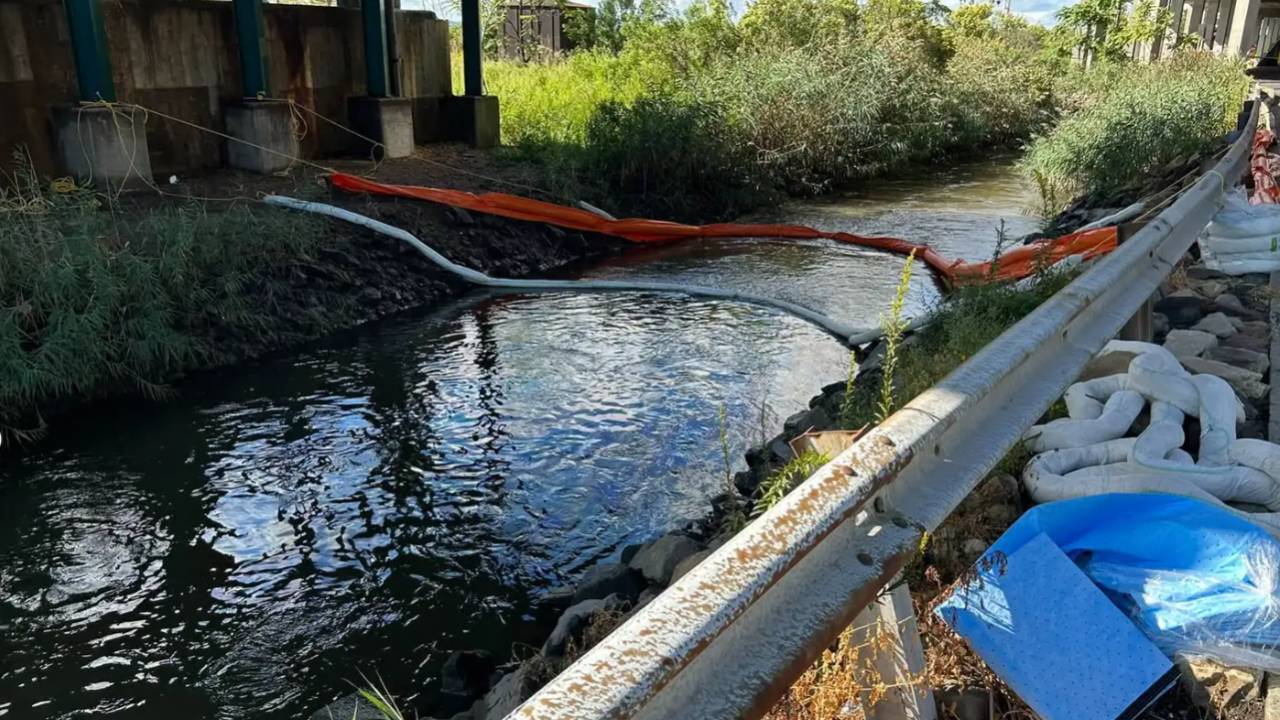
Five thousand gallons of fuel poured into a New Jersey creek. That is the stark reality left behind after an industrial accident at a commercial data facility, turning a quiet waterway into an emergency containment zone. When a backup generator system fails or leaks, the crisis rarely stays on corporate property. It bleeds into surrounding ecosystems, exposing the toxic environmental debt carried by the relentless expansion of modern digital infrastructure.
We build monuments to cloud computing on the edges of suburban wetlands and agricultural watersheds, pretending that server farms operate in a sterile vacuum. They do not. Every megawatt of computing capacity demands an army of diesel generators standing by to kick on the moment the local utility stumbles. Those generators need fuel. Thousands of gallons of it sit underground or in massive surface-adjacent storage tanks, waiting for a blackout that threatens financial markets or streaming pipelines.
Sometimes, the containment fails.
The Anatomy of a Facility Spill
Modern server architecture relies on an absolute guarantee of uptime. Enterprises pay millions for five-nines reliability, meaning zero tolerance for power interruptions. To meet that demand, data facility operators maintain vast liquid fuel reserves on-site.
When a leak occurs during routine maintenance, fuel transfer, or structural failure, the physics of fluid dynamics take over. Fuel slips through containment berms, breaches stormwater management systems, and finds its way into nearby outfalls.
Creeks do not forgive petrochemicals. Diesel coats the surface, suffocates aquatic life, and leaches into sediment where cleanup crews spend months dredging black mud. The local response is frantic booms, vacuum trucks, and public relations damage control. Yet the broader structural flaw goes unexamined. Why are we storing millions of gallons of hazardous hydrocarbons directly upstream of fragile watersheds to power digital services?
The answer lies in the grid's failure to keep pace with algorithmic appetite.
Power Hunger Meets Fragile Grids
Artificial intelligence training clusters, high-frequency trading engines, and hyperscale cloud networks demand unprecedented quantities of electricity. Local power grids across the Mid-Atlantic and Northern Virginia are buckling under the strain. Utility companies struggle to deliver the steady voltage required by server racks packed densely with power-hungry accelerators.
Operators cannot wait years for transmission line upgrades or new substation builds. They plug into existing substations and backstop their power demands with on-site generation.
Backup power used to mean a modest generator keeping the emergency lights on in a hospital wing. Today, it means multi-megawatt turbine farms running on diesel fuel, sitting adjacent to residential neighborhoods and sensitive watersheds. The sheer scale of fuel required to keep these facilities running through a multi-day grid failure transforms a server room into a bulk fuel storage depot.
When safety margins shrink, accidents multiply. A valve left open by a weary contractor, a corroded pipe joint hidden beneath concrete, or an automated fuel transfer pump malfunction turns into an ecological disaster.
The Regulatory Blind Spot
Environmental protection agencies police industrial polluters with rules written for factories and chemical plants, often treating server facilities as passive office parks with blinking lights. Local zoning boards see high-tech real estate through the lens of property tax revenue and job creation, overlooking the heavy industrial footprint lurking behind the security gates.
Emergency response plans often assume minor leaks contained entirely within concrete vaults. They rarely model the catastrophic failure of bulk storage valves during a severe weather event or a major operational mishap.
Inspections are infrequent. Operators point to automated shut-off systems and double-walled piping as proof of safety, while regulators lack the technical staff to audit complex fuel management systems under real-world load conditions.
The public only learns about these vulnerabilities when an oil sheen coats a local creek and residents smell unburnt fuel in their backyards. By then, the damage is done. The cleanup operation becomes a prolonged bureaucratic wrestling match between municipal agencies, corporate legal teams, and environmental contractors.
Reengineering Reliability
Solving this crisis requires abandoning the fiction that data facilities are clean, quiet neighbors. They are heavy industrial consumers of electricity and hazardous materials, and they must be regulated accordingly.
Operators must transition away from massive on-site diesel storage toward cleaner long-duration energy storage systems, fuel cells, and microgrid integrations that do not require tens of thousands of gallons of toxic liquid sitting next to natural waterways. Where diesel remains mandatory for baseline redundancy, secondary and tertiary containment barriers must become non-negotiable engineering standards, subject to independent, unannounced safety audits.
Until the industry faces genuine financial and regulatory consequences for treating local ecosystems as collateral damage, thousands more gallons of fuel will find their way into our creeks. The cloud is physical, and its toxic weight is spilling over our riverbanks.