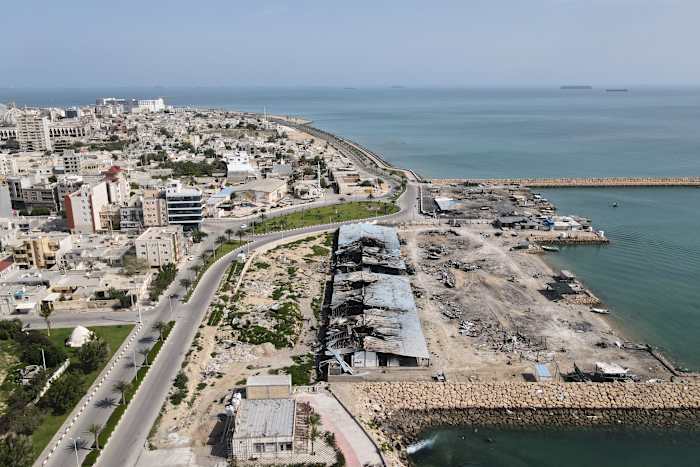
The overnight drone strike on Russia's Black Sea port of Tuapse is a brutal reminder that modern warfare doesn't stay confined to the front lines. On April 16, 2026, the Krasnodar region felt the sharp edge of Ukraine's long-range strategy, but the fallout wasn't just measured in charred fuel tanks or industrial downtime. According to Governor Veniamin Kondratyev, two children, aged 5 and 14, were killed when debris and strikes hit residential areas near the port.
This wasn't some minor border skirmish. It's part of a massive, calculated push by Kyiv to cripple the Russian war machine's lungs—its oil and logistics infrastructure. But when you launch dozens of drones at a dense port city, the margin for error is razor-thin, and the human cost is often devastating.
Why the Tuapse oil refinery is a recurring target
You have to understand that Tuapse isn't just a scenic coastal town. It's home to a massive Rosneft oil refinery, one of Russia's top ten largest processing plants. We're talking about a facility that handles roughly 12 million tons of petroleum products every year. It produces the diesel, gasoline, and fuel oil that keep Russian tanks moving and jets flying.
If you're Ukraine, hitting Tuapse is a strategic "must." Here's why the refinery matters so much right now.
- Logistics hub: The port handles massive exports that fund the ongoing invasion.
- Military supply: It's a primary source of refined fuel for the southern grouping of Russian forces.
- Psychological impact: Striking deep into Krasnodar Krai proves that no "rear" area is truly safe.
Eyewitnesses in the area reported the sky turning a deep, sickly red as fuel tanks ignited. Local Telegram channels were flooded with videos of explosions lighting up the night. While the governor focused on "debris" hitting enterprises, open-source intelligence and satellite analysis confirm that the refinery itself was the primary bullseye.
The reality of civilian casualties in drone operations
It's easy to look at a map and see a drone strike as a "precision" event. The reality on the ground is messy and often tragic. In this specific attack, five private houses and one apartment building were damaged. Two adults were also injured alongside the two children who lost their lives.
When drones are intercepted by electronic warfare or anti-aircraft fire, they don't just disappear. They fall. Sometimes they fall into the sea, but in Tuapse, they fell into neighborhoods. This is the grim math of the current conflict. As Ukraine ramps up its drone production—with the UK recently pledging over 120,000 units—these deep-strike missions are becoming daily occurrences.
Classes in Tuapse were canceled immediately. For the residents there, the war isn't something they see on state TV anymore. It’s the sound of a drone motor over their roof at 3:00 AM.
A broader campaign against Russian industry
Ukraine isn't just throwing darts at a map. In March alone, they hit over 70 industrial targets inside Russia. Commander-in-Chief Oleksandr Syrskyi recently noted that 15 of those were major oil refineries.
Kyiv is basically betting that if they can knock out enough of these facilities, the Russian economy will bleed faster than the West can lose interest in the war. It's a high-stakes gamble. Even the U.S. has expressed concerns about these strikes because of how they might rattle global oil prices. But from Kyiv’s perspective, when your cities are being hammered daily, global fuel prices are a secondary concern.
What this means for the Black Sea region
Expect the security situation around the Black Sea to get significantly worse before it gets better. Tuapse is only about 75 kilometers from Sochi, a crown jewel of Russian tourism and home to one of Putin's favorite residences. If Ukraine can consistently hit Tuapse, they're signaling that they can hit anything on that coast.
Russia's response has been predictable but no less violent. On the same day as the Tuapse strike, a massive Russian missile and drone wave hit Kyiv, Dnipro, and Odesa, killing at least 14 people. It’s a vicious cycle of escalation where children on both sides are paying the ultimate price.
Practical reality for residents and travelers
If you have any reason to be in the Krasnodar region, specifically near industrial hubs like Tuapse, Novorossiysk, or Sochi, you need to realize the air defense umbrella isn't a silver bullet.
- Stay away from ports: Port areas are high-priority targets.
- Watch the refineries: Proximity to oil infrastructure is a massive liability.
- Use local alerts: Rely on Telegram channels for real-time siren updates, as official sirens sometimes lag.
The war is moving deeper into Russian territory every month. The attack on Tuapse proves that the "special military operation" has long since crossed the border and parked itself in the backyards of ordinary families. Until the air defense systems can reliably stop 100% of these long-range drones—which they currently cannot—the risk to civilians in these industrial zones remains extreme.
Monitor the local governor's Telegram for updates on temporary housing if you're in the affected areas. Avoid the seaport perimeter until debris clearing is finished, as unexploded ordnance or drone fragments can still pose a threat.