When the only known handwritten final draft of Martin Luther King Jr.’s "I Have a Dream" speech heads to the auction block, the resulting media coverage inevitably fixates on the eye-watering price tag. Collectors and institutions prepare to wage a bidding war over ink on paper. Yet beneath the spectacle of the auction house lies a much more uncomfortable reality about who gets to own, control, and profit from the foundational artifacts of the American civil rights movement.
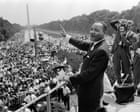
The manuscript itself is a piece of living history. Delivered on August 28, 1963, during the March on Washington for Jobs and Freedom, the address reshaped the moral trajectory of the United States. The physical document up for sale captures the final moments of preparation before King stepped up to the podium at the Lincoln Memorial. It is the tangible bridge between quiet, solitary preparation and one of the most consequential public performances in modern history.
What Makes a Handwritten Draft Different From the Delivered Speech
To understand the frenzy surrounding this specific document, you have to understand how King actually constructed his most famous address. History books often flatten the speech into a single, seamless monologue. The reality was far more chaotic.
King worked late into the night at the Willard Hotel in Washington, D.C., drafting and revising his remarks with input from trusted advisors like Wyatt Tee Walker and Clarence Jones. The handwritten final draft reflects the prepared text he intended to read. It contains the carefully calibrated metaphors of the "bad check" and the "bank of justice"—economic arguments designed to resonate with a nation still grappling with systemic inequality.
Then came the moment on the steps of the Lincoln Memorial.
Midway through his prepared remarks, gospel singer Mahalia Jackson famously called out from behind him, urging King to "tell them about the dream." King set his prepared pages aside, gripped the lectern, and began preaching extemporaneously. The most famous section of the speech—the rhythmic, soaring "I Have a Dream" refrain—does not appear in the prepared text in the way it was ultimately spoken.
This distinction is precisely why the handwritten draft carries such immense historical weight. It is not merely a transcript of words everyone already knows by heart. It is forensic evidence of his thought process right up to the second he abandoned the script. For historians, examining the cross-outs, margin notes, and phrasing choices offers an unfiltered look at how King balanced political strategy with prophetic urgency.
The Murky Legal History of Civil Rights Manuscripts
Whenever a major Martin Luther King Jr. artifact surfaces on the private market, it drags a decades-old legal and ethical war back into the spotlight. The provenance of civil rights documents is rarely simple, and the path from a podium in 1963 to a climate-controlled auction vault today is often paved with litigation.
In the frantic days of the movement, formal archival practices did not exist. Speeches were drafted on hotel stationery, legal pads, and scrap paper. Once an event ended, papers were routinely handed to aides, left on podiums, or given away as keepsakes to supporters and hosts. Nobody at the time was thinking about future valuations at Sotheby's or Christie's. They were trying to survive the week and pass legislation.
Decades later, those casual handoffs turned into multi-million-dollar disputes.
The King estate has spent years aggressively asserting copyright and ownership claims over King’s words, likeness, and physical papers. In the late 1990s and early 2000s, high-profile legal battles erupted over early drafts of the "I Have a Dream" speech that had been gifted to or retained by former associates, including George Raveling, the former basketball coach who happened to be standing near the podium in 1963 and asked King for the reading copy immediately after the speech concluded.
Auction houses operate in the gray areas of these historical transactions. Before a document of this caliber can be offered to the public, teams of lawyers and provenance researchers must establish a clear chain of title. If an item was gifted outright by King, the recipient or their heirs generally hold the legal right to sell the physical paper—even if the King estate retains the underlying intellectual property and copyright to the text itself.
Owning the physical paper does not give a buyer the right to print the speech on T-shirts or license it for commercials. It buys the right to possess the object, display it privately, or loan it to a museum. That distinction between physical ownership and copyright is the invisible fault line running beneath every major literary and historical auction.
Why Private Auctions Threaten Public Memory
The rise of the ultra-high-net-worth collectibles market has fundamentally altered how historical artifacts are preserved. A generation ago, major papers from twentieth-century figures routinely found their way to university libraries, the Library of Congress, or public museums through donations or modest institutional purchases.
Today, public institutions are routinely priced out of the market.
When a manuscript carries a multi-million-dollar estimate, state universities and non-profit museums cannot compete on their own. Their acquisition budgets are dwarfed by the liquidity of private equity billionaires, tech founders, and sovereign wealth-backed collectors who view rare historical documents as an alternative asset class alongside fine art and rare sports memorabilia.
This financial reality creates a troubling dynamic for public access:
- Disappearing Artifacts: Once a manuscript is bought by a private collector, there is no legal obligation to ever show it to the public again. It can vanish into a private vault in Geneva, New York, or Zurich for decades.
- Fragmented Archives: Instead of a researcher being able to study all of King’s 1963 papers in one place—such as the King Center in Atlanta or Boston University, where much of his early archive resides—key pieces are scattered across the globe based on who had the highest bid on a given Tuesday.
- The Donor Dependency Trap: Museums increasingly rely on wealthy patrons to buy artifacts at auction and donate them back for a tax write-off. This puts the curation of national history entirely at the mercy of private philanthropy rather than public stewardship.
There is an inherent irony in watching a document born out of a march for economic justice become a trophy asset accessible only to the wealthiest fraction of the population. The March on Washington was explicitly tied to jobs, fair wages, and dismantling systemic economic barriers. Turning its central artifact into a luxury commodity highlights the widening gap between the ideals of the movement and the mechanics of modern capitalism.
The Mechanics of Valuing Priceless History
How does an auction house actually put a number on a piece of paper that cannot be replaced? Valuation at the top end of the manuscript market is equal parts data science, market psychology, and theatrical staging.
Specialists start by looking at comparable sales, though for a document like the handwritten final draft of "I Have a Dream," true comparables barely exist. They look at the market performance of other foundational American manuscripts—such as working drafts of the Gettysburg Address, signed copies of the Emancipation Proclamation, or landmark scientific papers by Albert Einstein and Isaac Newton.
Condition plays a massive role. Ink stability, paper acidity, folds, tears, and staining are scrutinized under high-magnification lighting. Ironically, visible wear often increases value in historical manuscripts. Creases from where a speaker folded the pages to fit inside a suit jacket pocket, or smudges from sweat and handling on a hot August afternoon in Washington, serve as physical proof of the document's presence at the historic event.
Then comes the narrative premium.
A signature on a routine piece of correspondence might sell for a few thousand dollars. A signature on a document that changed the course of a nation commands millions. Auction houses spend months building a media narrative around the lot before the gavel ever drops. Press previews, academic symposiums, and global tours are orchestrated to ensure that by the time bidding opens, the item is no longer viewed as a collectible, but as a monument.
The Counter-Argument From the Collectibles Industry
Defenders of the open auction system argue that high prices are actually the best mechanism for preserving history. The logic is straightforward: when something is worth millions of dollars, people take extraordinary care of it.
Countless historical documents have been lost to basement floods, house fires, or careless heirs simply because nobody realized their monetary value. When an auction house publicizes a record-breaking estimate, it forces owners to insure the items, store them in proper environmental conditions, and consult conservationists.
Furthermore, industry veterans point out that private collectors frequently act as temporary custodians rather than permanent hoarders. Many high-profile buyers of civil rights and African American historical artifacts—such as Robert F. Smith, Oprah Winfrey, or David Rubenstein—have a well-documented track record of purchasing rare manuscripts specifically to place them on long-term loan at institutions like the Smithsonian National Museum of African American History and Culture.
In those cases, the private market acts as an agile acquisition arm for public museums that move too slowly to navigate complex estate sales. Without private capital stepping in to rescue items from obscurity, many artifacts might remain locked in private family attics or be broken up and sold page by page to maximize profit.
What Happens When the Gavel Drops
The sale of the handwritten final draft of "I Have a Dream" is more than a routine news item for the art and antiques beat. It is a stress test for how the United States values its own civil rights legacy.
If the manuscript is acquired by a consortium of donors or an institution committed to permanent public display, it will join the ranks of the Declaration of Independence and the Constitution as a visible touchstone of American democracy. Students, scholars, and ordinary citizens will be able to stand in front of the glass, look at King’s handwriting, and see the deliberate, human labor behind words that now feel inevitable.
If it disappears into a private collection, it becomes another casualty of the privatization of public memory.
Either way, the ink on those pages remains unchanged. The handwritten draft stands as a permanent reminder that history is not made by accident or divine inevitability. It is written, crossed out, revised late at night in hotel rooms, and carried onto a stage by human beings willing to risk everything for a future they might not live to see.