The US Treasury is about to play a losing hand and call it a power move.
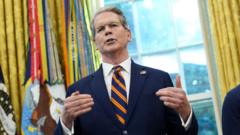
The signaling from Janet Yellen’s office regarding a fresh round of tariffs isn't a strategy. It is a frantic attempt to patch a sinking hull with duct tape. While the headlines frame these levies as a "crackdown" on unfair trade practices or a "protection" of domestic industry, they are actually a confession. They are a loud, expensive admission that decades of domestic industrial policy have failed to produce a competitive edge.
If you believe tariffs protect the American worker, you’re reading the wrong ledger.
The Myth of the Protective Shield
Standard economic reporting treats tariffs like a surgical strike. They aren't. They are a blunt instrument that hits the domestic consumer first and hardest. When the Treasury hikes the cost of entry for foreign goods, they aren't taxing the foreign exporter; they are taxing the American manufacturer who relies on those inputs and the family that buys the finished product.
I’ve spent twenty years watching supply chains buckle under the weight of "strategic" trade interventions. The pattern is always the same. Washington announces a tariff to "save" an industry—say, domestic steel or solar panels. Within six months, the cost of raw materials for every other American business using those goods spikes.
The result? The small percentage of workers in the "protected" sector might see a temporary stabilization, but the millions of workers in downstream industries—construction, automotive, aerospace—face layoffs or wage freezes as their employers' margins evaporate.
The Treasury isn't protecting the economy. It’s picking winners and losers, and it usually picks the losers who have the best lobbyists.
Why "Overcapacity" Is a Distraction
The current buzzword being floated is "industrial overcapacity." The narrative suggests that foreign nations—specifically China—are producing more than the world needs, dumping goods at a loss, and crushing "fair" competition.
This is a fundamental misunderstanding of how global markets function. There is no such thing as global overcapacity in a world where billions of people still lack access to basic technology, affordable energy, and modern infrastructure. What we actually have is a competitiveness gap.
If a foreign competitor can produce a high-quality electric vehicle or a high-efficiency battery for 40% less than a US firm, that isn't just a subsidy issue. It’s an R&D and scaling issue. By slapping a tariff on those goods, the US Treasury is effectively telling American CEOs: "You don't need to innovate. You don't need to find efficiencies. We will just make your competitors more expensive so you can keep being mediocre."
This is how industries die. They don't die from competition; they die from the lack of it. Protectionism is a sedative that lulls domestic companies into a terminal slumber while the rest of the world continues to iterate at lightning speed.
The Invisible Tax on Innovation
Every dollar spent on a tariff is a dollar that isn't spent on Research and Development.
When a US manufacturer has to pay an extra 25% for specialized components due to trade barriers, that money comes directly out of their capital expenditure budget. I have sat in boardrooms where "Project X"—the next-generation, high-efficiency manufacturing line—was scrapped because the "Trade War Tax" ate the budget.
The Math of Stagnation
Consider the basic cost of a hypothetical industrial component, $C$.
If the base price is $C$ and the tariff rate is $t$, the new cost $C'$ is:
$$C' = C(1 + t)$$
But the damage isn't just the delta between $C$ and $C'$. It’s the opportunity cost. If a firm’s profit margin is $m$, the number of units they can produce or invest in drops by a factor significantly higher than the tariff percentage itself.
We are forcing our smartest engineers to solve for "how do we source this around the tariff?" instead of "how do we make this better than anyone else on Earth?"
The Great Supply Chain Lie
The Treasury suggests these moves will "re-shore" manufacturing. This is a fantasy.
Manufacturing doesn't move like a game of checkers; it moves like a tectonic plate. When you make it impossible to source from Country A, the factory doesn't magically appear in Ohio. It moves to Country B—Vietnam, Mexico, or India. These are "pass-through" economies.
I’ve seen this firsthand. A product is 90% manufactured in the "target" country, shipped to a "friendly" country for minor assembly or a new label, and then imported to the US. The only thing the tariff achieved was adding 15% to the logistics costs and enriching a few middlemen in a third country.
The Treasury knows this. They just hope the public doesn't.
The Geopolitical Backfire
Trade is the only thing that keeps modern superpowers from direct kinetic conflict. When you dismantle trade links, you aren't just adjusting a balance sheet; you are removing the incentives for peace.
By weaponizing the Treasury, the US is signaling to the rest of the world that the "Rules-Based Order" only applies when the US is winning. This accelerates the "de-dollarization" trend. If your assets or your trade can be throttled at the whim of a Treasury Secretary, you find a different currency.
We are trading long-term global financial hegemony for a short-term bump in the polls in three swing states. It is a catastrophically bad trade.
The Hard Truth Nobody Wants to Hear
If we want to "win" the trade war, we have to stop fighting it with taxes and start fighting it with talent.
- Dismantle the Regulatory Thicket: It takes ten years to permit a mine in the US for the minerals we need for the "Green Transition." In the time we spend filing paperwork, our competitors have built three entire factories.
- Education as Industrial Policy: We are graduating more MBAs than engineers. You cannot tariff your way out of a talent deficit.
- End the Subsidy Addiction: Whether it's the CHIPS Act or the IRA, we are trying to buy our way to victory. Subsidies create "zombie firms" that can only survive on the government teat.
Tariffs are the ultimate "lazy" policy. They require no hard choices, no restructuring of the tax code, and no improvement to the education system. They just require a signature.
The Hidden Cost of the "Win"
Imagine a scenario where the Treasury gets exactly what it wants. Foreign imports drop by 50%. Domestic prices for cars, electronics, and appliances jump by 30%. The "protected" steel worker keeps his job, but his rent, his grocery bill, and his truck payment all skyrocket because the entire economy has become less efficient.
Is that a win?
We are currently witnessing the "Argentinization" of American trade policy—a slow slide into a closed-loop system where we protect ourselves into poverty.
The Treasury will announce these tariffs with a straight face and a patriotic tone. They will tell you they are standing up for America. In reality, they are kneeling to the pressure of an outdated economic model that values optics over output.
Stop asking when the tariffs will work. They are working exactly as intended: as a massive, regressive tax hike that protects the status quo while sacrificing the future.
The next time you hear a politician or a Treasury official brag about "getting tough" with tariffs, check your wallet. You’re the one paying for their tough talk.
The era of American dominance wasn't built on walls; it was built on being too fast to catch. We’ve stopped running and started trying to trip the other guy. That never ends well for the runner.
Go ahead. Raise the tariffs. Watch the inflation numbers tick up. Watch the innovation cycles slow down. Just don't act surprised when the "protection" feels a lot like a prison.


