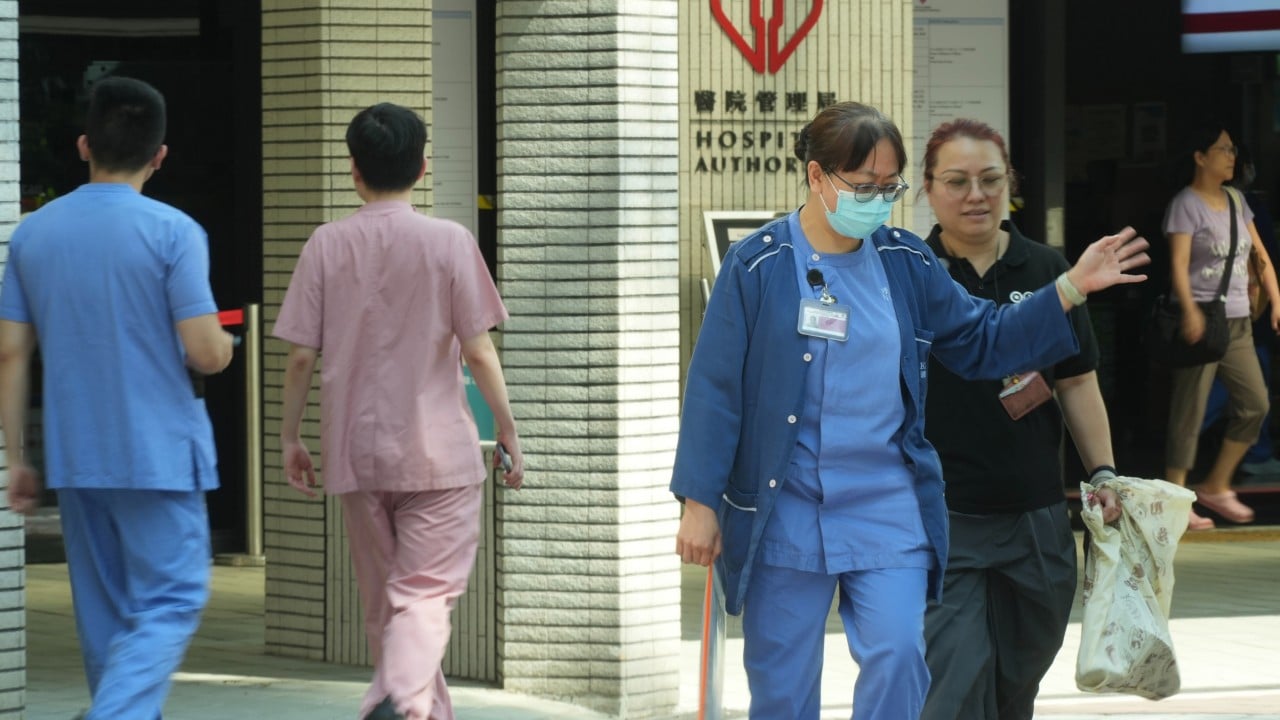
The midnight shift in a public hospital feels less like a workplace and more like a long, slow-motion siege.
At 3:15 AM, the fluorescent lights overhead do not illuminate; they hum with a low, chemical fatigue that seeps directly into the bone. In Ward 4C, the monitor beside Bed 12 emits a rhythmic, mechanical whisper. Every three seconds, a dry papery cough echoes from the corner bay where an elderly man waits for a nurse who is currently three patients behind schedule.
She is not walking. She is running.
Her name is Wai-yin, though most people just call out whichever pronoun happens to cross their mind first when they press the call button. She has spent fourteen hours on her feet today, navigating a labyrinth of linoleum corridors that smell faintly of bleach and stale chamomile tea. Her calves throb with a dull, heavy ache—the kind of physical debt that sleeping eight hours on a Saturday can never quite repay.
When you ask Wai-yin why she stays, she does not talk about healthcare policy, gross domestic product ratios, or legislative frameworks. She talks about Mrs. Leung in Bed 8, who remembers the exact day Wai-yin started wearing the white uniform fourteen years ago. She talks about the fragile, invisible contract binding the exhausted caregivers of this city to the beds they tend.
That contract is currently tearing at the seams.
Look at the numbers on paper and you see a sterile ledger of crisis. Only zero point five percent. That is the proportion. Out of thousands upon thousands of registered nurses holding the line across public wards, fewer than one in two hundred received their foundational training beyond the borders of Hong Kong.
Pause on that fraction for a moment. Zero point five.
It is a number so small it almost vanishes into the margins of the official report. Yet it carries the weight of a staggering paradox. For years, the public has been told that the cavalry is coming. Headlines blare about overseas recruitment drives, global talent schemes, and international credential evaluations designed to patch the gaping holes in an overworked public health system. Lawmakers argue across polished mahogany tables. Bureaucrats issue press releases boasting of open doors and streamlined pathways.
Yet the doors remain stubbornly, quietly shut. Or perhaps, more accurately, the bridge outside is too narrow for anyone to cross.
To understand why that fraction refuses to budge, you have to look past the political posturing and step inside the regulatory machinery. Imagine, for the sake of clarity, an intricate clockwork mechanism designed centuries ago to keep dust out of the gears. Every pivot, every wheel, every tooth must match an exact, uncompromising specification.
Now imagine that the clockwork is trying to measure time in a hurricane.
The licensing examinations for overseas-trained nurses are notoriously exacting. This is not inherently wrong; public safety demands rigorous standards. No one wants an unqualified practitioner administering chemotherapy or adjusting ventilator pressures. But there is a vast, yawning chasm between rigorous verification and bureaucratic paralysis.
When a nurse with a decade of acute-care experience in Melbourne, London, or Toronto looks at the requirements to practice in Hong Kong, they do not just see a test. They see a wall of paper, a labyrinth of language proficiencies, clinical attachment hurdles, and provisional registration rules that treat seasoned professionals like nervous interns fresh out of a lecture hall.
Consider a hypothetical nurse named Sarah. She spent eight years running a cardiac unit in Manchester. She knows how to read the subtle, silent shifts in a patient's color before the monitor even starts to beep. She knows how to hold a weeping family member’s hand while simultaneously calculating an emergency drip rate. When she hears about Hong Kong’s nursing shortage, she feels a professional pull—perhaps she has family here, or perhaps she simply wants a new horizon.
Then she opens the application portal.
She discovers that her clinical hours must be recertified under conditions that require her to step away from earning a living for months. She discovers that language exams demand a specialized, archaic fluency that even native speakers struggle to parse without prep courses. Month after month passes in administrative limbo. Eventually, Sarah closes the tab, accepts a position in Singapore instead, and the Hong Kong public health system loses another invisible pair of hands.
Multiply Sarah by a thousand, and you begin to understand why the registry remains nearly empty.
The hiring row that dominates the morning talk shows is rarely about reality; it is about optics. On one side, critics point to the skeleton crews in emergency departments and accuse the government of moving too slowly, guarding professional protectionism at the expense of human lives. On the other side, institutional guardians warn against diluting standards, arguing that an influx of unvetted foreign staff could destabilize an already strained ecosystem.
Both sides miss the human center of the gravity.
The crisis is not merely a staffing shortage. It is a crisis of sustainability. When a nursing workforce is stretched this thin, mistakes stop being hypothetical and start becoming statistical certainties. Fatigue dulls intuition. Rushed handovers miss crucial details. A nurse who should be monitoring three complex cases is suddenly managing twelve, running on adrenaline and caffeine, praying that nothing catastrophic happens in the ten minutes she is forced to spend charting behind a computer screen.
Wai-yin knows this exhaustion intimately. She felt it during the winter surges. She felt it when entire wards went down with infections, leaving the survivors to pull double shifts without complaint. She has watched young, bright nursing graduates burn out within eighteen months of leaving university, trading the public sector for the quiet, predictable hours of a private cosmetic clinic or leaving the profession entirely.
If the overseas recruitment pipeline remains a trickle rather than a stream, the burden does not fall on the bureaucrats who draft the policies. It falls on Wai-yin’s calves. It falls on the elderly man in Bed 12 waiting for his water pitcher to be refilled.
Solutions do not require dismantling safety standards, nor do they require lowering the bar. They require imagination and urgency. They require treating credential recognition not as a bureaucratic obstacle course, but as an emergency rescue operation. What if clinical assessments were modular, practical, and conducted on-site during a paid probationary period, allowing experienced professionals to prove their competence in real-world wards rather than examination halls? What if administrative barriers were pruned with the same aggression usually reserved for emergency budget cuts?
Until those questions are answered with action rather than committee meetings, the number will stay where it is.
Zero point five percent.
Back in Ward 4C, the digital clock on the wall ticks toward 4:00 AM. Wai-yin pauses for three seconds at the nurse's station, closing her eyes to let the burning sensation fade from beneath her eyelids. In the distance, an elevator door chimes, signaling the arrival of the morning laboratory results. She takes a deep breath, straightens her collar, and steps back down the long, linoleum corridor, walking resolutely toward the next room where someone is waiting in the dark.