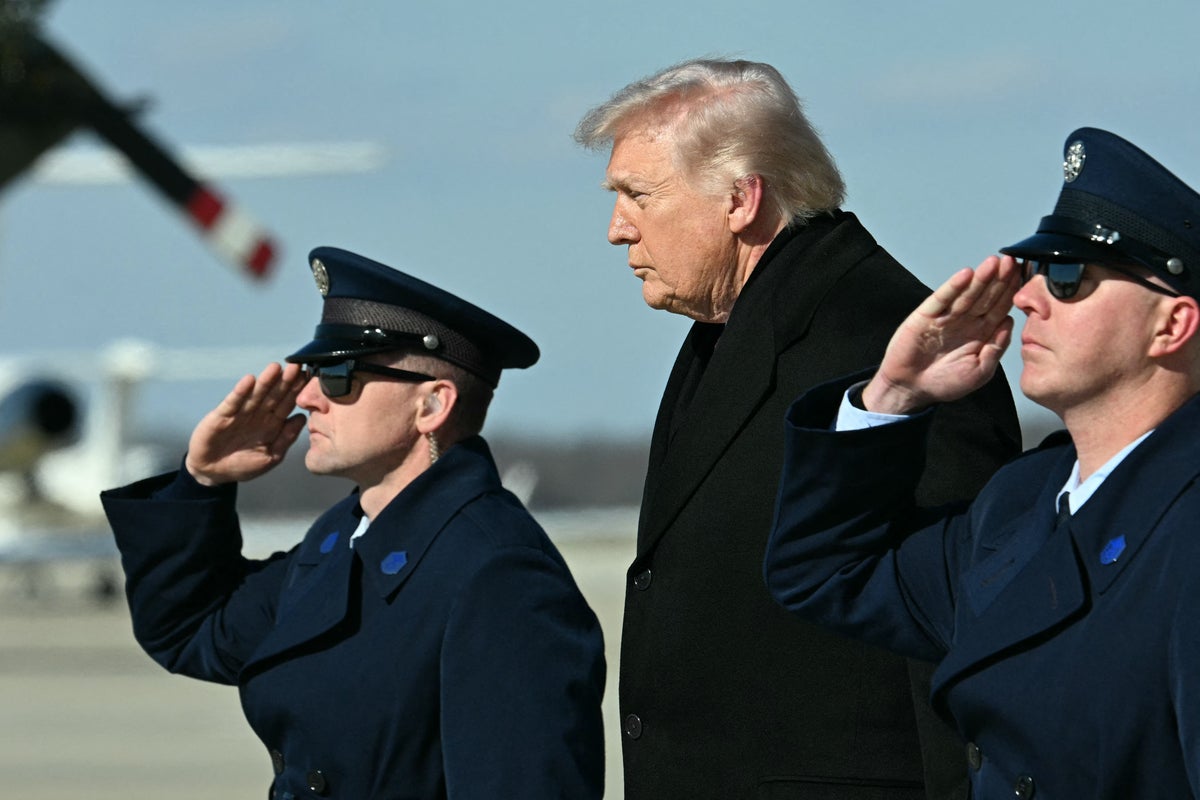
The modern media machine loves a "closed-press" event. It frames the moment as an act of profound, hushed reverence. When Donald Trump attended the dignified transfer of six U.S. troops killed in a Middle East plane crash, the narrative was immediately vacuum-sealed: a solemn Commander-in-Chief performing the ultimate duty away from the prying eyes of the cameras.
That narrative is a lie. Or, at the very least, it is a convenient half-truth that protects the political class from the actual cost of their decisions.
By keeping the press behind a velvet rope, we aren't "honoring" the fallen. We are sanitizing the war. We are turning a visceral, agonizing human tragedy into a manageable political asset that doesn't trigger a single uncomfortable conversation about why those six troops were in that plane in the first place.
The Myth of Private Grief in a Public Office
When a president attends a dignified transfer at Dover Air Force Base, it is never a private act. It is a state function.
The "closed-press" designation is a tactical choice, not a moral one. It allows the administration to leak the vibe of the event—the stoicism, the salutes, the heavy silence—without having to deal with the messy reality of grieving families who might not want a politician using their child’s casket as a backdrop for a "presidential" moment.
I have spent two decades watching how power operates in D.C. and at military hubs. I have seen the way "dignity" is used as a shield to deflect scrutiny. If the public actually saw the raw, unedited footage of a flag-draped transfer every single time a service member died in a theater of operations we can no longer justify, the appetite for these "forever deployments" would vanish overnight.
The "closed-press" rule isn't for the families. It’s for the optics. It’s about maintaining a sanitized version of the American war machine.
Why the "Dignified Transfer" is a Semantic Trap
We need to stop using the military's preferred terminology if we want to understand what is actually happening.
A "dignified transfer" is a logistics term. It is the movement of remains from an aircraft to a transport vehicle. It is purposefully distinct from a "funeral" or a "memorial service."
By emphasizing the "dignity" of the transfer, the government shifts the focus from the cause of death to the process of return. It’s a brilliant bit of linguistic engineering. If we are talking about how respectful the transfer was, we aren't talking about:
- The mechanical failure of an aging airframe.
- The lack of clear strategic objectives in the Middle East.
- The systemic overextension of our flight crews.
When six troops die in a plane crash, it’s rarely an act of God. It’s an act of policy. Whether it was maintenance shortcuts due to budget reallocation or a mission profile that pushed the limits of safety, those lives were traded for a geopolitical "maybe."
Trump showing up doesn't fix the policy. It just validates the sacrifice without questioning the necessity.
The Contradiction of the Anti-War Populist
The irony here is thick enough to choke on. Trump built a massive portion of his brand on being the guy who wanted to end "endless wars." Yet, here he is, presiding over the return of bodies from a region he claimed we should have left years ago.
You cannot be the "America First" candidate while simultaneously participating in the quiet, ritualistic acceptance of troop deaths in nebulous Middle Eastern conflicts.
If you want to honor the troops, don't show up to their caskets in secret. Show up to the briefing room and demand to know why they were flying that specific route. Demand to know why the aircraft wasn't upgraded. Demand to know what objective was so vital that it was worth six lives.
Everything else is just performance art for a restricted audience.
The "People Also Ask" Delusion
People often ask: "Is it more respectful for the president to attend these events in private?"
The answer is a brutal no.
Privacy belongs to the families. The President of the United States does not have a "private" life when he is acting in his capacity as the head of the executive branch. When he steps onto that tarmac, he represents the state that sent those individuals to their deaths.
By keeping it "closed-press," the state avoids the "Vietnam effect." During the Vietnam War, the constant flow of images—caskets, wounded soldiers, the sheer grit of combat—forced the American public to confront the reality of the war.
Modern administrations have learned that lesson too well. They’ve perfected the "invisible war." We have troops scattered across dozens of countries in "non-combat" roles that look suspiciously like combat, and we only hear about them when a plane falls out of the sky.
The "closed-press" transfer is the final stage of that invisibility. It ensures that the only thing we feel is a vague sense of "respect" rather than a sharp, motivating sense of "outrage."
The Logic of the Sanitized Casket
Let’s look at the data on public opinion and military casualties. Historically, public support for military interventions drops not based on the number of deaths, but on the visibility and perceived meaning of those deaths.
If the public sees the transfer, the death becomes "real." It becomes a political liability.
If the public only reads a 300-word blurb about a "closed-press" ceremony where the president was "solemn," the death remains an abstraction.
This is why the Pentagon fought so hard for decades to ban media coverage of caskets arriving at Dover. That ban was only lifted in 2009—and even then, with massive caveats. The "closed-press" event with a high-profile politician is just the new way to achieve the same result: control the narrative.
Imagine a scenario where every dignified transfer was broadcast live on every major network. Imagine if we saw the faces of the children and the parents in high definition, without the filter of a presidential press release.
The policy would change within a week.
Stop Falling for the "Dignity" Narrative
We are told that criticizing these ceremonies is disrespectful to the fallen. This is the ultimate "shut up" move used by politicians of all stripes.
True respect isn't found in a silent salute on a cold tarmac. True respect is found in an administration that refuses to put its citizens in harm's way for anything less than a direct threat to the nation.
If the mission was worth the lives of those six service members, it should be worth the public’s attention. If the mission is so delicate or so poorly defined that we have to hide the return of the bodies, then the mission shouldn't exist.
We have a professional military, yes. They signed up for the risk. But that doesn't give the political class a blank check to spend those lives and then cover the bill in "closed-press" secrecy.
The next time you see a headline about a president "honoring" troops in a private ceremony, don't feel a swell of national pride. Feel a sense of deep skepticism.
Ask what they are hiding. Ask why the "dignity" of the fallen requires the exclusion of the people who paid for the war.
Stop accepting the hollow spectacle. Demand the uncomfortable truth.
Go look up the tail number of that plane. Look up the maintenance record of that unit. Look up the specific "training mission" or "patrol" they were on.
That is how you actually honor the dead. You stop letting their deaths be used as a quiet, respectable backdrop for a political career.