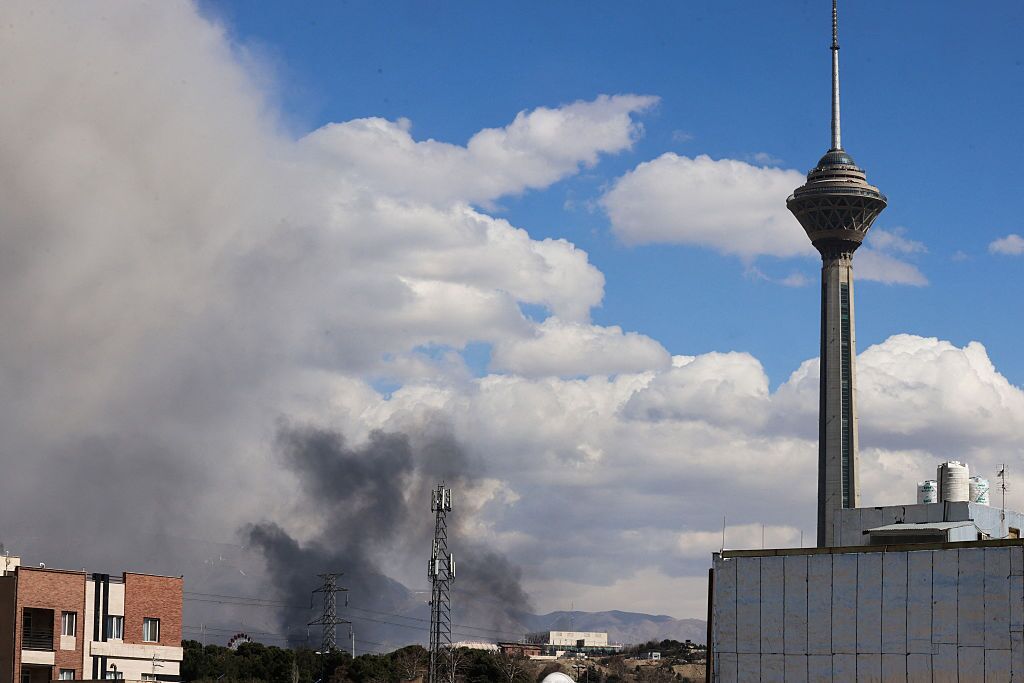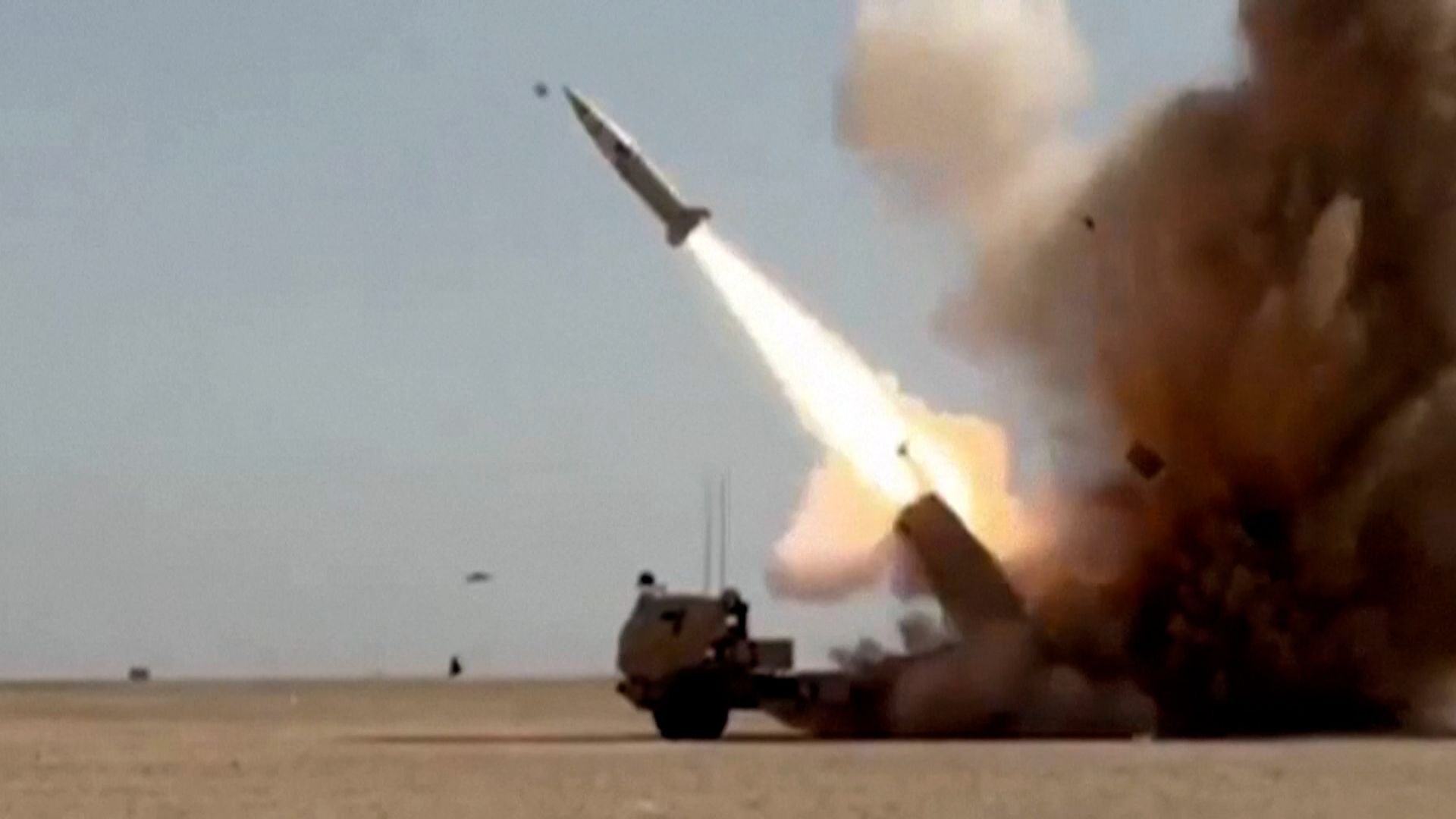
The sudden removal of a central figure in the Iranian executive branch does not just create a vacancy. It triggers a high-stakes stress test for a system that prides itself on being immune to individual mortality. While the world watches the formal funeral processions and the choreographed grief, the real story is unfolding in the windowless rooms of the Supreme Council for National Security and the back-offices of the Islamic Revolutionary Guard Corps (IRGC). Iran is not just grieving; it is recalculating its entire survival strategy for a decade where its old guard is fading and its young population is increasingly disconnected from the 1979 mission.
The immediate crisis is one of management, but the deeper threat is a crisis of legitimacy. The Islamic Republic has spent forty-five years building a bureaucracy designed to withstand external shocks, yet it remains uniquely vulnerable to the internal friction that follows a sudden power vacuum. This isn't just about who sits in the president's chair. It is about whether the complicated web of clerics, generals, and "bonyad" billionaires can maintain a unified front when the usual hierarchy is disrupted.
The Architecture of Controlled Transition
The Iranian constitution provides a clear roadmap for what happens when a leader falls. The first vice president takes the reins, an election is organized within fifty days, and the Council of Guardians vets the candidates to ensure no "deviants" make it onto the ballot. This is the surface-level mechanics of the state. It is efficient, predictable, and largely irrelevant to the actual distribution of power.
The real transition happens within the Office of the Supreme Leader. Ali Khamenei, now in his mid-80s, remains the ultimate arbiter. For the aging Ayatollah, the loss of a loyalist president is more than a personal blow; it is a logistical nightmare. He requires a subordinate who can manage the failing economy without questioning the massive military budget or the "Look to the East" foreign policy.
In the immediate aftermath, the IRGC has moved to secure the borders and domestic communication hubs. This is a standard operating procedure designed to project strength. If the regime looks disorganized for even a moment, they fear the embers of the "Woman, Life, Freedom" protests could reignite. Stability in Tehran is maintained by the credible threat of force, and a leadership void is the one thing that can make that threat look less credible.
The Economic Ghost in the Machine
Whoever takes the permanent role next will inherit a fiscal disaster. The Iranian rial has been in a tailspin for years, and the shadow economy—controlled largely by the IRGC and religious foundations—now accounts for a massive portion of the nation's GDP. This creates a ceiling for any new leader. They cannot reform the economy without stripping power from the very generals who keep them in office.
The "bonyads" or charitable trusts are the silent players in this succession. These multi-billion dollar conglomerates answer only to the Supreme Leader. They pay no taxes and operate with zero transparency. When a president dies or leaves office, the fight for control over these assets intensifies. It is a game of musical chairs played with the nation's industrial base.
The public feels this in the price of eggs and the scarcity of medicine. While the elite debate the finer points of revolutionary jurisprudence, the average citizen is more concerned with the fact that their savings have lost 90% of their value in a decade. A new leader can promise reform, but they cannot touch the "bonyads" without risking a palace coup.
The Digital Iron Curtain and the Tech War
Technology has become the primary battlefield for the regime's survival. In the wake of leadership loss, the first move is always to tighten the "National Information Network"—Iran's attempt to create a filtered, domestic version of the internet. This isn't just about blocking Instagram or X. It is about data sovereignty.
The Iranian Deep State has spent years observing how social media can mobilize flash protests. Their response has been a sophisticated blend of Chinese-style filtering and homegrown surveillance. The loss of a leader often prompts a "dark period" where internet speeds are throttled and VPNs are targeted with renewed vigor.
- Surveillance Infrastructure: Massive investment in facial recognition technology at traffic lights and metro stations.
- Data Localization: Forcing businesses to move servers to domestic data centers where they can be monitored.
- Information Operations: A fleet of state-sponsored "cyber-armies" designed to flood the digital space with misinformation during times of transition.
This digital grip is the regime's strongest tool, but also its most fragile. Every time they shut down the internet, they hemorrhage millions in trade and alienate the tech-savvy youth who are essential for the country's long-term modernization. It is a tactical win that results in a strategic loss.
The Regional Chessboard After the Fall
Beyond the borders, Iran's "Axis of Resistance" is watching closely. From Hezbollah in Lebanon to the Houthis in Yemen, the network of proxies relies on a steady hand in Tehran. These groups don't just need money; they need a clear line of command.
A period of internal Iranian instability can lead to two outcomes on the regional stage. The first is a temporary retreat, as the regime focuses on domestic security. The second, and more likely, is a surge in aggressive rhetoric and proxy activity to prove that the loss of a leader has not diminished the "revolutionary export."
The IRGC's Quds Force handles these external relationships. They operate largely independent of the presidency, yet they still need the executive branch to handle the diplomatic fallout of their actions. If the new president is a weak placeholder, the Quds Force will likely exert even more influence over foreign policy, potentially leading to miscalculations with Israel or the United States.
The Succession Within the Succession
The elephant in the room is not the presidency, but the eventual succession of the Supreme Leader himself. The president who was lost was widely considered a frontrunner to replace Ali Khamenei. His removal from the board creates a massive gap in the long-term plan for the Islamic Republic's future.
The Assembly of Experts, the body tasked with choosing the next Supreme Leader, is now back to the drawing board. This creates a vacuum of ambition. Potential candidates will now start positioning themselves, often by trying to out-hawk one another on security and religious purity. This internal competition makes the regime less predictable and more prone to extreme positions.
The IRGC is the kingmaker here. They have spent forty years evolving from a ragtag militia into a state-within-a-state. They are the biggest landowners, the biggest contractors, and the biggest security force. They will not allow a Supreme Leader to take office who intends to clip their wings. The next president will be a litmus test for how much control the military has over the clergy.
The Demographic Time Bomb
While the elites play for power, the demographic reality of Iran remains unchanged. Over 60% of the population is under the age of 30. They have no memory of the 1979 revolution and little interest in its ideological rigidness. They want jobs, high-speed internet, and social freedom.
The regime's response to this has been a cycle of repression and occasional, superficial "thaws." But a leadership transition often ends the thaws. To prove their "revolutionary credentials," new leaders often double down on the morality police and social restrictions. This creates a pressure cooker environment.
The youth are not just passive observers. They are increasingly sophisticated in their dissent. They use encrypted comms, they understand the regime's financial vulnerabilities, and they have lost the fear that governed their parents' generation. The state can replace a leader in fifty days, but it cannot replace a disgruntled generation in fifty years.
The Myth of the Monolith
Outsiders often view the Iranian government as a monolith, a single block of ideological fervor. The reality is a chaotic ecosystem of competing interest groups. You have the "Principlists" who want a return to the strictest interpretation of the law, the "Pragmatists" who want to end sanctions at any cost, and the "Securitocrats" who simply want to maintain the status quo.
A sudden vacancy brings these factions into open conflict. This friction is visible in the state-run media, where different outlets will subtly back different candidates or emphasize different priorities. Watch the rhetoric surrounding the "Global Arrogance" (the West) versus the need for "Economic Diplomacy." These are the code words for the internal tug-of-war.
If the IRGC feels that the civilian government is leaning too far toward reform to appease the public, they are perfectly capable of expanding their "temporary" security measures into a permanent military administration. This is the ultimate "break glass" scenario for the Iranian state.
The Intelligence Gap
One of the most overlooked factors in any Iranian transition is the role of intelligence failures. If a leader is lost under sudden or suspicious circumstances, the immediate focus is on findng a scapegoat. This leads to purges within the intelligence ministries.
When a regime purges its own spies, it becomes blind. The internal paranoia that follows a leadership loss often does more damage than the loss itself. Competent officers are replaced by loyalists, and the quality of information flowing to the top degrades. This makes the regime more likely to overreact to small domestic protests or misread the intentions of foreign adversaries.
The "Deep State" in Tehran is currently a house of mirrors. Everyone is watching everyone else to see who will blink first. In this environment, long-term policy-making is impossible. The focus is entirely on the next twenty-four hours, the next week, the next month.
The Fallacy of the Moderate
Western analysts often hold out hope that a leadership crisis will pave the way for a "moderate" to take power. This is a fundamental misunderstanding of the vetting process. The Council of Guardians ensures that no true moderate ever gets near the ballot.
Any candidate allowed to run has already proven their absolute loyalty to the concept of Velayat-e Faqih (Guardianship of the Jurist). The choice is never between a hardliner and a liberal; it is between different shades of hardliner. One might be slightly better at talking to the UN, while the other is better at managing the domestic crackdown, but both serve the same master.
Expecting a change in direction from a new president is like expecting a change in course from a train by changing the conductor. The tracks were laid decades ago, and they only lead in one direction.
The actual path forward for the Iranian state is not a change of heart, but a slow, grinding process of institutional decay. The more they rely on the military to manage the economy and the police to manage the culture, the less they resemble a functioning Republic. They are becoming a garrison state, where the ideology is a veneer for the preservation of elite wealth and power.
Monitor the turnout in the upcoming emergency election. In recent years, voter participation has plummeted to record lows. This is the most accurate poll of the regime's health. When the people stop voting, it’s because they’ve realized the theater doesn't change the reality of the script. The true test for the Iranian leadership isn't whether they can hold an election, but whether they can convince a cynical nation that the result matters.
Identify the names that are not being discussed in the state media. The real power brokers in Iran often prefer the shadows. Watch for moves within the IRGC's engineering wing, Khatam al-Anbiya. If their leadership shifts, it’s a sign that the money is moving. And in Tehran, as in anywhere else, the power always follows the money.
The transition is a distraction. The underlying structure is what remains, scarred but intact, waiting for the next crisis to prove its durability or its eventual, inevitable collapse.
Check the black market exchange rate of the rial daily during the election cycle. If it continues to tank despite state intervention, it means the merchant class—the traditional backbone of the bazaar—has lost faith in the transition. That loss of faith is more dangerous to the regime than any foreign sanction.