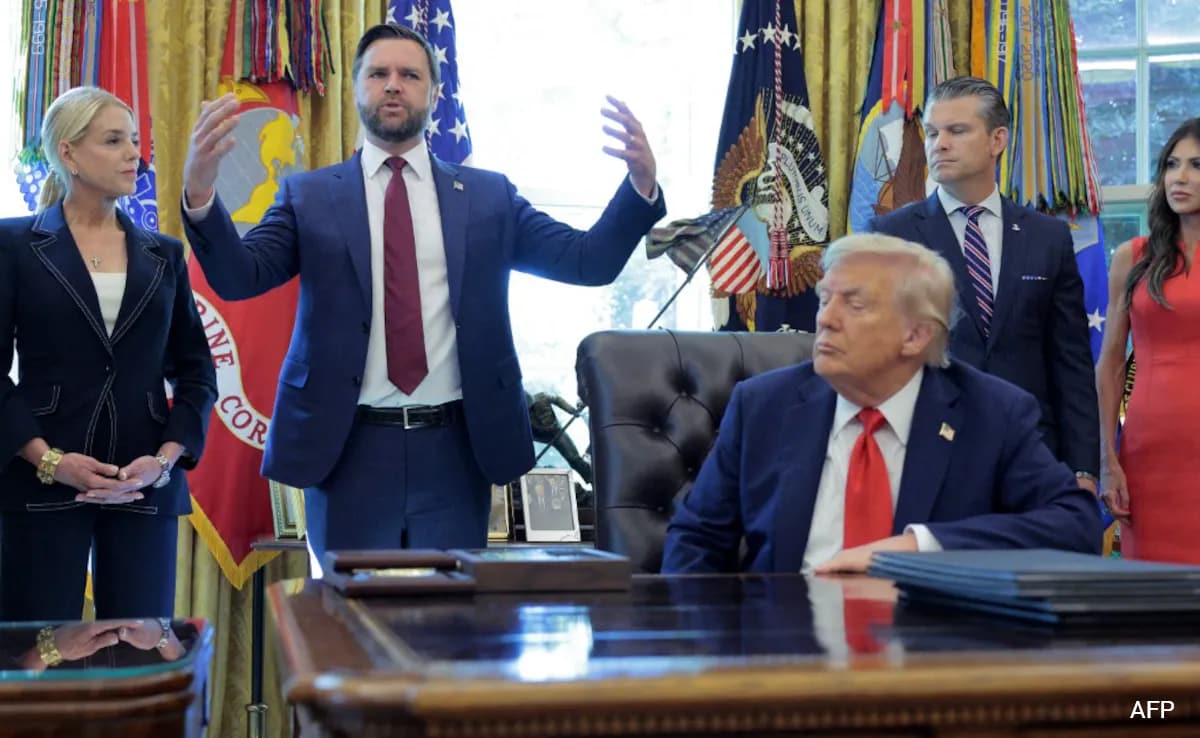
The conflict with Iran is being sold to the American public as a masterclass in modern warfare, but behind the heavy curtains of the West Wing, the facade is beginning to crack. While Defense Secretary Pete Hegseth projects an image of overwhelming dominance, Vice President JD Vance has begun a quiet, persistent campaign to challenge the Pentagon's math. At the heart of the friction is a terrifyingly simple question: Is the United States actually running out of the very weapons it needs to deter a much larger conflict with China?
Vance’s skepticism isn't just a policy disagreement. It is a fundamental rift over the reality of American power in 2026. While Hegseth briefs President Trump on "catastrophic" damage to Iranian assets, Vance is reportedly circulating internal memos that tell a different story—one of depleted Tomahawk stocks, exhausted interceptor batteries, and an industrial base that cannot keep pace with the current rate of fire.
The Pentagon's Morning Show Strategy
Pete Hegseth has transformed the Defense Department's communications into a high-production media blitz. His 8:00 AM briefings are timed specifically for the President’s television viewing habits, emphasizing "warrior ethos" and total victory. To the public, the war is a series of surgical strikes and unmanned triumphs. Hegseth and General Dan Caine, Chairman of the Joint Chiefs, have consistently maintained that U.S. stockpiles remain "robust" and "sufficient."
However, this optimism appears increasingly untethered from the logistics on the ground. Reports indicate the U.S. fired over 850 Tomahawk cruise missiles in the first four weeks of the campaign alone. For context, that is a significant portion of the entire national inventory, and replacing those missiles is not a matter of weeks, but years. The "victory" being championed in the briefing room may be creating a strategic vacuum elsewhere in the world.
Vance and the Ledger of Scarcity
JD Vance has positioned himself as the administration's "realist-in-chief." Having led failed peace talks in Islamabad, Vance is acutely aware of the gap between military pressure and diplomatic results. His concern isn't rooted in pacifism; it’s rooted in math.
Advisors close to the Vice President suggest he is worried about "strategic overextension." If the U.S. empties its magazines to achieve a tactical victory in the Persian Gulf, it leaves the back door wide open in the Pacific. Vance has raised specific alarms regarding:
- Precision Munitions: The rapid depletion of long-range missiles required for any potential defense of Taiwan.
- Logistical Delays: New warnings sent to allies like Japan and various European nations that their weapons orders will be delayed because the U.S. is diverting production to its own immediate needs.
- Intelligence Discrepancies: Internal assessments that suggest Iran has retained far more of its missile and naval capability than the Pentagon publicly admits.
Vance is walking a political tightrope. He has been careful not to publicly accuse Hegseth of lying, instead framing his interventions as "asking tough questions." But in the high-stakes environment of the Trump White House, a question about the accuracy of a Secretary’s report is a direct challenge to their authority.
The China Shadow
The most overlooked factor in the Vance-Hegseth tension is the shadow of Beijing. For the Vice President’s wing of the party, every missile dropped on a base in Isfahan is a missile that won’t be available to stop a blockade in the South China Sea. This is the "Why" behind Vance's persistence. He views the Iran conflict not as a standalone victory, but as a potential trap that bleeds American strength before the real fight begins.
Industry analysts have noted that the U.S. defense industrial base is currently operating at maximum capacity, yet it still struggles to replace advanced electronics and propulsion systems at wartime speeds. If Vance is right, the "unlimited" stockpiles the President speaks of are a dangerous myth.
A Ceasefire Built on Sand
The current two-week ceasefire, announced after Trump threatened "unprecedented" destruction, is a fragile breathing space. Hegseth views this as a pause before a final, decisive blow. Vance views it as an exit ramp. The Vice President knows that the longer the war drags on, the more the ledger tilts against American readiness.
The tension within the administration is no longer just about strategy; it is about who gets to define reality for the Commander-in-Chief. If the Pentagon is indeed polishing the numbers to suit a narrative of easy victory, the eventual bill for that deception will be paid in more than just tax dollars. It will be paid in the sudden realization that the "arsenal of democracy" has run dry.
The next few weeks will determine if Vance can steer the administration toward a permanent settlement or if the momentum of the "warrior ethos" will push the U.S. into a prolonged regional quagmire that the military's warehouses simply cannot support.
Watch the delivery schedules for the Pacific. If those missiles don't start shipping to Tokyo soon, we’ll know exactly which side of the internal war is winning.