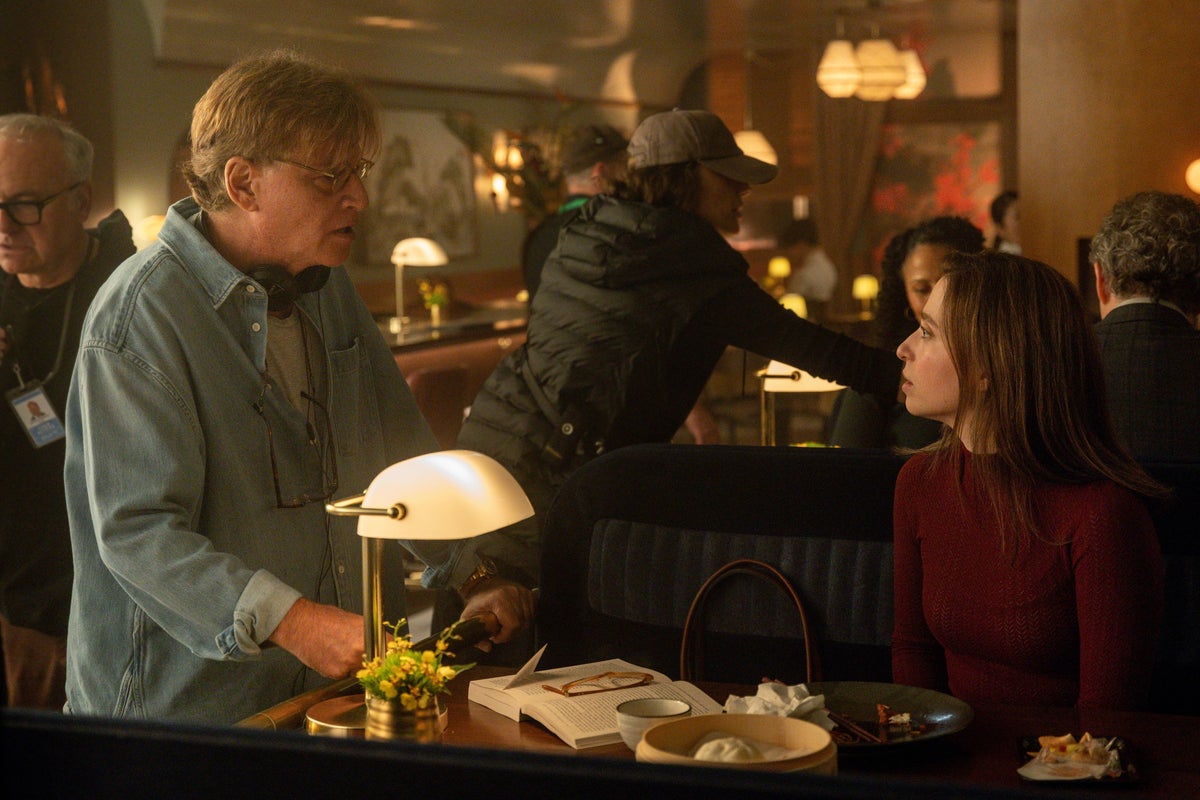
Hollywood loves a comeback story, but only if the person at the center looks like Robert Downey Jr. or Ben Affleck. For women in the director’s chair or the lead producer’s office, the margin for error isn't just slim. It’s nonexistent. You see it every time a female-led blockbuster doesn't break box office records in its first forty-eight hours. The industry treats these projects like a referendum on the entire gender. If a man directs a $200 million flop, he’s "ambitious" and gets another shot three years later. If a woman does it, she’s "difficult" or "unreliable," and the money dries up for everyone who looks like her.
We’re told the industry has changed. We point to Greta Gerwig’s Barbie or Emerald Fennell’s rise as proof that the glass ceiling is shattered. But that’s a convenient lie that ignores the systemic "one-strike" rule. The reality of Hollywood in 2026 is that women aren't allowed to take the kind of messy, expensive risks that define cinematic history. We’re stuck in a cycle of perfectionism where a single mistake results in professional exile. For a closer look into this area, we suggest: this related article.
The Glass Cliff is Real and Lethal
The "glass cliff" isn’t a new concept, but in the film industry, it’s a standard operating procedure. This happens when women are finally handed the keys to a massive franchise only when that franchise is already showing signs of fatigue or structural rot. Think about the high-profile "failures" of the last few years. Often, these women were hired to fix a mess they didn't create.
When the movie underperforms, the post-mortem never blames the tired IP or the bloated marketing budget. It blames the female lead or the female director. It’s a rigged game. Data from the Annenberg Inclusion Initiative shows that while the number of women directing top-grossing films has fluctuated, the long-term career sustainability for those women remains lower than their male peers. A man can have three consecutive duds and still find financing based on "potential." Women are judged strictly on their last weekend's receipts. To get more context on this issue, detailed analysis is available at Rolling Stone.
This creates a culture of playing it safe. If you know that one flop will end your career, you aren't going to push boundaries. You aren't going to try that weird, experimental camera angle or demand a script rewrite that challenges the status quo. You’re going to deliver exactly what the studio wants so you can live to work another day. That’s how we get stagnant storytelling.
Why We Forgive Men and Forget Women
Look at the career arcs of directors like M. Night Shyamalan or Ridley Scott. Both have made incredible films, but they’ve also had massive, high-budget disasters. They were allowed to fail, learn, and return. That’s how it should work. Failure is part of the creative process. It’s how artists grow.
Now, try to find the female equivalent. Where is the woman who was given $150 million, crashed it into a wall, and then got another $150 million to try again? She doesn't exist. Instead, we see talented directors like Patty Jenkins or Catherine Hardwicke hit massive heights only to face inexplicable hurdles or "creative differences" the moment things get complicated.
This double standard is rooted in how "risk" is perceived by the people holding the checkbooks. In most boardrooms, a man with a vision is a visionary. A woman with a vision is a gamble. When a gamble doesn't pay off, you stop gambling. When a visionary fails, you wait for his next moment of genius. This fundamental bias keeps women from reaching the "A-list" longevity that allows for true creative freedom.
The Budget Gap and the Mid-Budget Death
One of the biggest issues is the disappearance of the mid-budget film. This used to be the training ground for directors. It’s where you learned to manage a set and tell a story without the crushing weight of a $200 million price tag. As the industry shifted toward "megapix" and "indies," the middle ground evaporated.
Women are frequently pushed into the indie space where budgets are tiny. If they succeed there, they’re expected to jump immediately to a $100 million Marvel or DC project. There’s no transition. It’s like asking someone who just learned to drive a go-kart to pilot a Boeing 747. When they struggle with the logistics of a massive crew and heavy VFX, the industry says, "See? They can't handle the big stuff."
It’s a setup. By removing the $30 million to $60 million "prestige" film, Hollywood removed the safety net for women to build their technical muscles. Men, meanwhile, are still frequently plucked from the Sundance crowd and handed the keys to the kingdom based on a "cool" short film or a single gritty drama.
The Myth of the Difficult Woman
We need to talk about the "difficult" label. It’s the ultimate weapon used to suppress women who take risks. Taking a risk often means pushing back against a studio executive or demanding more time for a crucial scene. When a male director does this, he’s "exacting" or "uncompromising." He’s a "perfectionist" in the vein of Kubrick or Fincher.
When a woman does it, she’s "unprofessional" or "hard to work with." These labels stick. They circulate in the trades and among talent agents. Once a woman is branded as difficult, her ability to take risks vanishes. She has to spend every moment on set being twice as likable and twice as prepared just to be seen as competent. That emotional labor is exhausting. It takes away from the creative energy needed to make a great film.
Moving Past the Performative Diversity
Studios love to brag about their diversity initiatives. They release infographics and hire consultants. But true progress isn't about hiring one woman to direct a superhero movie once every four years. It’s about changing the criteria for success and failure.
If Hollywood actually wanted women to take risks, they’d look at the data. Films with female protagonists or female directors often have better ROI (Return on Investment) because they are frequently made for less money and tap into an underserved audience. Yet, the industry remains obsessed with the young male demographic, even though women buy half the movie tickets.
We need to stop treating every female-led project as a test for the entire gender. If The Marvels underperforms, it’s not because "people are tired of women superheroes." It’s because the movie had specific flaws, just like Ant-Man and the Wasp: Quantumania had flaws. But notice how the conversation around those two films differed. One was a "sign of the times" for women; the other was just a "miss" for Marvel.
How to Actually Fix the System
The industry won't change because people suddenly decide to be fair. It’ll change when the financial incentives shift. We’re already seeing some of this with the rise of production companies led by women like Reese Witherspoon (Hello Sunshine) and Margot Robbie (LuckyChap). They aren't waiting for permission. They’re raising their own capital and hiring their own teams.
But that’s not enough. The major studios still control the global distribution pipelines. If you want to see real risk-taking, you have to support it at the source.
- Stop the "One and Done" Culture: Support female directors even when their first big-budget project isn't a masterpiece. Look at the potential, not just the box office.
- Invest in Mid-Budget Genres: We need more romantic comedies, thrillers, and dramas that aren't tied to a comic book. These are the spaces where women have historically excelled and taken creative risks.
- Normalize Failure: Start calling out the double standard in trade publications and social media. When a male director flops, ask why he’s getting his next job so quickly. When a woman flops, demand she gets the same grace.
- Diversify the Greenlight Committees: The people who decide which movies get made are still overwhelmingly male and white. Until the boardrooms change, the definition of a "safe bet" won't change.
Hollywood loves to act like it’s the most progressive place on earth. Honestly, it’s one of the most conservative. It’s a town built on fear and old-school networks. If we want better movies, we have to let women be as messy, as experimental, and as "failed" as the men who have dominated the screen for a century. The next great cinematic masterpiece is probably sitting in the head of a woman who is currently too afraid to pitch it because she knows she only gets one shot. That’s the real tragedy of the modern film industry.
Go see the weird films. Buy tickets for the mid-budget dramas directed by women. Use your spending power to show the studios that "risk" isn't a dirty word when it’s attached to a woman’s name. Stop waiting for the critics to tell you something is a "must-see" and start seeking out the voices that the system is trying to silence.