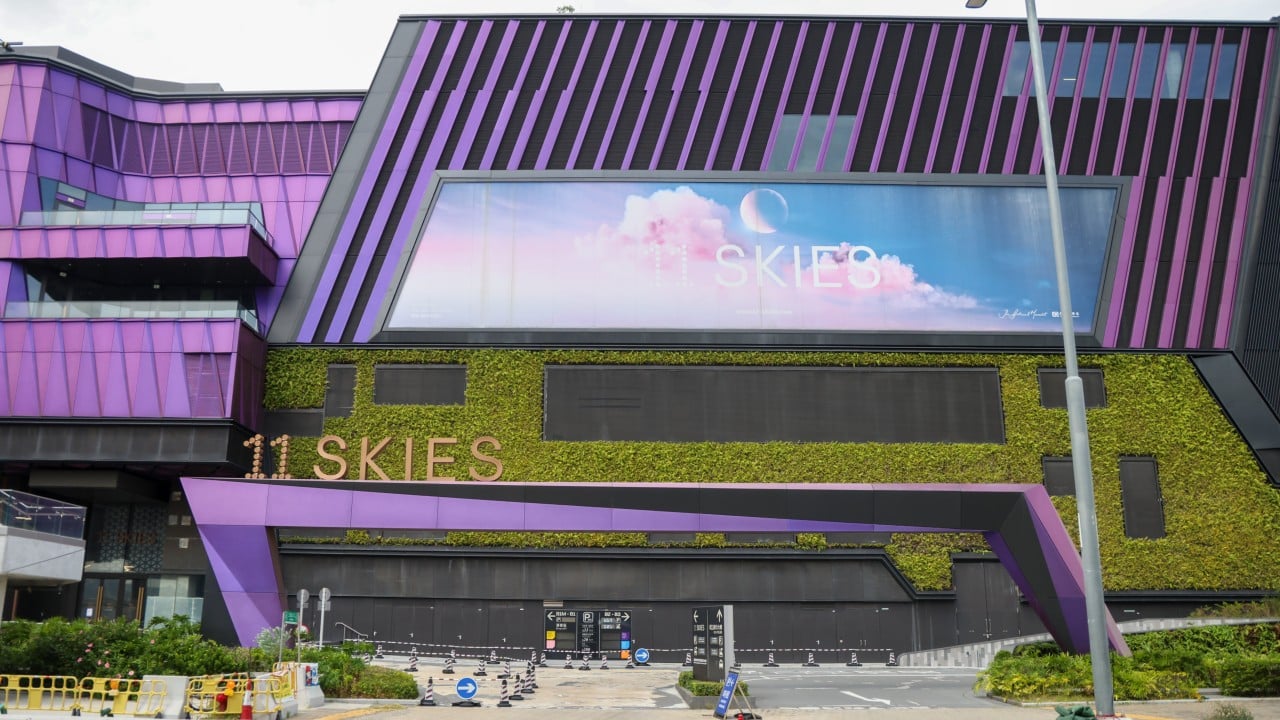
The Hong Kong Airport Authority is betting billions on a pivot. 11 Skies, the colossal commercial development sitting adjacent to Hong Kong International Airport within the SKYCITY hub, is undergoing a calculated metamorphosis. Originally conceived as a standard mega-mall targeting regional shoppers and transient foot traffic, the project is now pivoting toward high-end medical tourism, wealth management, and ultra-luxury experiential retail. It is an aggressive attempt to capture high-net-worth individuals before they even clear immigration.
Yet, building glass towers in an economic crossfire is a high-stakes gamble. The retail property market across the territory faces structural headwinds, changing consumer habits, and fierce regional competition from mainland hubs like Shenzhen and Hainan. To understand why the Airport Authority is forcing this strategic realignment, one must examine the shifting economics of transit retail and the desperate need to extract maximum yield from every square foot of reclaimed land on the Chek Lap Kok peninsula. Meanwhile, you can find similar events here: Stop Blaming The Pilot With The Axe Because Aviation Security Is Built On Theater.
The Transit Retail Playbook Needs a Rewrite
For decades, the formula for airport-adjacent commercial real estate was simple. Build massive floor plates, load them with duty-free luxury boutiques, mid-tier fashion chains, and food courts, and rely on an endless conveyor belt of tourists catching connecting flights or crossing the border via the Hong Kong-Zhuhai-Macao Bridge. That formula is broken.
Regional travelers have evolved. A traveler landing in Hong Kong today is vastly different from the visitor of a decade ago. Mainland Chinese consumers, long the primary financial engine of Hong Kong retail, have alternative domestic options. Hainan Island offers sweeping duty-free shopping privileges without the hassle of crossing international borders. E-commerce platforms deliver luxury goods directly to doorsteps in Shanghai and Beijing with frictionless efficiency. To understand the full picture, we recommend the detailed report by Lonely Planet.
The Airport Authority recognized that traditional retail leasing would not sustain a multi-billion-dollar asset. Enter the high-end pivot. By integrating wellness tourism, private wealth management offices, and bespoke entertainment into 11 Skies, the development aims to transition from a place where people buy souvenirs while waiting for a flight into a destination where wealthy travelers and regional elites intentionally fly in for specialized services.
Medical Tourism and Wealth Management as Anchors
The core of the new strategy relies on sectors that cannot be easily replicated by an app or a duty-free shop in downtown Shenzhen. Advanced medical services, preventative healthcare diagnostics, and specialized clinics form the backbone of this transformation.
High-net-worth individuals across Asia increasingly prioritize longevity, private healthcare access, and wealth structuring in a secure, common-law jurisdiction. Hong Kong retains a formidable reputation for medical expertise and financial compliance, despite recent geopolitical shifts. By carving out massive floor space for elite medical and wellness operators, 11 Skies is positioning itself as a medical concierge hub.
Consider the logistical brilliance of the location. A billionaire from Shenzhen or Guangzhou can fly into Hong Kong International Airport, take a covered skybridge directly to 11 Skies, undergo a comprehensive executive health screening, consult with wealth advisors, attend a private art exhibition, and fly home, all without ever stepping foot in the congested urban core of Central
The 11 Skies Miscalculation Why Hong Kong Airport is Reinventing Its Megaproject
travel, business
Mega-developments rarely fail because of a lack of ambition. They usually collapse under the weight of their own assumptions. When the Airport Authority Hong Kong originally conceived 11 Skies, the multibillion-dollar commercial complex situated next to the Hong Kong International Airport, the blueprint belonged to a different economic era. It was designed as a massive retail and entertainment destination meant to capture arriving passengers, mainland day-trippers, and transit travelers before they even cleared immigration.
Then reality intervened. Consumer habits shifted. Cross-border travel dynamics transformed permanently. The traditional duty-free shopping model faced structural headwinds from changing mainland Chinese spending habits and tighter domestic retail policies. The original vision of a sprawling mega-mall backed by standard entertainment concepts stopped making financial sense.
Now, the authority is executing a quiet pivot. Instead of positioning the complex as just another massive shopping center attached to an airport hub, strategists are attempting to reshape 11 Skies into a high-end tourism landmark. This means shifting the focus from high-volume retail transactions to experiential tourism, wellness, medical tourism, and specialized entertainment designed to extract higher yields from a more selective visitor base.
The Genesis of the Pivot
Understanding why this redirection is happening requires looking closely at the shifting profile of the modern traveler moving through the Greater Bay Area. Pre-pandemic projections assumed a continuous, predictable stream of high-spending tourists eager to purchase luxury goods immediately upon landing. That pipeline has dried up or, more accurately, evolved into something much more discerning.
Tourists today spend differently. They prioritize experiences, wellness, and unique cultural interactions over traditional shopping sprees. At the same time, regional competition has intensified dramatically. Cities across Southern China have developed their own world-class entertainment and commercial zones, reducing the unique pull of a standard Hong Kong retail destination.
Faced with these pressures, continuing down the original commercial path would have resulted in an oversized white elephant. The Airport Authority recognized that survival required turning 11 Skies into a distinct destination that commands a dedicated trip rather than relying entirely on captive airport foot traffic.
Re-Engineering the Blueprint
The restructuring of 11 Skies relies on several key pillars designed to capture high-value market segments. Rather than focusing solely on traditional storefronts, the project leans heavily into wellness tourism and advanced healthcare services. This is a deliberate strategy aimed at capturing affluent mainland consumers who travel abroad specifically for specialized medical checks, anti-aging therapies, and aesthetic treatments.
In addition to wellness, the entertainment strategy has been rewritten. Instead of generic attractions, the complex is anchoring its draw on immersive, technology-driven experiences that cannot be replicated online or easily copied by competing regional developers.
The financial mechanics of this pivot are complex. Shifting from high-volume retail leasing to specialized wellness and experiential venues requires longer lead times and deeper partnership agreements with major operators who manage risk differently than traditional department stores. Landlords can no longer rely on simple square-foot rental metrics. They must participate in the operational ecosystem to ensure these high-end tourism anchors actually draw the projected foot traffic.
Logistics and Regional Realities
Yet, building a high-end tourism landmark adjacent to one of the world's busiest cargo and passenger aviation hubs comes with structural contradictions. An airport environment is inherently transactional, fast-paced, and transient. Visitors are usually trying to catch a flight, clear customs, or exit toward the urban center as quickly as possible.
Convincing travelers to linger for days, or enticing urban residents to travel out to the airport island for a medical procedure or a leisure weekend, requires overcoming significant psychological and logistical barriers. The infrastructure connecting the complex to the rest of the city must be completely frictionless. While the ongoing expansion of the SkyPier terminal and automated people movers helps, the psychological barrier of traveling to the airport perimeter for leisure remains a hurdle.
Furthermore, competition for high-end medical and wellness tourists is fierce across the region. Singapore, Bangkok, and mainland hubs like Hainan have invested heavily in building robust health tourism infrastructure over the past decade. 11 Skies cannot simply rely on the Hong Kong brand name to attract premium clientele; the operational execution must match or exceed established regional competitors.
The Broader Economic Gamble
The gamble behind this transformation extends far beyond a single real estate asset. It serves as a test case for Hong Kong's broader economic transition. For decades, the local economy relied heavily on a predictable formula of property development, finance, and traditional retail. As those traditional drivers face structural maturation, the city must find new ways to generate high-value economic activity.
If the revamped 11 Skies successfully captures the high-end tourism and wellness market, it offers a template for how large-scale infrastructure projects can adapt to sudden macroeconomic shifts without requiring a total write-off of sunk capital. If it stumbles, it will stand as a cautionary tale about the limits of retrofitting megaprojects designed for a bygone era.
The physical construction is largely complete, but the real test is only beginning. The success of this multi-billion-dollar bet will not be measured by the number of square feet leased, but by whether it can fundamentally alter why people choose to spend their time and money at the edge of the Pearl River Delta.