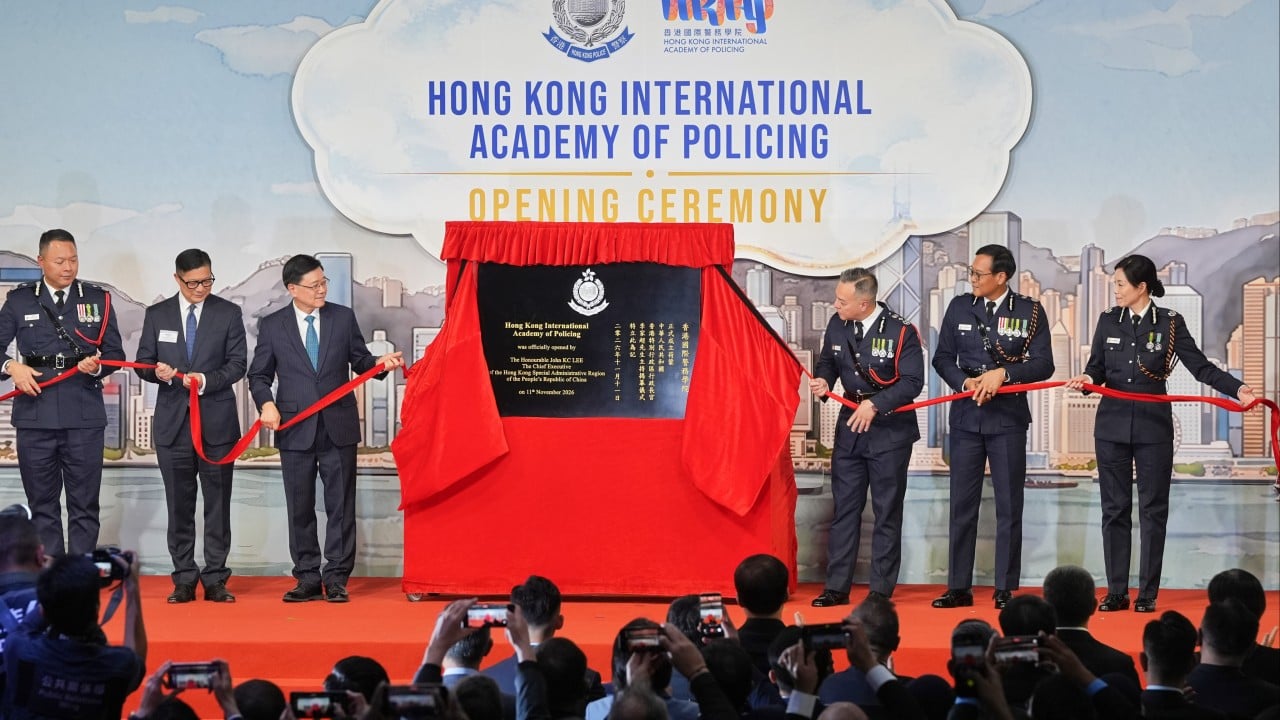
Most people outside law enforcement policy circles missed what Hong Kong just put on the table. While Western headlines focus on domestic politics, the city is quietly positioning itself as an international hub for police training—and it wants to run 1,000 overseas and local officers through a brand-new academy every single year.
That number isn't arbitrary. It's a calculated bid to turn Hong Kong's policing infrastructure into a regional diplomatic export.
If you've followed international security cooperation over the last decade, you know training programs aren't just about teaching riot tactics or cyber forensics. They're about relationships, technical standards, and soft power. When officers from Southeast Asia, the Middle East, or Belt and Road partner nations spend weeks learning investigative procedures in Hong Kong, they take those operational habits home with them.
What the New Hong Kong Police Academy Plan Actually Entails
The Hong Kong Police Force (HKPF) has long operated its existing Police College in Wong Chuk Hang, which handles standard recruit training, detective courses, and command development. But the push for a dedicated international-facing academy—designed to train roughly 1,000 personnel annually—marks a major shift in scale and ambition.
Here's the core of what's happening. Hong Kong officials want to formalize and expand exchanges that previously happened on an ad-hoc basis. Instead of hosting occasional delegations or sending small teams abroad, the city is building permanent capacity to bring foreign law enforcement officers in for structured programs.
Why now? Two reasons stand out immediately.
First, cross-border crime has changed completely. Financial fraud, cryptocurrency laundering, telecom scams, and cyberattacks don't respect municipal boundaries. A scam syndicate operating out of a compound in Southeast Asia might launder money through shell companies in three jurisdictions before cashing out. Police forces that don't share investigative protocols—or even basic contact networks—end up chasing ghosts while suspects move funds in seconds.
Second, Hong Kong needs to reassert its international relevance. For decades, the city marketed itself as Asia's financial super-connector. Expanding that brand into law enforcement and security training fits directly into Beijing's broader vision for Hong Kong as an international exchange hub.
Why International Police Training Matters More Than You Think
People often assume police academies just teach firearms handling, physical fitness, and local criminal codes. That's outdated. Modern international policing is mostly about interoperability—getting two agencies from different legal systems to work together without tripping over bureaucracy.
Think about what happens during a real cross-border investigation.
Suppose an investigator in Bangkok needs banking records or digital evidence tied to a suspect passing through Hong Kong. If that investigator only has an official diplomatic channel to rely on, the request can sit in an inbox for months. By the time a mutual legal assistance treaty (MLAT) request gets processed, the trail is cold.
Now imagine that same investigator spent six weeks in a Hong Kong training cohort alongside HKPF cybercrime specialists. They know each other's first names. They understand what specific documentation the other side needs to act fast. Formal channels still apply for courtroom evidence, obviously, but informal intelligence sharing speeds up the front end of an investigation dramatically.
That's the real currency of international police academies.
The Core Focus Areas
Based on the HKPF's operational strengths and recent public security priorities in the region, training programs at this scale naturally center on four practical pillars:
- Cybercrime and financial investigation: Hong Kong deals with massive volumes of cross-border financial transactions, which means its Commercial Crime Bureau and Cyber Security and Technology Crime Bureau handle sophisticated fraud schemes daily. Sharing those analytical frameworks is a major draw for developing police forces.
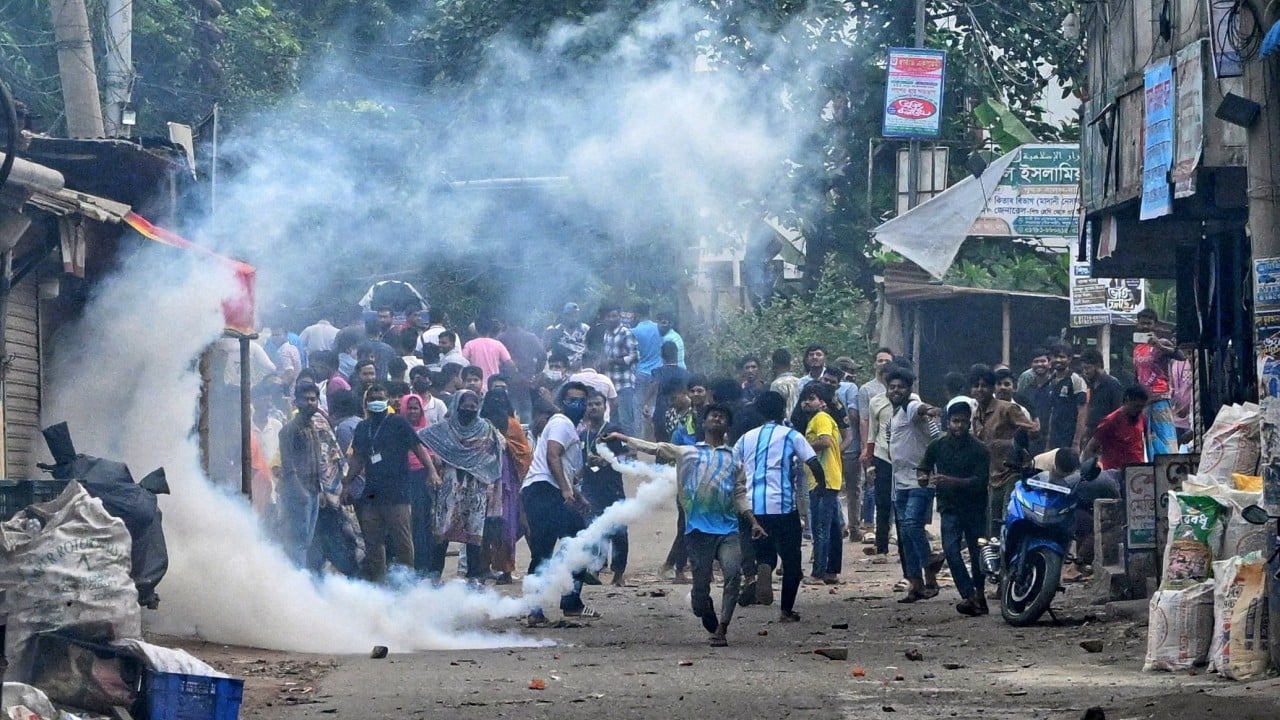
- Counter-terrorism and public order management: The HKPF has extensive, heavily scrutinized experience in crowd management, tactical response, and critical infrastructure protection. Many regional forces look at Hong Kong's urban policing model specifically because managing high-density environments is notoriously difficult.
- Forensic science and technical policing: Crime scene reconstruction, digital forensics, and ballistic analysis require expensive lab setups and strict chain-of-custody discipline. Smaller jurisdictions often lack the budget to build these training pipelines from scratch.
- Command and leadership development: Mid-level and senior officers need training in crisis coordination, inter-agency command, and resource allocation during major emergencies.
How Hong Kong Compares to Other Global Police Training Hubs
Hong Kong isn't inventing this playbook. It's entering an arena where major powers have operated for decades—and where geopolitical competition is heating up fast.
If you look at how international law enforcement training works globally, a few established models dominate:
The United States runs the International Law Enforcement Academies (ILEA) program through the State Department, with regional facilities in Bangkok, Budapest, Gaborone, Roswell, and San Salvador. ILEA has trained tens of thousands of officers worldwide, focusing heavily on rule-of-law standards, anti-corruption, and transnational crime.
The European Union operates CEPOL (the European Union Agency for Law Enforcement Training), which coordinates cross-border training across member states and partner countries, emphasizing human rights compliance, data protection, and joint investigation teams.
Interpol runs its own capacity-building programs out of its Global Complex for Innovation in Singapore, zeroing in on cybercrime, border security, and database integration.
And mainland China has rapidly expanded its own foreign police training programs, hosting thousands of officers from Africa, the Pacific Islands, Central Asia, and Southeast Asia at institutions like the People's Public Security University of China.
Hong Kong occupies an interesting middle ground here.
Unlike mainland Chinese academies, Hong Kong operates under a common law legal system—a legacy of its British history that remains intact under the "One Country, Two Systems" framework. For police forces from Commonwealth countries or jurisdictions with common law roots (like Malaysia, Singapore, or several African nations), Hong Kong's rules of evidence, courtroom testimony standards, and procedural frameworks feel immediately familiar.
At the same time, Hong Kong is deeply integrated with mainland Chinese security agencies and has direct access to regional networks across Asia. That dual fluency—understanding both Western-style common law procedures and mainland Chinese operational models—gives Hong Kong a niche no other training hub can easily replicate.
The Geopolitical Reality Nobody Should Ignore
Let's be honest about the elephant in the room. International police cooperation isn't purely technical, and pretending otherwise misses half the story.
Since 2019 and the implementation of the National Security Law in 2020, Western governments have taken a sharply critical view of Hong Kong's policing apparatus. The United States imposed sanctions on several senior HKPF officials, and several Western countries suspended extradition treaties and paused formal police exchange programs with the city.
Prior to 2019, it was completely routine for HKPF officers to train at the FBI National Academy in Quantico or the UK's College of Policing at Bramshill, and vice versa. Those traditional Western pipelines largely froze.
So when Hong Kong announces plans to train 1,000 officers a year at a new academy, you have to read it in context. This isn't about reviving old exchanges with London or Washington. It's a strategic pivot toward the Global South, ASEAN neighbors, the Middle East, and countries participating in China's Belt and Road Initiative.
For many governments in Asia, Africa, and the Middle East, Western diplomatic friction with Hong Kong isn't a dealbreaker. What they care about is practical capability. They see a city with one of the lowest violent crime rates in the world, efficient emergency response systems, and deep experience handling complex financial crimes. If Hong Kong offers funded or low-cost training slots for 1,000 officers annually, plenty of interior ministries will gladly sign up.
What Critics and Observers Are Watching Closely
Any major expansion of security cooperation brings legitimate questions, and serious analysts point out several tensions worth watching as this academy takes shape.
1. Standards and oversight
International police training programs live or die by their professional reputation. Programs like ILEA and CEPOL attach strict vetting requirements—such as human rights vetting under the U.S. Leahy Law—to ensure partner units receiving training aren't implicated in systemic abuses. Observers will be watching to see what vetting criteria, if any, Hong Kong applies to incoming foreign cohorts, and how the curriculum balances operational efficiency with civil liberties and due process.
2. Capacity and instructor strain
Training 1,000 officers a year sounds great in a policy speech, but running quality programs at that volume is tough. Good police instruction requires pulling experienced detectives, tactical commanders, and forensic specialists off active duty to teach. The HKPF, like many police forces globally, has faced recruitment pressures in recent years. Balancing frontline staffing with a major international teaching commitment won't be effortless.
3. Real operational payoff vs. diplomatic symbolism
There's a big difference between a two-week cultural exchange tour with nice banquets and a rigorous technical course that actually changes how a detective handles digital evidence. If the new academy becomes mostly a diplomatic showcase, its long-term influence will fade quickly. If it delivers hard, practical skills that help partner agencies solve real cases, it will build lasting loyalty.
Why This Matters Even If You Don't Work in Security
You don't need a badge to care about how police forces train each other across borders.
If you run a business operating across Asia, rely on international banking networks, or simply care about how regional governance is evolving, these institutional ties matter. Law enforcement standards shape everything from how cross-border fraud gets investigated to how personal data is shared between jurisdictions during criminal inquiries.
More broadly, Hong Kong's 1,000-officer-a-year target shows how cities adapt when old geopolitical alignments shift. When traditional Western partnerships narrowed, Hong Kong didn't retreat inward—it built a new mechanism to project its institutional expertise toward a different set of global partners.
Watch who fills those 1,000 seats over the next few years. The roster of countries sending officers to Hong Kong will tell you more about shifting security alliances in Asia than almost any diplomatic communique ever could.