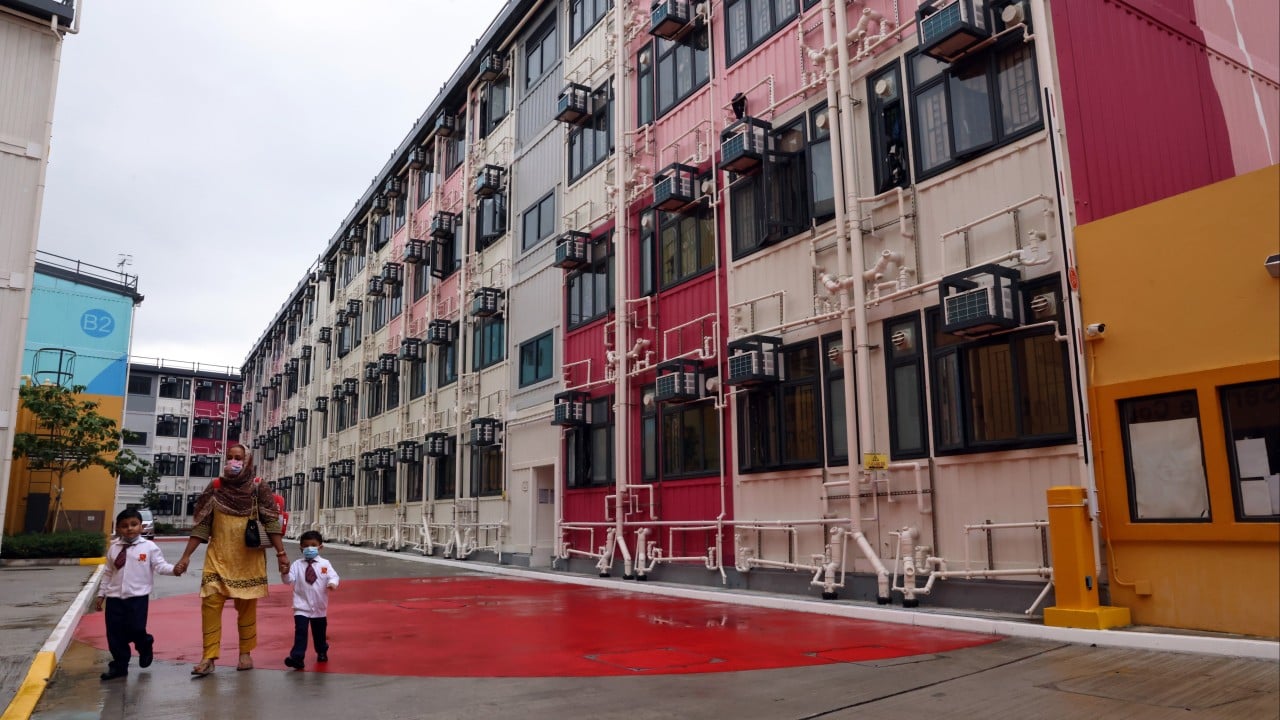
Romanticizing concrete is a luxury reserved for people who already own their mortgage.
Every few months, a predictable op-ed drops in the local press lecturing the public about how "Hongkongers need more than four walls and a roof to make a home." They wax poetic about community soul, biophilic balconies, heritage preservation, and artisanal living spaces. They point at subdivided flats—tong fong—and nano-flats, tut-tutting at the lack of "livability" and "human dignity" in modern architectural planning.
It is comforting nonsense. It allows urban planners, academics, and wealthy commentators to feel morally superior while completely ignoring the brutal economic math choking the city.
When a family of four is crammed into 120 square feet in Sham Shui Po, their primary crisis is not a lack of curated public art or communal rooftop gardens. Their crisis is a structural supply deficit and a land-revenue addiction that makes basic shelter mathematically unattainable. Talking about "making a house a home" before solving the floor-area-to-income ratio is like arguing over the thread count of sheets while the bed is on fire.
The Dangerous Comfort of the "Livability" Trap
The lazy consensus in Hong Kong’s urban planning circles is that developers are greedy, apartments are too small, and the solution is stricter design mandates, wider podiums, and more "soulful" neighborhood zoning.
I have sat in boardrooms with property consultants and municipal policy advisors who spend hours debating the psychological impact of corridor widths and clubhouse amenities, yet treat gross floor area (GFA) costs like an unchangeable law of physics. That obsession with qualitative perfection is precisely what drives quantitative scarcity.
Every time the government or an advocacy group demands higher aesthetic standards, mandatory green features, or minimum unit sizes without unlocking massive tracts of raw land, they inject friction and cost directly into the supply pipeline. You cannot regulate your way into affordability. When you force developers to build "better" homes in a market with an artificial chokehold on buildable land, you do not get better homes for the working class. You get luxury micro-units priced for investment portfolios, while everyone else gets pushed further into illegal squatter structures or infinite waiting lists for public rental housing (PRH).
What the Romanticists Get Wrong About Density
Critics love to blame high-density living for Hong Kong’s social malaise. They equate verticality with alienation.
Look at the actual urban mechanics. High density is Hong Kong’s greatest economic superpower. By concentrating over seven million people onto roughly 25% of its total landmass—leaving the remaining 75% as country parks, reservoirs, and undeveloped terrain—the city achieves transit efficiency, low per-capita carbon footprints, and commercial velocity that sprawling Western metropolises can only dream of.
The problem is not that Hong Kong builds up. The problem is that it stops building out, even by a single percentage point, because of rigid zoning laws, brownfield hoarding, and political paralysis over reclamation and Country Park peripheries.
| The Romantic Consensus | The Economic Reality |
|---|---|
| Homes fail because they lack "soul" and community design. | Homes fail because median housing prices exceed 18x median annual household income. |
| Minimum unit size laws protect buyers from predatory developers. | Minimum unit size laws price single buyers out of ownership entirely, forcing them into unregulated rentals. |
| Heritage and neighborhood character must trump raw square footage. | Preserving low-rise decay in prime urban cores subsidizes nostalgia at the expense of working families. |
| Better public spaces compensate for tiny private apartments. | Public space is an amenity, not a substitute for private square footage where children can do homework. |
Why Minimum Size Mandates Backfire
A few years ago, authorities introduced a minimum flat size requirement of roughly 280 square feet (26 square meters) for private residential land sales. The applause from the "more than four walls" crowd was deafening. Finally, they cheered, the era of the 150-square-foot nano-flat was over.
Let us examine what actually happens when you outlaw the bottom rung of a housing ladder without lowering the price per square foot.
Imagine a scenario where a young nurse earns HK$35,000 a month. Under the old regime, she could scrape together a down payment for a 180-square-foot studio. Was it cramped? Yes. Was it her forever home? No. It was an equity-building stepping stone that shielded her from rent inflation. When you ban that 180-square-foot unit by decree, her salary does not magically rise to afford the new 280-square-foot minimum. Instead, she is permanently locked out of ownership, forced to pay rent to a landlord who bought their properties in 1998.
Developers did not create nano-flats out of sadism. They built them because land premiums were so astronomical that shrinking the unit was the only way to keep the lump-sum ticket price within reach of a local mortgage. Attacking the unit size while leaving the land-cost structure intact is pure economic illiteracy.
The Fiscal Addiction Nobody Wants to Audit
If you want to understand why four walls and a roof cost a fortune in Hong Kong, stop looking at interior design and start looking at the government’s balance sheet.
For decades, Hong Kong maintained some of the lowest corporate and personal income tax rates in the developed world. How did it fund world-class infrastructure, healthcare, and public services? Through land sales, stamp duties, and development premiums. The government holds a near-monopoly on new land supply, releasing it in metered doses that maximize auction revenue.
This created an implicit, unspoken pact:
- The Government got billions in non-tax revenue to keep budgets in surplus.
- Property Tycoons got predictable scarcity and massive margins on controlled supply.
- Existing Homeowners watched their net worth inflate effortlessly, turning apartments into retirement funds.
Everyone won—except the young, the asset-poor, and the immigrant workforce. When commentators write tear-jerking essays about how Hongkongers need "warmth and belonging" in their housing, they are politely averting their eyes from a fiscal model explicitly engineered to make land expensive. You cannot have cheap four walls in a system whose treasury relies on land being treated like bullion.
Dismantling the "People Also Ask" Fallacies
Whenever housing policy enters the public debate, the same predictable questions surface. Most of them are built on flawed premises.
"Why can't Hong Kong just copy Singapore's public housing model?"
Because Hong Kong’s government does not own the land outright in the same frictionless way, nor did it execute aggressive, compulsory land acquisition at agricultural prices in the 1960s and 1970s. Singapore’s Housing & Development Board (HDB) houses roughly 80% of its population because the state stripped away private land speculation early and treats housing as foundational social infrastructure rather than a revenue engine.
In Hong Kong, roughly half the population lives in public housing, creating a brutal binary: either you are poor enough to qualify for heavily subsidized state housing (after waiting five to six years in miserable conditions), or you are thrown into one of the most expensive private markets on earth. There is no middle tier. Copying Singapore now would require dismantling the property-tax-and-land-sale foundation of Hong Kong’s entire financial system—a political impossibility that no administration has the stomach to attempt.
"Aren't vacant luxury flats the real reason people can't afford homes?"
No. This is populist math that collapses under basic scrutiny. Even if you confiscated every vacant luxury unit on the Peak and in Mid-Levels tomorrow, the total inventory would represent a rounding error against a backlog of hundreds of thousands of households. Vacancy taxes make for great headlines, but they do not create net-new floor area for working families in Kwun Tong or Tsuen Wan. Supply deficits cannot be solved by redistributing a tiny fraction of high-end inventory.
"Does urban renewal destroy the soul of old neighborhoods?"
Yes, it often does—and you should accept that trade-off without flinching. Nostalgia does not house people. Keeping dilapidated, walk-up tenement buildings (tong lau) in prime transit hubs because they have charming neon signs and street-level dai pai dongs is an aesthetic indulgence paid for by people stuck in suburban bottlenecks. True urban compassion means bulldozing low-density decay, maximizing plot ratios around MTR stations, and building massive residential towers—even if they look sterile to architecture critics.
What Actually Solves the Crisis (And the Downsides Nobody Admits)
If we strip away the sentimental fluff about "making a home," fixing Hong Kong’s housing crisis requires four ruthless, unglamorous interventions. None of them will win design awards, and all of them carry painful trade-offs.
Flood the Market with Raw Buildable Land
Reclamation projects like Lantau Tomorrow Vision and aggressive rezoning of New Territories brownfield sites must move at wartime speed. You break a scarcity cartel by drowning it in supply.
The Downside: Environmental disruption, massive upfront capital expenditure, and the near-certainty of triggering a painful negative-equity crash for middle-class families who bought at the peak of the market.Decouple Treasury Revenue from Land Premiums
The government must gradually shift away from land-sale dependency by broadening its tax base—introducing a modest Goods and Services Tax (GST) or capital gains mechanisms—so it no longer has a financial incentive to keep land scarce.
The Downside: It destroys Hong Kong’s legendary simple-and-low-tax brand, risking capital flight and corporate pushback in the short term.Standardize and Industrialize Construction
Stop treating every residential tower like a bespoke architectural sculpture. Mandate Modular Integrated Construction (MiC) across both public and private mass-market developments. Pre-fabricate concrete rooms in factories across the border and stack them like shipping containers.
The Downside: Streets will look monotonous. Architectural critics will hate it. Neighborhoods will lose visual charm. People will actually have bedrooms.Separate Shelter Policy from Wealth Creation
Public housing and subsidized homeownership schemes (like HOS) must carry permanent resale restrictions so they remain strictly inside a closed-loop affordability pool, rather than leaking into the speculative private market after a few years.
The Downside: It strips working-class families of the primary wealth-building elevator that built Hong Kong’s previous generation of middle-class prosperity.
Stop Moralizing Architecture
A home is not created by an urban planner’s mood board, a developer’s lifestyle branding, or a journalist’s sentimental essay about community spirit. A home is created when a human being has enough affordable, secure square footage to close a door, sleep in silence, raise a child without tripling up in bunk beds, and keep enough of their paycheck at the end of the month to live a life outside their apartment.
Give Hongkongers four cheap, abundant, structurally sound walls and a roof—and get out of their way. They know how to turn it into a home without your advice.


