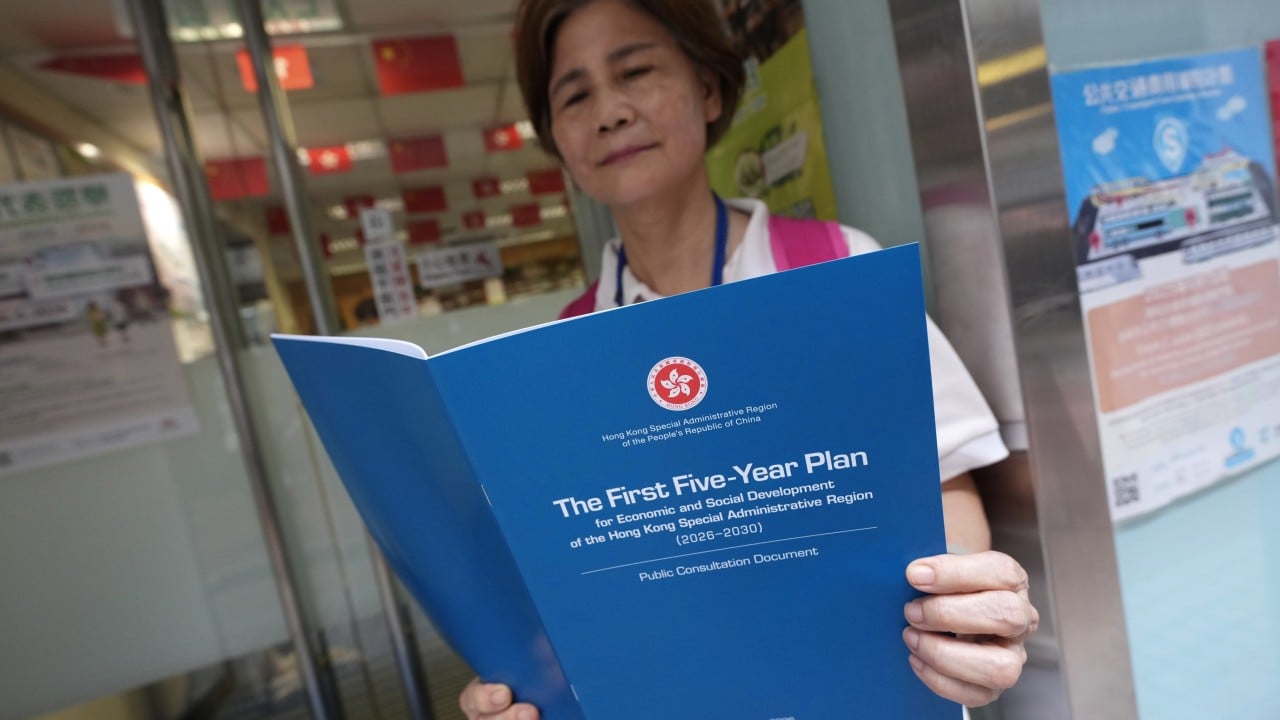
Hong Kong is breaking a decades-old governance tradition. For generations, the city operated under a laissez-faire philosophy that basically boiled down to leaving the market alone and fixing things through annual budget adjustments. That era is over. The launch of the public consultation for Hong Kong's first-ever localized five-year plan signals a monumental pivot toward proactive state steering.
This isn't just about matching Beijing's 15th Five-Year Plan covering 2026 to 2030. It's a fundamental structural rewrite. For years, the lack of an active industrial strategy left the city with severe land shortages for technology, a stagnant innovation ecosystem, and minimal commercialization of local research. If you think this new framework is just a cosmetic exercise to please the central government, you're missing the point. It's the institutional scaffolding Hong Kong desperately needs to survive. Learn more on a connected topic: this related article.
The real test won't be writing the policy document. The test is whether the city can transition from passive observation to aggressive execution without crushing the free-market dynamics that made it a global financial center.
Moving Past Hesitation in the Northern Metropolis
You can't build a technology ecosystem on paper. The Northern Metropolis, envisioned as a massive tech hub and university town right next to Shenzhen, has faced years of skepticism. People wonder if it will turn into another real estate play rather than a genuine industrial engine. Additional reporting by MarketWatch explores similar views on the subject.
To make this plan work, the government needs to stop acting like a slow-moving landlord. We need binding, time-indexed land allocation targets specifically reserved for advanced manufacturing and biotechnology. If the land sits empty or gets swallowed by commercial property developers, the entire tech pillar of the five-year plan collapses.
The strategy must involve immediate zoning fast-tracks. For instance, matching the speed of Shenzhen's hardware iteration requires slashing bureaucratic red tape for building laboratories. The city needs to guarantee that an international robotics or chip-design firm can sign a lease and start operating within months, not years.
Committing to Patient Capital for Local Science
Hong Kong has world-class research universities, but it routinely fails to turn that science into commercial products. Professors publish papers, while mainland or Singaporean companies capture the market value. Why? Because local investors are notoriously short-sighted, preferring real estate flip returns or quick stock market gains over long-term technological development.
The Financial Secretary recently highlighted the need for "patient capital." That means funding that sticks around for five to ten years before expecting a massive payout. The five-year plan must formalize this by utilizing the Hong Kong Investment Corporation to co-invest directly with venture funds in deep-tech sectors.
We need to set concrete, measurable quotas for private-public research funding. If the government doesn't de-risk early-stage clinical trials or hardware prototyping, private money will stay parked in safe, boring assets.
Transforming the Commodity Trading Ecosystem
A major addition to the national policy framework is the explicit mandate for Hong Kong to establish a commodity trading ecosystem. This isn't just a minor expansion. It's a completely new economic frontier for a city that has traditionally focused almost entirely on equities and wealth management.
Building this from scratch requires more than just announcing a new gold vault or an iron ore desk. It requires rewriting local tax laws and clearing house regulations to attract global merchants. The city must quickly introduce specific tax incentives for physical commodity traders, shipping lines, and maritime insurance underwriters to set up regional headquarters here.
This ecosystem must tie directly into high-value-added supply chain services. By acting as the financial and logistical nerve center for bulk goods moving into mainland China, Hong Kong can capture an entirely new stream of transactional revenue that isn't dependent on volatile stock market volumes.
Accelerating the Off-Shore Renminbi Network
Hong Kong is already the dominant global offshore Renminbi business hub, handling the vast majority of international trade settlement in the currency. But dominance breeds complacency. As the mainland pushes for greater internationalization of its currency, Hong Kong cannot simply coast on its current market share.
The five-year plan must forcefully expand the mutual market access schemes. We need to introduce more diverse Renminbi-denominated products, particularly in the fixed-income and green bond markets. This isn't just about volume; it's about depth.
Local financial institutions need to make it incredibly easy for Southeast Asian and Middle Eastern corporate issuers to raise capital in Renminbi right here in Hong Kong. This means working directly with regional central banks to integrate payment systems, making cross-border digital currency transactions instant and cheap.
Forcing a Realistic AI Plus Workforce Transition
Everyone loves talking about artificial intelligence, but few cities have a real plan to deal with the resulting employment displacement. The national "AI Plus" initiative demands that industries upgrade, which means Hong Kong's massive professional services sector—lawyers, accountants, and back-office bank staff—is facing an existential shift.
The local five-year plan needs to move beyond simple training subsidies. The current system of offering small cash rebates for random coding courses doesn't work. Instead, the government needs to partner directly with major employers to create mandatory, sector-specific retraining programs.
If a mid-career accountant can't learn how to operate automated auditing software, they will become structurally unemployed. The plan should link corporate tax breaks directly to verified upskilling milestones within the local workforce. We need to invest heavily in human beings, not just software licenses.
Securing Green Finance and Carbon Trading Standards
The mainland's strict targets for the 2026–2030 period involve cutting carbon dioxide emissions per unit of GDP by 17 percent. This massive energy transition requires trillions of dollars in capital. Hong Kong is positioned to be the green funding pipeline, but the competition is fierce.
To capture this market, the city must establish a unified, internationally recognized carbon listing and trading platform. Right now, green washing is a massive concern for global institutional investors. Hong Kong can solve this by strictly enforcing standardized climate disclosure rules that bridge the gap between Chinese national standards and international frameworks.
We need to see a rapid scaling of green bond issuances for regional infrastructure projects. If a solar farm in Guangdong or a wind project in Indonesia wants to raise money, the regulatory framework in Hong Kong should make it the absolute fastest and most trusted place to issue certified green debt.
Reforming Legal Services for Cross Border Disputes
The city's common law system is its ultimate competitive advantage. It's what keeps global corporations comfortable doing business here. The five-year plan explicitly tasks the city with deepening its status as an international legal and dispute resolution center.
To maximize this, local courts and arbitration bodies must become the default jurisdiction for contracts signed between mainland enterprises and international partners. The government needs to aggressively market this capability across emerging economies, particularly throughout the Middle East and ASEAN regions.
This requires expanding mutual recognition of judgments with the mainland. International businesses need absolute certainty that an arbitration award secured in Hong Kong will be swiftly and transparently enforced across the border in Shenzhen, Shanghai, or Beijing without political interference.
Solving the Structural Talent Retention Deficit
You can build all the tech parks you want, but they mean nothing without world-class talent to fill them. While the Top Talent Pass Scheme successfully attracted tens of thousands of applicants over the last few years, the city has struggled with retention. High housing costs and intense school competition mean many high-caliber professionals treat Hong Kong as a temporary stepping stone.
The five-year plan must bind talent attraction directly to housing and social policy. We need dedicated, subsidized housing developments specifically reserved for scientists, engineers, and researchers working in the Northern Metropolis.
If a top-tier machine learning expert can't find an affordable place to live or a school slot for their child, they will pack up and move to Singapore or Silicon Valley. The plan needs to address these basic lifestyle bottlenecks head-on, treating liveability as a core economic metric.
Integrating Maritime and Aviation Infrastructure
The Greater Bay Area is crowded with ports and airports. Shenzhen, Guangzhou, and Hong Kong are all competing for the exact same cargo and passenger traffic. This fragmentation leads to massive inefficiencies and wasted capital.
The first five-year plan must move past nominal cooperation agreements and drive structural synchronization. We need a unified digital customs clearance system that treats the entire region as a single logistical zone for international transshipments.
Hong Kong International Airport must solidify its role as the premium, high-value cargo hub by co-managing logistics facilities directly inside the mainland border. This allows goods to be security-cleared in Dongguan and loaded directly onto planes in Hong Kong without redundant checks, cutting transit times down to hours.
Establishing Binding Targets for Social Livelihood
Economic growth that doesn't improve daily life is politically unsustainable. For decades, Hong Kong's stellar GDP figures masked deep structural inequalities, particularly in housing. The first five-year plan must completely break from the past by treating public housing construction and healthcare capacity as binding, statutory commitments.
The government needs to set concrete annual targets for reducing the waiting time for public rental flats. We need specific, non-negotiable capacity benchmarks for public hospitals, tracking doctor-to-patient ratios year by year.
By holding bureau secretaries directly accountable for these metrics, the five-year plan turns governance into a transparent, trackable performance review. If a department fails to meet its housing or health targets, there must be clear administrative consequences. That is the difference between a real development plan and an empty public relations campaign.
The public consultation period lasts for two months. Businesses, industry leaders, and residents need to use this window to demand specific, measurable targets rather than settling for vague policy slogans. The blueprint finalized in the third quarter of this year will dictate the economic reality of Hong Kong for the next half-decade.