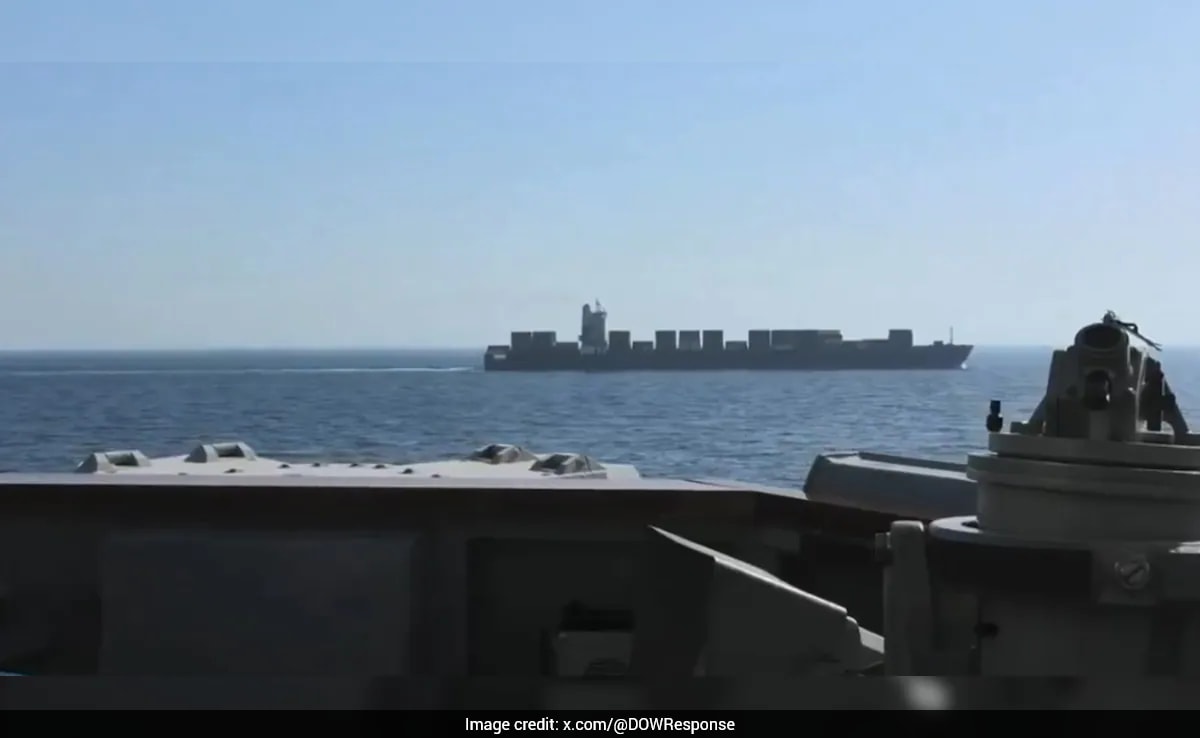
The media is eating out of Tehran’s hand again. The standard narrative is predictable: the United States seizes a tanker carrying sanctioned Iranian crude, and Iran screams "piracy" while claiming a violation of the ceasefire. It’s a script written in the 1980s that everyone is still performing with straight faces.
But if you believe this is a story about international law or maritime security, you’ve already lost the plot.
The seizure of cargo ships near the Strait of Hormuz isn't a disruption of the Iranian agenda. It is the fuel for it. For a regime under crushing economic weight, a captured ship is worth more as a rhetorical weapon than the oil inside the hull is worth in dollars. We are witnessing a calculated exchange of commodities for political legitimacy, and the West is playing its part with embarrassing sincerity.
The Piracy Paradox
Iran’s use of the word "piracy" is a masterpiece of gaslighting. By definition, piracy involves non-state actors attacking ships for private gain. When a sovereign nation-state enforces a judicial warrant or a domestic sanctions law in international waters, it’s a legal grey area—a "grey zone" conflict—but it isn't piracy.
Tehran knows this. They also know that by screaming "piracy," they force the international community to debate the legality of US sanctions rather than the underlying reason for those sanctions. It shifts the focus from their nuclear non-compliance and regional proxy wars to a debate about the freedom of the seas.
The "lazy consensus" says the US is "policing" the waters. The reality? The US is being baited into a PR trap that validates Iran's domestic narrative of "Western bullying."
The Math of Martyrdom
Let’s talk about the money. I have watched analysts pore over the value of a million barrels of light sour crude as if the loss of $80 million is a "blow" to the Islamic Revolutionary Guard Corps (IRGC).
It isn’t.
The IRGC operates a shadow economy. They factor "seizure risk" into their margins the same way a retail giant factors "shrinkage" into theirs. When a ship is seized, the Iranian state media gets weeks of high-octane propaganda material. They use it to:
- Galvanize domestic support against an external enemy.
- Pressure regional neighbors (UAE, Oman) to distance themselves from US maritime security initiatives.
- Test the resolve of the current administration’s "ceasefire" or de-escalation agreements.
If the oil arrives, they get the cash. If the oil is seized, they get the victimhood. In the world of asymmetric warfare, that is a win-win.
The Ceasefire Fallacy
The competitor's headline mentions a "ceasefire violation." This is the most dangerous bit of fiction currently circulating.
There is no formal ceasefire. There are only informal understandings—"gentleman’s agreements" between parties who are neither gentlemen nor in agreement. To claim a seizure violates a ceasefire is to imply that the US has agreed to stop enforcing its own federal laws in exchange for Iranian "restraint."
If such a deal exists, it’s a strategic failure. You cannot have a ceasefire with a ghost. Iran uses its proxies (the Houthis, Hezbollah, various militias in Iraq) to strike Western interests while maintaining "plausible deniability." Yet, the moment the US asserts its legal authority over a physical asset, Iran demands the protection of the very international norms they spend every other day of the year dismantling.
Beyond the Strait
The Strait of Hormuz is the world's most important chokepoint. Approximately 20% of the world’s oil passes through it. The standard take is that Iran wants to "close" the Strait.
Nonsense.
Iran is the last entity on earth that wants the Strait closed. Their entire economy depends on the transit of goods through that narrow neck of water. What they want is selective sovereignty. They want the power to decide who gets a "free pass" and who gets harassed.
When the US seizes a ship, it isn't "securing" the Strait; it is participating in a high-stakes game of chicken where the rules are rewritten every week. The real danger isn't the seizure itself. It’s the normalization of the "seizure-for-seizure" cycle.
Imagine a scenario where the US seizes an Iranian vessel in the Atlantic, and within six hours, Iran seizes a Greek or British tanker in the Gulf as "reciprocity." This isn't law enforcement. It’s state-sponsored hostage-taking of global supply chains. By continuing this tit-for-tat, we aren't stopping Iranian aggression; we are legitimizing their "eye for an eye" maritime doctrine.
The Hidden Beneficiaries
Who actually gains when these ships are grabbed? It isn't the American consumer.
The "dark fleet"—the loosely organized network of aging tankers used to bypass sanctions—thrives on this volatility. Higher risk means higher premiums. The middlemen, the shadow insurers, and the front companies in jurisdictions with no oversight are the ones laughing.
The seizure of a ship is a drop in the bucket of the dark fleet’s operations. For every ship the US captures, ten more slip through. The act of seizure provides a false sense of security to the public while doing almost nothing to stop the flow of sanctioned crude. It’s security theater at sea.
Stop Playing the Game
The US needs to stop treating maritime seizures as isolated legal victories. They are tactical wins that result in strategic losses.
Every time we seize a cargo ship, we give Tehran a megaphone to preach to the Global South about American "hegemony." We provide the justification for their next round of "counter-piracy" (read: kidnapping) operations.
If the goal is to bankrupt the regime, seizures are the least efficient way to do it. You don't stop a shadow economy by grabbing one shadow; you stop it by shining a light on the ports, the banks, and the insurance providers that make the shadow possible.
The current strategy is reactive. It's an impulsive response to a calculated provocation. We are chasing hulls in the water while the IRGC is building a narrative that will outlast any barrel of oil.
The "piracy" outcry isn't a protest. It’s a press release. And as long as we keep providing the content for it, Iran will keep winning the exchange.
Stop looking at the ship. Look at the play.