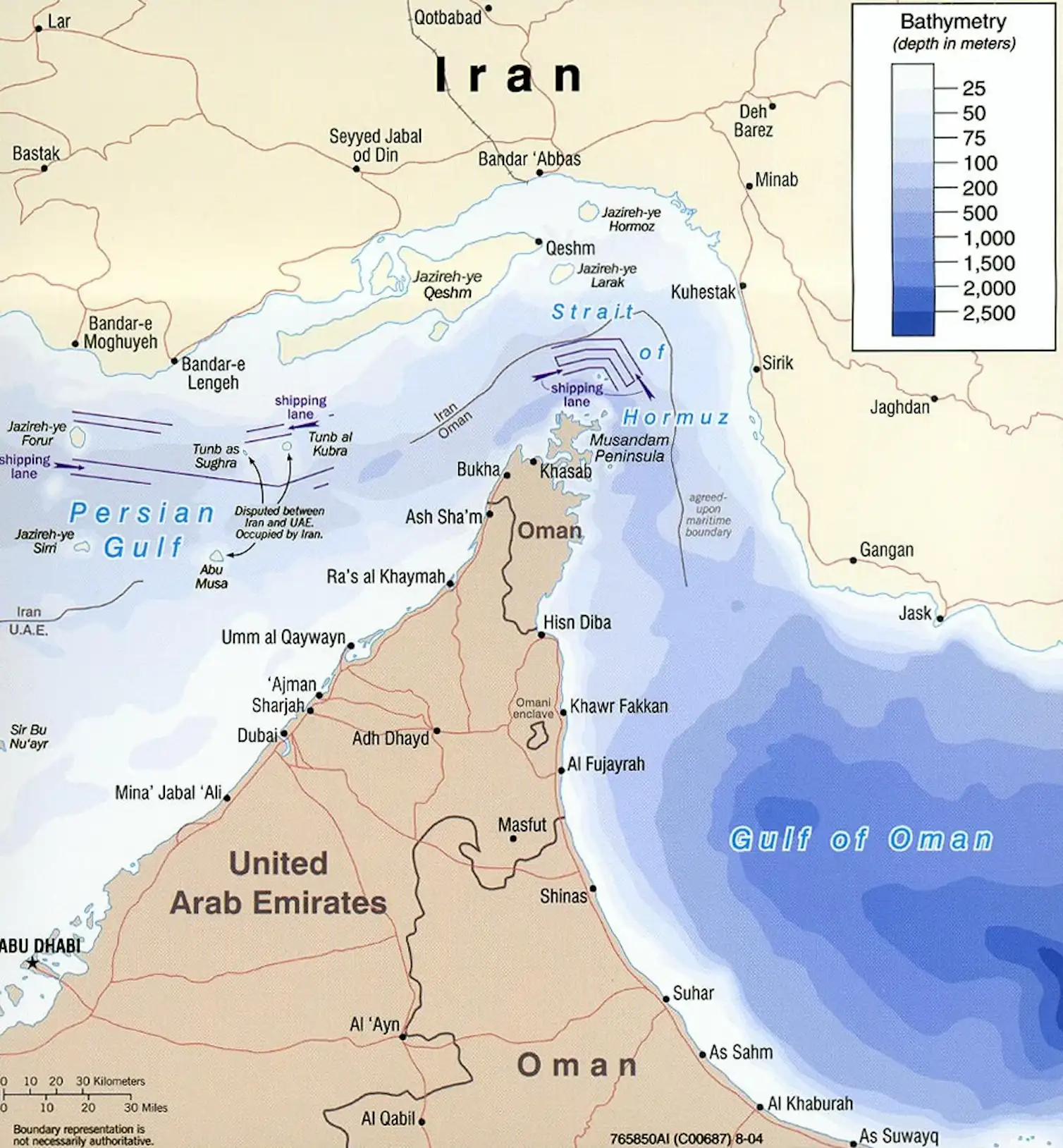
Tracking a Qatari LNG tanker as it nears the Strait of Hormuz isn’t journalism. It’s digital birdwatching for people who don't understand how global energy markets actually function.
Every time a transponder pings near the Musandam Peninsula, the financial press breaks into a predictable cold sweat. They want you to believe the world is one rogue torpedo away from an industrial dark age. They point to the "choke point" as if it’s a fragile glass neck. Learn more on a related topic: this related article.
They are wrong.
The obsession with physical transit through the Strait misses the structural evolution of the energy trade. We aren't living in 1973. The "threat" of a Hormuz closure is the most overpriced risk in the history of commodities. If you’re trading or making corporate policy based on the sight of a single vessel moving through a well-traveled shipping lane, you aren't an insider. You’re a tourist. Further journalism by MarketWatch highlights related perspectives on the subject.
The Myth of the Choke Point
The prevailing narrative suggests that if the Strait closes, the world stops. This logic assumes the global economy is a static machine. It isn’t.
When a Qatari vessel—likely a Q-Flex or Q-Max class carrier—moves through that water, it represents a massive amount of $CH_4$ (Methane). Specifically, these ships carry between 210,000 and 266,000 cubic meters of liquefied natural gas. But here is what the "crisis" reporters won't tell you: the physical cargo is often the least important part of the equation.
Markets have already priced in the "Hormuz Premium." The risk is baked into the insurance contracts, the freight rates, and the long-term Sales and Purchase Agreements (SPAs).
Why the "Shutdown" Scenario is a Paper Tiger
- The Insurance Buffer: No ship moves without P&I (Protection and Indemnity) insurance. If the risk were truly existential, these ships wouldn't even leave the Port of Ras Laffan. The fact that they are sailing proves that the underwriters—who have more skin in the game than any journalist—view the passage as a routine operation.
- The Rational Actor Trap: People love to fear a "madman" scenario where the Strait is mined. Use your head. Qatar’s economy is almost entirely dependent on these exports. Iran, despite the rhetoric, relies on the same waters for its own imports and shadow-fleet exports. Closing the Strait is not a tactical move; it is economic suicide for every player on the shoreline.
- The Buffer Stock Reality: Europe and Asia have spent the last three years building record-level storage. A temporary disruption in the Strait is no longer a death blow; it’s a drawdown on a balance sheet.
The Data You’re Ignoring While Staring at MarineTraffic
While you’re refreshing a map to see if a tanker makes a 45-degree turn, the real shift is happening in contractual flexibility.
In the old world, a tanker leaving Qatar was destined for a specific terminal. If that path was blocked, the gas was "lost." In the modern world, we have "diversion rights" and "portfolio players."
Companies like Shell, TotalEnergies, and QatarEnergy operate fleets as a fluid grid. If a ship can't leave the Gulf, a cargo currently in the Atlantic—originally destined for Brazil—gets rerouted to a terminal in South Korea. The molecules don't care where they come from. The "Hormuz Crisis" is solved by a series of keyboard strokes in London and Singapore, not by naval escorts.
Stop Asking "Is the Strait Open?"
The question is flawed. You should be asking: "What is the cost of the alternative?"
If the Strait of Hormuz were truly the singular point of failure the media claims, the world would have built a permanent workaround by now. We have the East-West Pipeline in Saudi Arabia and various bunkering hubs outside the Gulf. The reason we still use the Strait is simple: It is the cheapest route.
We aren't trapped by geography; we are addicted to the margin.
The Cost of a "Black Swan"
Imagine a scenario where the Strait actually closes for 30 days.
- Day 1-5: Spot prices in JKM (Japan Korea Marker) and TTF (Title Transfer Facility) spike by 40%. Panic buying ensues.
- Day 6-15: The "Floating Storage" currently sitting off the coast of Spain and Singapore begins to unload. This is gas that is already past the "choke point."
- Day 16-30: Demand destruction kicks in. Industrial plants in Germany and China switch to alternative fuels or scale back production.
The result? A bad quarter for manufacturers and a spike in inflation. Not the end of civilization. By the time the Strait reopens, the market is usually oversupplied because everyone over-ordered during the panic.
I’ve seen traders lose tens of millions trying to "front-run" a geopolitical event in the Gulf that never materialized. They followed the ships. They didn't follow the math.
The LNG Industrial Complex
LNG is not oil. You cannot just dump it into a different tank. It requires a massive cryogenic infrastructure.
The Qatari fleet is a specialized tool. These ships are floating pipelines. When you see a Q-Max vessel heading toward the Strait, you aren't seeing a "vulnerable asset." You are seeing a piece of high-leverage infrastructure that is heavily protected by the interests of the United States, China, and every major European power.
Do you really think the global powers would allow the primary energy source for the Chinese manufacturing base and the German heating system to be cut off because of a regional skirmish?
The "Sailing towards Hormuz" headline is a dog whistle for retail investors. It triggers a lizard-brain fear response. It ignores the reality that the U.S. Fifth Fleet is effectively a private security force for these specific molecules.
The Real Risk Nobody Is Talking About
If you want to be worried about something, stop looking at the Strait of Hormuz and start looking at Cyber-Kinetic interference.
A physical blockage of the Strait is loud, messy, and invites an immediate military response. It’s bad for business. However, a sophisticated cyber-attack on the loading software at Ras Laffan or the regasification logic at a terminal in Zeebrugge? That’s quiet. That’s deniable.
The physical ship is a distraction. The data stream controlling the ship is the actual "choke point."
How to Actually Read the Market
If you want to know if there is a real problem in the Middle East, don't look at shipping data. Look at the Credit Default Swaps (CDS) for the regional national oil companies.
When the people who insure the debt of the producers start to sweat, then you have a story. Until then, a ship sailing through a strait is just a ship sailing through a strait.
Actionable Skepticism
- Ignore "Vessel Tracking" Alerts: Unless 10+ ships have stopped dead in the water for more than 48 hours, it’s noise.
- Watch the Spreads: Look at the price difference between Henry Hub (US) and JKM (Asia). If the "Hormuz Risk" was real, these spreads would be widening long before the ship reached the Strait.
- Question the Source: Is the person reporting the "movement" an energy economist or a general assignment reporter looking for a "World War III" clickbait angle?
The world loves a disaster narrative. It makes life feel cinematic. But the global energy trade is a boring, redundant, and incredibly resilient system designed specifically to survive the "crises" that keep you up at night.
Qatar is going to keep shipping gas. The ships are going to keep moving through the Strait. And you are going to keep being told that "this time it’s different."
It’s not.
Bet on the molecules. Bet on the greed of the nations involved. Everything else is just a blip on a radar screen.