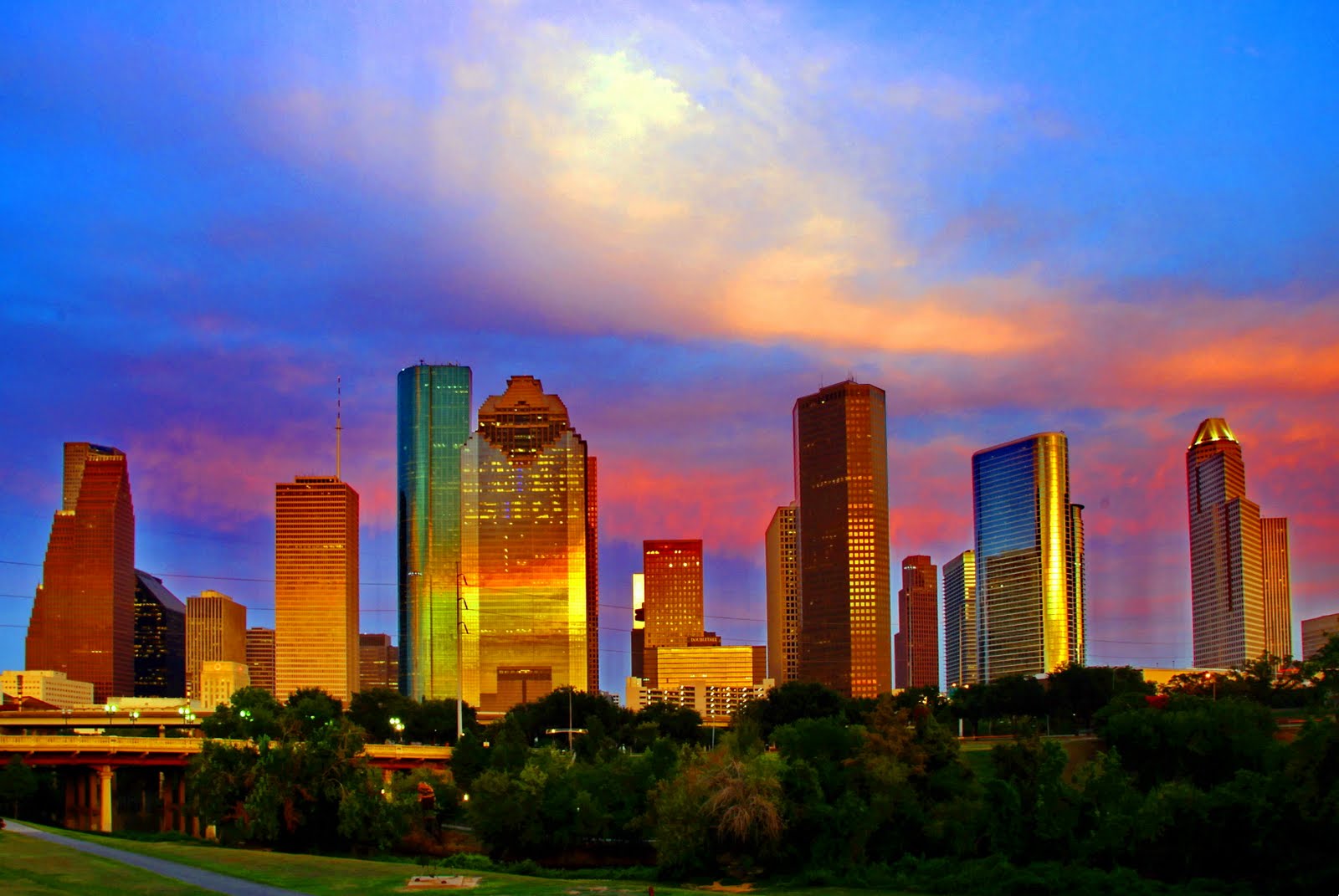
Standard aviation coverage treats a flagship lounge opening and a multi-billion-dollar terminal rebuild as a passenger comfort story. That framing misses the real mechanics. At a fortress hub like George Bush Intercontinental Airport (IAH) in Houston, a $2.6 billion capital commitment paired with United Airlines' largest lounge footprint is a network-capacity, yield-protection, and bottleneck-elimination play. A mega-lounge does not generate direct ticket revenue on its own; it absorbs high-margin connecting and origin-and-destination passengers, stabilizes dwell behavior during banking waves, and supports higher premium cabin and co-brand card economics across a constrained physical plant.
This analysis deconstructs the commercial and operational logic behind United's $2.6 billion Houston hub overhaul and the flagship lounge centerpiece. We separate established structural facts from analytical hypotheses, map the cause-and-effect chains that surface-level reporting glosses over, and evaluate the operational trade-offs that govern whether capital deployed in airport real estate earns its cost of capital.
Deconstructing Standard Hub Coverage
Conventional reporting on major airport expansions usually follows a predictable sequence: announce the headline dollar figure, highlight the square footage of the new lounge, list upgraded dining or seating amenities, and treat passenger convenience as the primary return on investment. When applied to a $2.6 billion overhaul at Houston's Terminal B and United's largest lounge there, that narrative leaves three analytical gaps.
The first gap is conflating amenities with unit economics. Airlines operate capital-intensive networks where marginal seat cost, gate utilization, aircraft turnaround time, and connecting bank timing dictate profitability. A larger lounge with more seating, showers, and food-and-beverage stations changes how passengers experience delay or dwell time, but its financial value depends on how it interacts with fare mix, loyalty program retention, and concourse throughput.
The second gap is treating hub infrastructure as isolated real estate rather than a coupled queuing system. In a hub-and-spoke network, incoming flights arrive in concentrated banks and depart in coordinated outgoing waves. If terminal gates, security checkpoints, baggage systems, and holding areas are mismatched in capacity, a single bottleneck cascades across flight schedules. Evaluating a lounge without modeling passenger arrival curves, connecting minimum times, and gate-to-lounge walking distances treats the building as static scenery instead of an active buffer in a flow network.
The third gap is ignoring execution risk during multi-year construction. Major terminal overhauls inside an active airport rarely happen on a blank slate. Phased demolition, temporary rerouting, gate closures, and utility tie-ins can temporarily degrade the very passenger experience the project aims to upgrade. A rigorous assessment must account for both the steady-state payoff after completion and the friction costs incurred during the build.
The Four Pillars of Hub Capital Allocation
To evaluate why United is committing $2.6 billion to Houston and anchoring the push with its largest lounge, it helps to organize the decision around four interlocking pillars: network flow capacity, revenue mix defense, loyalty and co-brand economics, and terminal real-estate efficiency.
Network Flow Capacity and Bank Synchronization
Hub airports live and die by synchronization. A hub allows a carrier to serve hundreds of origin-destination city pairs using far fewer point-to-point aircraft than direct routes would require. The operational price of that efficiency is peaked demand: dozens of aircraft arrive within a narrow window, passengers deplane and transfer, and a matching wave departs shortly afterward.
When passenger volume grows faster than terminal square footage or gate geometry, congestion appears in predictable places:
- Concourse choke points: Narrow corridors and crowded gate hold rooms slow boarding and deplaning, pushing turn times closer to their floor.
- Dwell mismatch: Passengers with 90-to-180-minute connections or irregular-operations delays need predictable seating, power, restrooms, and food service that standard gate areas often cannot supply at scale.
- Baggage and transfer friction: Complex terminal layouts increase misconnect risk or slow bag handling when flight schedules tighten.
Expanding Terminal B and building a flagship-scale lounge acts as a spatial pressure valve. Rather than leaving high-value travelers crowded around congested gate holds, a large lounge concentrates eligible passengers in a controlled environment with dedicated service recovery touchpoints. During weather events or rolling delays—a recurring operational reality along the Gulf Coast—concentrating rebooking and care capacity inside a large lounge can reduce gate-area congestion and speed up passenger recovery.
Revenue Mix Defense and Premium Yield
In legacy U.S. airline economics, headline passenger numbers matter far less than yield—revenue per passenger mile—and mix across cabin tiers and fare families. Corporate travelers, international flyers, and high-fare last-minute bookers generate disproportionate margin compared to deeply discounted main-cabin leisure tickets.
Houston is a major commercial, energy, industrial, and Latin American gateway market. Defending share among corporate accounts and high-yield flyers requires reliable schedule frequency and competitive ground product. When a carrier's physical terminal feels dated or cramped compared to rival hubs or newer domestic concourses, the risk is gradual erosion in corporate contract renewals and high-fare leisure choices.
A record-sized lounge for United at IAH serves a defensive commercial function. Even if travelers rarely choose an airline solely because of a lounge, lounge access reinforces the perceived value of paid premium cabins and elite status. Over time, that reinforcement helps defend fare premiums on competitive trunk and connecting routes where schedule parity exists.
Loyalty Engagement and Co-Brand Card Economics
Modern U.S. network carriers generate substantial high-margin cash flow from frequent flyer programs and co-branded credit card partnerships. Lounge access is one of the most visible, tangible perks tied to upper-tier credit cards, elite status tiers, and one-time or membership passes.
When lounge capacity is too small for the eligible user base, two problems emerge quickly:
- Capacity rationing and crowding: Overcrowded lounges erode the perceived exclusivity of the benefit, leading to entry restrictions, waitlists, or member dissatisfaction.
- Missed upgrade and retention conversion: If travelers cannot reliably use a advertised perk at a major hub, the marginal incentive to hold a premium card or chase higher status weakens.
Building United's largest lounge in Houston addresses the supply side of that equation. A larger footprint allows the carrier to accommodate higher peak-bank occupancy without turning the space into a waiting room, protecting the value proposition of its loyalty ecosystem in a core market.
Terminal Real-Estate Efficiency and Long-Term Lease Horizon
Airport capital projects sit at the intersection of airline balance sheets and municipal or airport-authority financing, lease agreements, and rates-and-charges frameworks. Unlike a standalone office building or retail store, an airport terminal operates under long-term lease terms, strict aviation safety and security rules, and shared infrastructure agreements.
Committing $2.6 billion to a major terminal overhaul signals a multi-decade commitment to the hub's role in the network. Once capital is sunk into terminal structures, gate infrastructure, and major lounge buildouts, the carrier is optimizing for decades of aircraft gauge evolution, passenger growth, and schedule flexibility—not a single fiscal quarter.
Facts Versus Analytical Hypotheses
Clear strategy separates verified structural realities from analytical interpretations. In evaluating a $2.6 billion Houston terminal overhaul and flagship lounge launch, observers should distinguish what is concrete from what must be inferred from industry mechanics.
Known facts and structural realities:
- George Bush Intercontinental Airport (IAH) is one of United Airlines' primary domestic and international hubs, anchoring connecting flows across North America and Latin America alongside local Houston demand.
- Multi-billion-dollar terminal and concourse redevelopments at major U.S. hubs involve multi-year construction timelines, phased operational transitions, and substantial capital expenditure commitments.
- Airport lounges operate as controlled-access facilities serving eligible premium-cabin passengers, qualifying elite members, membership holders, and co-branded cardholders, functioning as both an amenity and a buffer during normal and disrupted travel.
Educated hypotheses based on airline and hub economics:
- United is sizing the Houston lounge to be its largest not merely for prestige, but to match peak connecting bank volumes and elevated eligible-passenger counts at IAH without severe overcrowding.
- Integrating terminal expansion with major lounge capacity is intended to reduce downstream congestion in adjacent concourses and improve recovery handling during Gulf Coast weather disruptions.
- The combined investment is designed to lock in high-yield corporate and connecting traffic over a long asset life, offsetting near-term construction friction and elevated capital costs.
Because exact proprietary financial hurdles, internal lounge utilization curves, and confidential airline-airport cost-sharing terms are not public in standard news summaries, treating those hypotheses as plausible causal mechanisms—rather than proven accounting figures—keeps the analysis disciplined.
Cause-and-Effect Chains Standard Coverage Misses
A superficial article stops at "bigger lounge and $2.6 billion rebuild equals better experience." A rigorous consultant traces the second- and third-order effects across operations and finance.
Mechanism One: Peak-Bank Cushioning vs. Off-Peak Underutilization
Lounges do not experience flat demand throughout the day. Traffic spikes sharply during major arrival and departure banks and drops during quiet midday or late-night troughs. If a lounge is sized for average daily traffic, it overflows during peak waves; if it is sized for extreme peaks, parts of the space sit underutilized during quiet hours.
The operational consequence is a staffing and provisioning trade-off. Food preparation, beverage service, housekeeping, and front-desk support must scale with expected wave intensity while keeping fixed overhead disciplined. A massive flagship lounge solves peak-bank crowding, but only if staffing rosters and service zones are flexed intelligently across the flight schedule rather than run at full static intensity all day.
Mechanism Two: Walk Times, Gate Proximity, and Misconnect Risk
Airport geometry creates a subtle tension between centralizing amenities and minimizing transfer times. A mega-lounge delivers economies of scale in kitchen infrastructure, mechanical systems, and service staff that several small lounges cannot match. However, if a traveler has a tight connection at a distant gate, spending time inside a large lounge introduces a clock-management hazard.
Consider a connecting passenger with a 55-minute ground window. If deplaning takes 10 minutes, walking to the lounge takes 8 minutes, and walking to the departure gate takes 12 minutes, the passenger has less than 25 minutes of usable lounge time before boarding doors close. For short connections, a mega-lounge is less useful than fast, predictable concourse flow; for medium-to-long connections and flight delays, its value rises sharply. Thus, the lounge's true utility depends on the distribution of connection lengths across the flights served by that terminal area.
Mechanism Three: Irregular Operations (IROP) Shock Absorption
Gulf Coast hubs face convective storms, crosswinds, and seasonal weather systems that trigger ground stops, flow-control metering, and rolling delays. When delays stack up across a bank, hundreds of passengers suddenly need accurate flight information, rebooking assistance, seating, and sustenance at the same time.
Without sufficient lounge capacity, crowded concourses amplify stress and slow down service recovery. A large, well-equipped lounge absorbs a portion of disrupted eligible travelers, giving customer service agents and automated recovery tools room to re-accommodate passengers while keeping main concourse walkways clearer for boarding operations. The hidden return on lounge square footage often shows up on high-disruption days rather than calm blue-sky afternoons.
Mechanism Four: Construction Drag vs. Post-Completion Step Change
Large terminal projects create a classic J-curve in operational experience. During active construction, passengers may face redirected walkways, temporary gates, noise, dust barriers, or altered concession access. Even well-managed phasing carries execution risk: supply chain delays, permitting shifts, or tie-in complexity can stretch schedules and raise costs.
The strategic payoff occurs once phases open cleanly and reach steady-state operation. At that point, the airline gains modern mechanical systems, better spatial flow, and higher-capacity facilities that age more gracefully than patchwork retrofits. Evaluating the investment fairly requires looking past opening-week press coverage to see how smoothly the terminal handles peak seasonal travel after construction wraps.
Tactical Evaluation Framework for Hub Overhauls
When assessing major airline hub investments and flagship lounge announcements, analysts, corporate travel managers, and frequent flyers can apply a practical five-step diagnostic rather than relying on headline numbers.
- Audit the bottleneck being solved. Identify whether the primary constraint at the hub is gate count, security throughput, customs/immigration processing, baggage handling, or passenger holding/lounge space. Capital applied to a non-bottleneck yields diminishing returns.
- Map eligibility against peak-wave headcount. Compare total lounge seating capacity against the number of eligible flyers (premium cabins, qualifying status, qualifying cardholders, and pass users) present during the busiest 90-minute hub bank, not the 24-hour average.
- Trace connecting walk and dwell distributions. Segment hub passengers into short connections, medium-to-long connections, originators, and terminators. Determine which segment actually captures value from a large centralized lounge.
- Stress-test for disruption scenarios. Evaluate how the terminal layout and lounge footprint behave during weather delays or aircraft swaps, when passenger concentration spikes unpredictably.
- Separate construction friction from steady-state capability. Track interim passenger rerouting and schedule buffer impacts during build phases separately from long-term capacity and unit-cost effects after completion.
Limitations and Strategic Trade-Offs
Even a well-conceived $2.6 billion terminal transformation and flagship lounge strategy carries real constraints and no guarantee of universal payoff.
First, capital intensity creates long-term fixed-cost exposure. Aviation demand is cyclical, shaped by macroeconomic growth, fuel prices, interest rates, and corporate travel budgets. Committing massive capital to physical infrastructure locks in obligations across decades, even when near-term demand fluctuates.
Second, a flagship lounge cannot rescue a broken core flight operation. If flights consistently depart late, cancel frequently, or suffer chronic baggage mishandling, better lounge seating or food will not retain high-value flyers over the medium term. Ground amenities amplify a strong schedule; they cannot substitute for operational reliability.
Third, space alone does not guarantee service quality. Without disciplined crowd-access rules, clear wayfinding, reliable Wi-Fi and power density, and consistent hospitality execution, a large lounge can still feel impersonal or strained at peak hours.
For United Airlines, the sharpest strategic play at Houston is to treat the mega-lounge and Terminal B overhaul as a unified flow-and-yield system rather than a standalone trophy asset: align lounge entry capacity and service staffing directly with peak connecting banks, position customer-recovery support where delay pressure hits hardest, and protect gate-to-gate connection times so speed is never sacrificed for square footage.



