Political theater is cheap. Litigation is not.
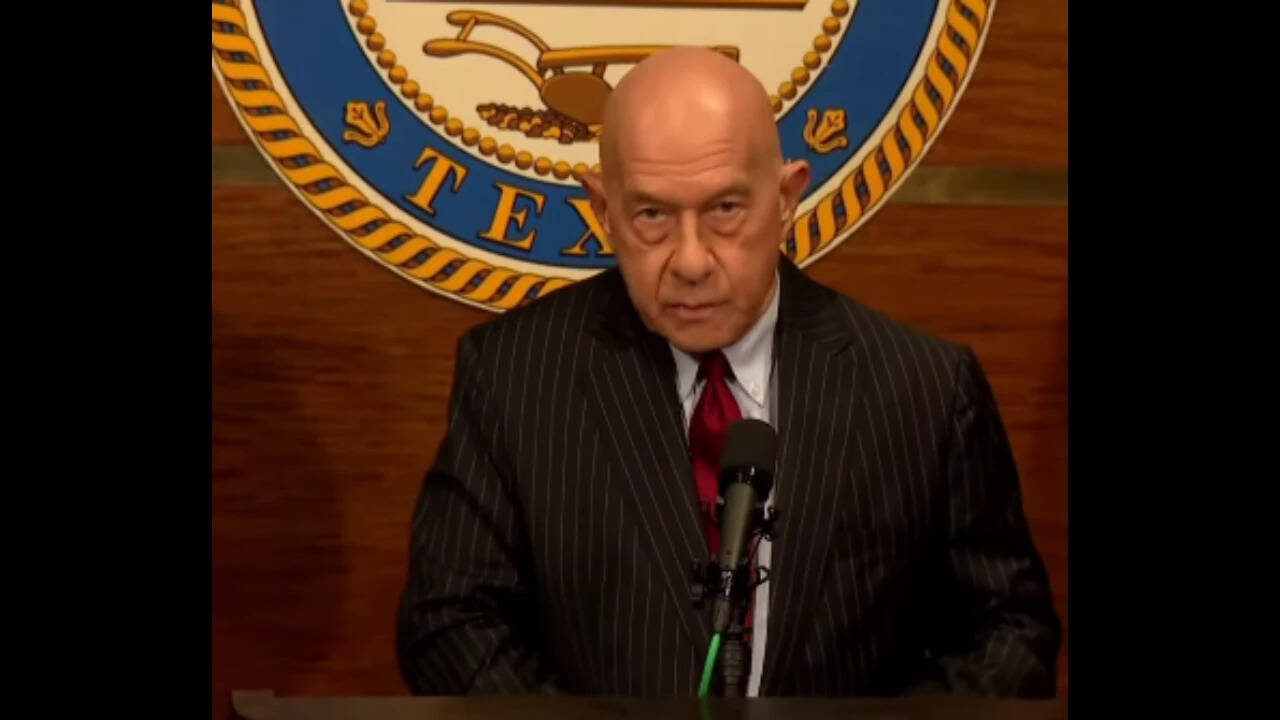
When Houston’s mayor declared that "elections matter," vowed to halt cooperation with Immigration and Customs Enforcement, and framed the move as the start of a "healing process" following a Democratic sweep in Texas, the press ate it up. Legacy outlets treated the statement as a sweeping ideological victory—a clean, binary triumph of local compassion over federal enforcement.
That framing is completely disconnected from how American municipal law actually functions.
The lazy consensus in political journalism treats city halls like sovereign nation-states. A mayor steps up to a podium, announces a policy shift, and reporters write the obituary for federal enforcement in that jurisdiction. In reality, a municipal executive cannot simply wish away statutory mandates, state preemption laws, or federal supremacy clauses with a press conference. By buying into the rhetoric of "healing" without examining the legal machinery underneath, the mainstream coverage missed the real story: Houston just signed up for a protracted, expensive legal war it is structurally designed to lose, while the actual mechanics of federal immigration enforcement remain largely untouched.
The Myth of the Sovereign Mayor
To understand why the "won't help ICE" narrative is flawed, you have to look at the basic architecture of American federalism and Texas state law. Municipal governments are creatures of the state. They possess zero inherent constitutional sovereignty.
In Texas, this isn't an abstract legal theory; it is codified law. Senate Bill 4 (SB 4), passed in 2017 and largely upheld by the Fifth Circuit Court of Appeals, explicitly prohibits local entities from adopting policies that materially limit the enforcement of immigration laws. Under SB 4, police chiefs, sheriffs, and mayors face severe civil penalties—and potential removal from office—if they prohibit local officers from inquiring about immigration status during lawful detentions or from honoring federal detainer requests.
I have spent over a decade analyzing municipal governance and state-local preemption battles across the Sun Belt. I have watched city councils pass sweeping, applause-inducing resolutions on everything from minimum wage hikes to environmental bans, only to watch those same ordinances get dismantled in state court within six months. Every single time, the pattern is identical: local politicians harvest the immediate political capital from their base, while the city attorney’s office quietly burns millions in taxpayer funds fighting a losing battle against statutory preemption.
When a mayor promises not to "help ICE," the public imagines a physical barrier erected around the city limits. What actually happens is far less dramatic and far more bureaucratic. Local police departments stop signing voluntary 287(g) agreements—which deputize local officers to perform federal immigration duties—or they restrict non-essential data sharing. Those are narrow administrative adjustments, not a shield against federal authority.
How Federal Enforcement Actually Operates
The media’s obsession with local cooperation stems from a fundamental misunderstanding of how Immigration and Customs Enforcement functions on the ground. Reporters frequently conflate voluntary municipal partnerships with mandatory federal access.
Let’s define the terms precisely, because the distinction is where the entire political narrative falls apart:
- 287(g) Agreements: Voluntary contracts under the Immigration and Nationality Act that allow local law enforcement to act as force multipliers for ICE. Ending these stops local police from acting as immigration agents. It does nothing to stop federal agents from operating in the city.
- ICE Detainers (Form I-247A): Requests issued by federal authorities asking local jails to hold an individual for up to 48 hours beyond their scheduled release time so ICE can take custody. In Texas, county sheriffs—not city mayors—run the major detention facilities. In Houston, the Harris County Jail is operated by the Harris County Sheriff's Office, an entirely separate constitutional entity from the Mayor’s office.
- Secure Communities: An automated federal program that cross-references fingerprints taken during routine local bookings against Department of Homeland Security databases.
Read that third bullet point again.
When anyone is arrested by the Houston Police Department and booked into a county facility, their fingerprints are automatically transmitted to the FBI for a standard criminal background check. The FBI automatically shares those prints with DHS. The mayor of Houston cannot turn off that pipeline. No city council vote can sever the digital link between local booking terminals and federal databases. ICE knows who is in custody the moment the booking process finishes, whether the mayor offers "help" or not.
The County vs. City Blind Spot
The competitor’s coverage completely ignores the jurisdictional firewall between the City of Houston and Harris County. This is a classic rookie mistake in local political reporting.
City police make arrests; county jails hold prisoners. While the Houston Police Department operates temporary holding facilities for initial processing, individuals facing serious charges or awaiting trial are transferred to the Harris County Joint Processing Center. Once a detainee crosses that threshold, the mayor’s authority evaporates.
Furthermore, federal agents do not need a mayor’s permission to execute targeted enforcement operations within city limits. Under the Supremacy Clause of the U.S. Constitution, federal officers executing federal law supersede local municipal directives. If ICE’s Enforcement and Removal Operations (ERO) division decides to conduct workplace raids, fugitive operations, or targeted arrests in Houston, the Houston Police Department cannot legally interfere. At best, HPD officers simply stay out of the way.
By framing the mayor's statement as a decisive halt to ICE operations, journalists are selling a comforting fiction to voters who want immediate relief, while simultaneously handing opposition politicians a pre-packaged talking point about "lawless sanctuary cities." Both sides get their preferred rage-bait, and the public gets zero clarity on how governance actually works.
What People Actually Need to Know About Municipal Sanctuary Policies
When news cycles erupt over local immigration stances, search engines flood with predictable, binary questions. Most of them are built on false premises. Let's dismantle them directly.
Can a mayor legally ban ICE from operating in their city?
No. Under the Supremacy Clause (Article VI, Clause 2 of the U.S. Constitution), federal law is the supreme law of the land. A municipal government has zero legal mechanism to bar federal law enforcement agents from entering a city, conducting investigations, or making arrests based on federal statutes. Any local ordinance attempting to physically obstruct federal agents would be struck down immediately in federal district court.
Does ending ICE cooperation make a city safer or more dangerous?
The data here is fiercely contested, and anyone claiming absolute certainty is selling you an ideological agenda. Proponents of non-cooperation point to studies—such as research from the Center for American Progress and various criminology journals—suggesting that immigrant communities are more likely to report violent crimes and serve as witnesses when they do not fear deportation during routine police interactions. Critics, including analysts at the Center for Immigration Studies, argue that refusing to honor detainers releases repeat offenders back onto the streets who would otherwise be transferred directly to federal custody. Both effects exist simultaneously in the real world. Pretending one cancels out the other is intellectual dishonesty.
What does "elections matter" actually change in Texas immigration enforcement?
It changes the rhetorical climate and alters municipal resource allocation. A mayor can direct the police department not to spend local tax dollars on federal immigration enforcement, ensuring patrol officers focus exclusively on municipal crimes like theft, assault, and traffic violations. What an election cannot do is overturn state statutes like SB 4 or rewrite Title 8 of the U.S. Code.
The Hidden Costs of Performative Governance
There is a legitimate policy argument for keeping local police out of federal immigration work. Municipal policing relies entirely on community trust. When a victim of domestic violence refuses to call 911 because she fears the responding officer will ask for her papers, public safety deteriorates for everyone in that neighborhood. As former Houston Police Chief Art Acevedo and numerous major-city police chiefs have argued for years, local law enforcement lacks the training, bandwidth, and constitutional mandate to untangle complex federal immigration statuses on the side of a highway.
That is a sound, pragmatic, conservative-adjacent argument rooted in resource management and local control.
The problem arises when politicians abandon pragmatism for messianic rhetoric. Calling a policy shift a "healing process" sets an expectation of protection that the city cannot legally deliver.
Consider a scenario where an undocumented resident hears the mayor declare that Houston will no longer help ICE. Believing the city is now a protected sanctuary, that resident takes fewer precautions, engages openly with municipal agencies, or assumes local legal protections shield them from federal scrutiny. Six months later, ICE conducts a targeted operation in their neighborhood—completely legally, without a shred of help from City Hall—and detains them. The psychological and communal fallout from that betrayal is infinitely worse than the honest truth would have been.
Moreover, there is the financial bleed. Texas Attorney General Ken Paxton has built an entire political brand around suing Texas municipalities that step out of line on state preemption laws. Every time a major Texas city issues a provocative statement challenging state or federal enforcement frameworks, the Attorney General’s office opens an investigation, files for injunctions, and drags the city through appellate courts.
I have seen municipal legal budgets hemorrhage millions of dollars defending press-release policies that had zero chance of surviving Fifth Circuit review. That is money pulled directly out of infrastructure repair, drainage projects, and police recruitment—the actual, unglamorous duties a mayor is hired to perform.
The Contrarian Reality: Admit the Limits
To be completely candid, my critique of performative sanctuary rhetoric carries its own uncomfortable trade-off. If local leaders strip away the lofty language and tell the brutal truth—that their power is severely hemmed in by state preemption and federal supremacy—they risk demoralizing their own voters. In modern politics, admitting structural limits looks like weakness. Politicians who speak in dry, accurate legal caveats rarely survive primary elections against opponents promising sweeping moral crusades.
Yet, honesty is the only sustainable strategy for municipal governance.
If Houston’s leadership actually wants to protect vulnerable communities without triggering a catastrophic legal ambush from Austin, the playbook isn't a podium speech about "healing." It is quiet, boring, unsexy administrative discipline:
- Strict Resource Auditing: Keep HPD focused rigorously on violent crime and property offenses. When patrol officers aren't conducting pretextual traffic stops for minor infractions like broken taillights, fewer non-violent residents enter the booking pipeline where automated fingerprint sharing occurs.
- Language Access and Municipal IDs: Expand non-law-enforcement city services, fund legal defense non-profits through transparent community grants, and ensure municipal identification cards allow residents to open bank accounts and interact with schools without relying on foreign passports.
- Zero Rhetoric, Maximum Compliance: Follow the exact letter of Texas SB 4 to deny the state Attorney General a legal hook for litigation, while refusing to volunteer a single dime of city funds toward optional federal task forces.
Notice what all three of those steps have in common. None of them make good cable news soundbites. None of them allow a politician to claim they are single-handedly reversing federal policy.
Elections do matter. They determine who manages the city’s budget, who sets policing priorities, and how municipal agencies treat the people who pay taxes to fund them. What elections do not do is suspend the Constitution or repeal state law. Until political journalists start reporting the difference between what a mayor says at a microphone and what the law actually allows them to do, voters will keep getting sold an illusion—and paying the legal fees when it shatters.