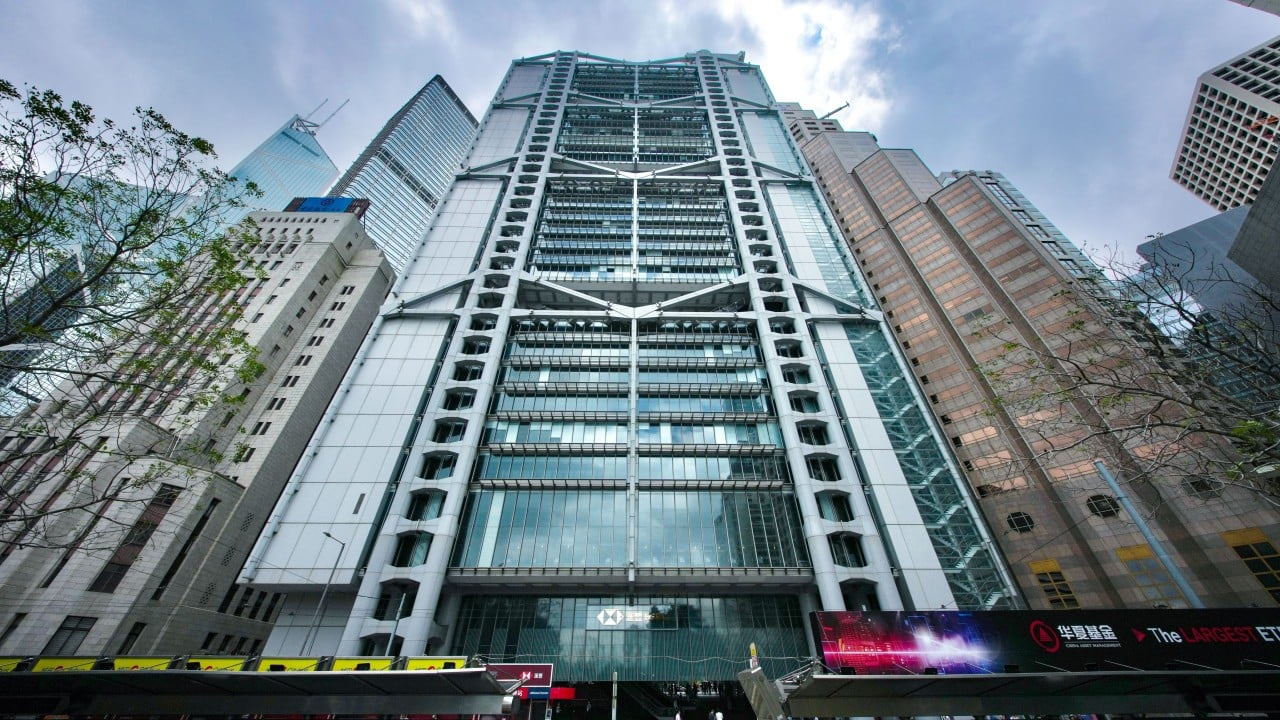
The Hong Kong Exchanges and Clearing recent mandate to overhaul its century-old board lot system will not trigger the massive, immediate surge in HSBC trading volume that retail brokers are predicting. While market optimists claim that lowering the minimum entry price for Hong Kong's favorite banking stock will invite an army of retail investors, a closer inspection of capital structures, trading behaviors, and institutional dominance reveals a far more muted reality. The retail entry barrier is indeed dropping. However, institutional matching and structural market shifts mean the expected turnover boom for HSBC Holdings shares is largely a marketing narrative rather than an imminent financial certainty.
For decades, Hong Kong's equity market has operated under an issuer-led board lot system. Unlike New York or London, where investors can purchase a single share of any company, Hong Kong requires equities to be traded in fixed bundles known as board lots. HSBC has long maintained a board lot size of 400 shares. When the bank’s stock price hovers around HK$150, an investor needs a minimum of roughly HK$60,000 just to execute a single basic trade. This high threshold earned HSBC the reputation of an exclusive, blue-chip asset, favored by long-term wealth but out of reach for regular day traders. Expanding on this topic, you can find more in: Why the ECB One and Done Rate Hike Strategy Is a Dangerous Bluff.
The newly implemented reform by the exchange fundamentally changes these rules. Under the framework launched in July 2026, the exchange is consolidating over 40 different board lot variations down to just eight standardized choices. More importantly, it institutes a rigid price ceiling of HK$50,000 per board lot for any security trading in units greater than 100 shares. Because HSBC’s traditional lot value comfortably exceeds this threshold, the banking giant is structurally forced to compress its lot size. This adjustment will lower the minimum capital needed to buy into the company, but assuming this change automatically translates to a permanent explosion in secondary market liquidity ignores how modern capital actually moves.
The Illusion of the Retail Renaissance
Retail investors have historically been the emotional bedrock of HSBC’s domestic shareholder base. Often referred to locally as the ultimate stock for widows and orphans due to its reliable dividend history, generations of local families held physical certificates as foundational assets. The argument for the reform relies on the idea that thousands of these smaller investors are sitting on the sidelines, waiting for the ticket price to fall so they can flood the order books. Observers at CNBC have shared their thoughts on this situation.
This view mistakes accessibility for genuine demand. The modern retail investor looking for high turnover or quick gains is rarely constrained by board lot sizes anymore. Fractional share platforms, specialized derivative instruments, and structured products like warrants or callable bull/bear contracts already allow small-scale capital to speculate on HSBC’s price movements without ever touching the underlying physical board lots. Those who wanted exposure to HSBC with limited capital have already found it elsewhere.
Furthermore, the domestic retail sector in Hong Kong has underwent a profound demographic shift. Wealthy older generations are holding onto their historical stakes, while younger retail participants show an overwhelming preference for high-growth technology equities or US-listed options markets. A cheaper board lot will not suddenly make a legacy banking institution attractive to a demographic that views traditional banking models as stagnant. The reduction in lot size changes the logistics of ownership, but it does not alter the fundamental investment thesis of a mature, capital-heavy financial institution.
The Mechanics of Market Friction
Trading costs explain why a lower lot size will not automatically spark a trading frenzy. Historically, the exchange maintained a minimum board lot value guidance of HK$2,000 to prevent execution fees from eating up the total value of small trades. Even though the exchange is now slashing that floor to HK$1,000 because clearing costs have decreased, smaller trades remain proportionally more expensive for retail participants.
Consider a retail trader buying a single minimized board lot. Even with lower platform fees, fixed minimum brokerage commissions, stamp duties, and exchange levies mean that small-scale accounts face a higher percentage drag on their capital per trade than institutional players executing massive block orders. This structural reality acts as a natural dampener on high-frequency retail trading. The cheaper entry ticket makes it easier for an individual to buy and hold, but it does not incentivize them to trade actively, meaning the impact on daily volume will be negligible.
Why Institutional Algos Dominate the Flow
To understand why the reform will not radically alter HSBC’s turnover, one must look at the actual composition of daily trading volumes. The overwhelming majority of HSBC’s market activity is driven by institutional asset managers, sovereign wealth funds, and algorithmic market makers. For these entities, the size of a single board lot is completely irrelevant.
Institutional desks trade via electronic algorithms that slice massive orders into thousands of smaller pieces throughout the trading day to minimize market impact. They do not think in terms of 400-share blocks; they think in terms of total notional value and percentage of average daily volume. Whether the underlying exchange architecture defines a standard lot as 400 shares or 100 shares has no bearing on a global fund manager’s decision to reallocate capital into or out of European-Asian banking stocks.
+-----------------------------------+-----------------------------------+
| Retail Trapped Capital View       | Institutional Reality View        |
+-----------------------------------+-----------------------------------+
| Assumes volume is restricted by   | Recognizes volume is driven by    |
| minimum lot costs.                | macroeconomic fund flows.         |
|                                   |                                   |
| Believes cheaper entry creates    | Understands algos slice orders    |
| high-frequency trading behavior.  | regardless of lot architecture.   |
+-----------------------------------+-----------------------------------+
The real driver of HSBC’s turnover remains global macroeconomic factors. Interest rate cycles, net interest margin outlooks, and corporate share buyback programs dictate institutional volume. When the US Federal Reserve alters its monetary path, or when HSBC announces a multi-billion-dollar equity repurchase, institutional desks move millions of shares in blocks that render retail board lot adjustments mathematically insignificant. The regulatory shift alters the plumbing of the exchange, but the volume flowing through the pipes is still controlled by macro allocators.
The Problem of Odd Lot Fragmentation
An overlooked consequence of forcing hundreds of legacy corporations to alter their board lot units is the immediate creation of a massive odd lot problem. Over years of scrip dividends, stock splits, and corporate actions, millions of corporate shares have ended up in irregular quantities that do not match standard board lots. These are known as odd lots, and they traditionally trade at a steep discount on a separate, less liquid exchange platform.
When HSBC shrinks its board lot to comply with the new HK$50,000 ceiling, it will inadvertently create a new wave of odd lot fractions for existing portfolios. An investor holding a precise multiple of the old 400-share system might find themselves with leftover shares under a new, standardized unit. While the exchange plans to introduce an automated matching mechanism for odd lots, that system is not scheduled for release until late 2027 at the earliest. In the interim, the market faces a prolonged period of operational friction where retail investors may find themselves trapped in illiquid, fragmented holdings, temporarily harming overall market efficiency.
The Southbound Capital Question
A more compelling counter-argument for a turnover boost comes from Mainland China via the Southbound Stock Connect program. Mainland retail investors, accustomed to the uniform 100-share board lot system used in Shanghai and Shenzhen, have long expressed frustration with Hong Kong's fragmented and expensive lot structures.
Shanghai/Shenzhen: Unified 100-share lot -> Highly intuitive for retail
Hong Kong: 40+ different lot structures -> Fragmented, requires heavy capital
Lowering the capital requirement for HSBC could theoretically make it a prime target for mainland retail capital flowing southward. HSBC is a recognizable global brand with a strong presence in mainland financial hubs, making it an intuitive destination for diversified capital.
Yet, even this channel faces steep headwinds. Southbound institutional capital already moves freely into HSBC because it operates outside the constraints of individual lot values. Mainland retail investors who do utilize the Connect link are overwhelmingly looking for growth plays or assets that are structurally unavailable on domestic mainland exchanges, such as specific technology operators or consumer giants. A mature global bank yielding stable dividends does not fit the typical profile of the high-turnover mainland retail trader. The reduction in lot size harmonizes the mechanics between the sister exchanges, but it does not magically transform HSBC into a speculative vehicle for mainland day traders.
The Real Timeline for Structural Shifts
Investors expecting a sudden spike in HSBC's stock liquidity are misinterpreting the phased rollout planned by regulators. The exchange is tying the mandatory board lot standardization directly to the implementation of the Uncertificated Securities Market scheme. This scripless initiative removes paper share certificates entirely, migrating the entire market infrastructure to digital ownership records.
Because existing companies have a multi-year window to fully transition into the digital environment, the adjustments to board lot sizes will be distributed over an extended period. HSBC is not going to change its entire trading structure overnight. The transition will be slow, calculated, and heavily managed to prevent abrupt disruptions to the clearing system. This gradual adaptation ensures that any incremental retail capital entering the market will be absorbed gradually, diluting any noticeable impact on daily turnover metrics.
The belief that regulatory standardizations will serve as a powerful catalyst for equity turnover is an attractive thesis that falls apart under structural analysis. The reform solves an operational complexity problem for the exchange, bringing Hong Kong closer to international electronic settlement standards. It provides welcome flexibility for long-term retail savers who wish to accumulate blue-chip equity over time. However, the forces that truly dictate market liquidity—institutional allocation, macroeconomic policy, and global interest rates—remain completely untouched by this administrative restructuring. HSBC shares will continue to trade based on banking fundamentals, while the board lot reform remains an evolutionary step in market infrastructure rather than a revolution in daily trading volume.