The Operational Mechanics of Cross-Border Regulatory Enforcement
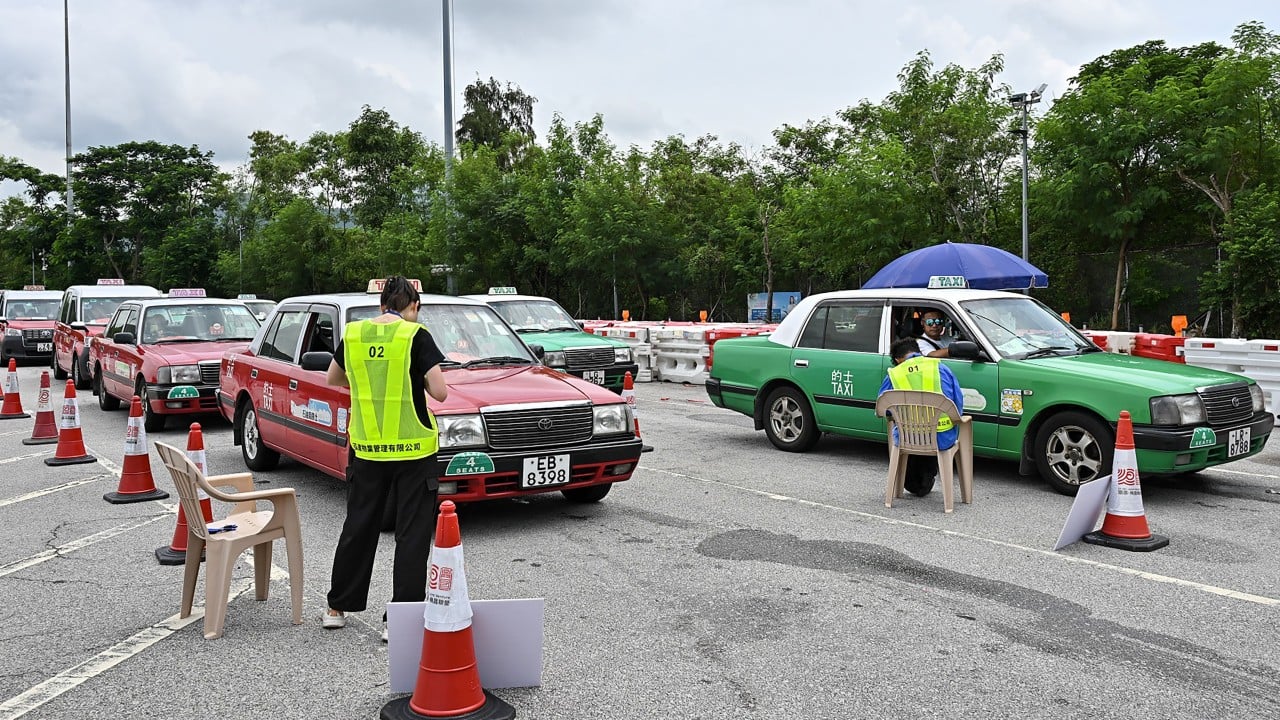
The announcement by Hong Kong and mainland authorities regarding mandatory compliance for travelers utilizing authorized buses and taxis at Huanggang Port represents a friction-based structural intervention in a high-density transit corridor. Cross-border infrastructure linking Shenzhen and Hong Kong operates under intense capacity constraints. When informal, unauthorized, or unregulated transport providers operate within these chokepoints, they introduce systemic inefficiencies, safety vulnerabilities, and enforcement asymmetries.
Understanding this regulatory tightening requires analyzing the underlying transport economics. Authorized transport operators function under strict compliance overheads, including mandated insurance, vehicle safety inspections, fare regulations, and designated route permissions. Unauthorized operators bypass these fixed costs, capturing economic rent while externalizing risk onto the passenger base and municipal infrastructure. By forcing travelers exclusively into authorized channels, authorities are shifting the enforcement burden from reactive roadside policing to structural access control.
The system design relies on choke-point economics. Huanggang Port processes tens of thousands of daily cross-border travelers, operating 24 hours a day in many zones. Controlling passenger flow at the point of egress eliminates the decentralized market for informal rides. When access is restricted to verified taxi queues and licensed coach bays, the transaction cost of procuring unauthorized transport increases dramatically, shifting consumer behavior through environmental design rather than individual deterrence.
The Cost Function of Informal Cross-Border Transport
To evaluate why authorities must enforce strict transit channels, one must examine the operational cost function of informal operators versus authorized fleets.
$$\text{Total Social Cost} = C_{\text{direct}} + C_{\text{safety}} + C_{\text{congestion}}$$
For authorized operators, $C_{\text{direct}}$ is high due to regulatory compliance, licensing fees, and adherence to labor laws. However, $C_{\text{safety}}$ and $C_{\text{congestion}}$ are minimized because vehicles meet rigorous structural standards and drivers operate within scheduled shifts.
Informal operators invert this equation. Their direct costs approach zero, but they impose massive negative externalities:
- Information Asymmetry: Passengers face unpredictable pricing structures, lack of verified recourse in the event of accidents, and exposure to unregulated insurance policies.
- Queue Disruption: Unregulated pickups create localized bottlenecks at port exits, compounding vehicular dwell times and degrading the throughput of the entire terminal infrastructure.
- Regulatory Arbitrage: Informal operators exploit the jurisdictional seams between Shenzhen municipal enforcement and Hong Kong transport departments, creating enforcement dead zones where neither agency can efficiently intervene without inter-agency coordination.
The recent directive acts as a hard boundary condition designed to drive the externalized costs back toward zero by starving informal operators of passenger volume.
Behavioral Compliance and the Design of Port Infrastructure
Enforcement declarations alone rarely alter commuter habits unless backed by architectural and operational modifications. Commuters optimize for two variables: time and monetary cost. When authorized queues experience high latency, the shadow market for unauthorized transport thrives.
Therefore, the mandate at Huanggang Port must be supported by adequate capacity provisioning within the authorized ecosystem. If authorities mandate authorized buses and taxis, they assume the responsibility of elasticity—ensuring vehicle supply scales dynamically with passenger arrival rates. Failure to match supply with demand creates a systemic paradox: strict enforcement without proportional fleet availability results in extended wait times, which paradoxically incentivizes desperate travelers to seek out clandestine alternatives despite the rules.
The operational strategy relies on three distinct behavioral levers:
- Spatial Friction: Physical barriers, directional signage, and spatial zoning make unauthorized vehicle rendezvous points difficult to access or locate.
- Verifiable Signage and Queue Management: Clear demarcation of authorized zones reduces cognitive load for travelers, minimizing the time spent navigating the terminal.
- Visible Deterrence: Active enforcement personnel at critical decision nodes alter the perceived probability of getting caught using informal transport, tipping the rational actor calculation toward compliance.
Systemic Vulnerabilities in Cross-Border Mobility
While the directive standardizes operations at Huanggang Port, it exposes broader vulnerabilities inherent in multi-jurisdictional transit hubs. Hong Kong and mainland China operate under distinct legal, regulatory, and licensing frameworks. A vehicle licensed in Shenzhen cannot automatically operate commercial services within Hong Kong territory without specific cross-border quotas and permits.
This regulatory discontinuity is precisely what informal operators exploit. By transferring passengers across the border via unregulated handoffs or utilizing dual-plated loopholes, illicit networks circumvent the strict quotas designed to manage road capacity. The crackdown at Huanggang is an attempt to close these operational loopholes by strictly policing the immediate terminal perimeter.
However, treating the port as a closed system has limits. If enforcement is localized strictly to Huanggang without concurrent measures at connecting arterial highways and secondary drop-off zones, displacement will occur. Informal transport operators will simply shift their pickup coordinates further downstream, forcing authorities to expand their enforcement perimeter.
Strategic Operational Outlook
The transition to mandatory authorized transport at Huanggang Port is a structural shift from open-market friction to controlled queue management. For enterprise logistics planners, corporate mobility managers, and frequent cross-border travelers, the operational takeaway is clear: journey planning must account for standardized transit bottlenecks. The era of ad-hoc, informal curbside pickups at major port interfaces is systematically closing, replaced by rigid, compliance-first infrastructure designed to maximize safety and throughput at the expense of commuter optionality.