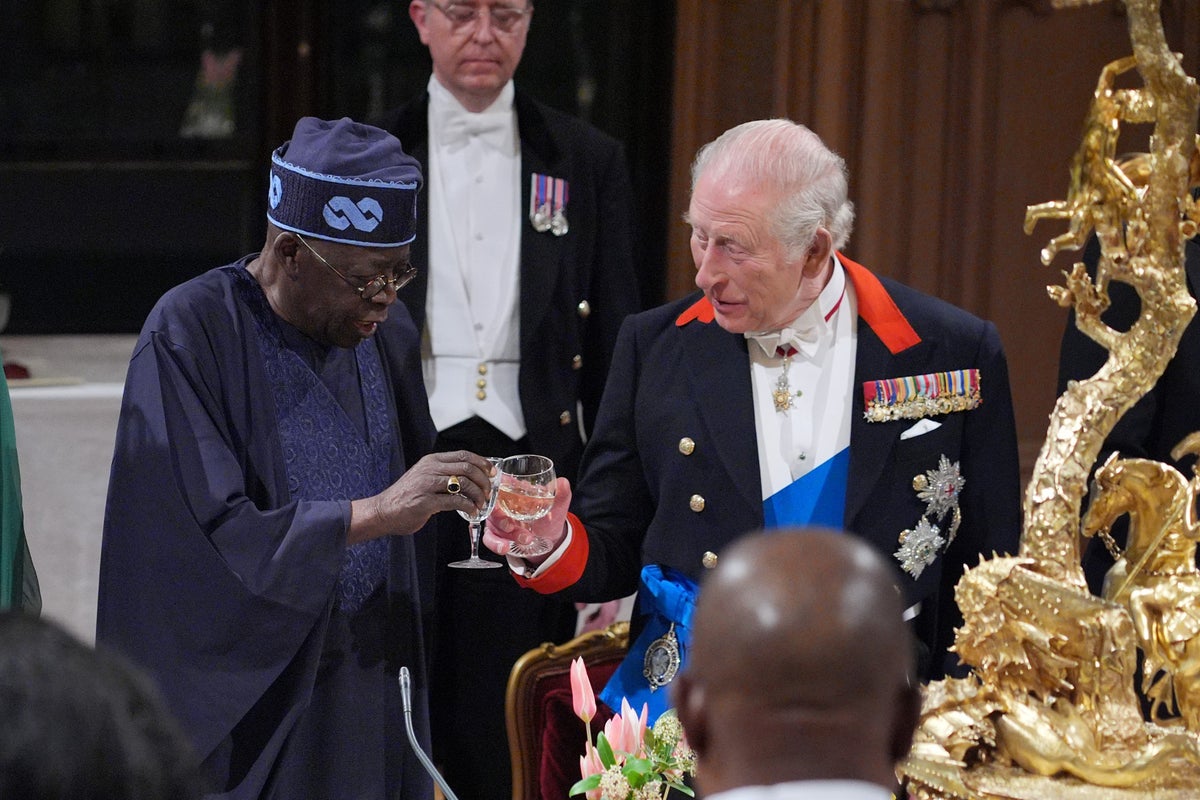
The activist class is at it again. As Keir Starmer prepares for a state visit with Nigerian President Bola Tinubu, the usual suspects are lining up to demand he "confront" Abuja on human rights. They want lectures on police reform, protests over the Special Anti-Robbery Squad (SARS), and public condemnations of civil liberties gaps.
It is a tired, predictable script. It is also a fast track to irrelevance in the West African corridor.
If Starmer follows this advice, he isn't just being a moralist; he’s being a fool. The West has spent decades treating African nations like students in a remedial democracy class. Meanwhile, China and Russia are treating them like board members. If the UK wants to actually influence the trajectory of the continent’s largest economy, it needs to stop treating "human rights" as a diplomatic battering ram and start treating Nigeria as a sovereign power with a different set of existential math.
The Myth of the Moral Lever
The "lazy consensus" among UK think tanks is that Britain holds a unique moral lever over its former colonies. It doesn't.
When you sit across from a leader managing a nation of over 220 million people—a population projected to overtake the United States by 2050—you aren't looking at a subordinate. You are looking at the gatekeeper of the Gulf of Guinea. Tinubu is currently wrestling with a currency crisis, a massive energy transition, and a security apparatus stretched thin by insurgencies.
If Starmer walks into the room and leads with a lecture on the 2023 election irregularities or press freedom, the conversation will be over before the tea is served. Why? Because the Nigerian elite have options. They have watched the UK’s influence wane as Brexit-induced insularity and a shrinking aid budget reduced London’s "soft power" to a whisper.
The Cost of Performance Diplomacy
Performance diplomacy is the act of saying something for the benefit of domestic voters back in Westminster while knowing it will achieve nothing on the ground in Lagos or Abuja. It is a vanity project.
- Scenario A: Starmer issues a stern public statement on human rights. The NGO sector cheers. Tinubu's administration views it as an infringement on sovereignty. Trade talks stall.
- Scenario B: Starmer prioritizes infrastructure, fintech integration, and security cooperation. He builds the capital required to have private, high-level discussions about governance.
The activist strategy assumes that public shaming leads to reform. In the world of high-stakes geopolitics, public shaming leads to a pivot toward the East. China’s "Belt and Road" doesn't come with a lecture on judicial independence. If Britain makes its partnership contingent on a Western-defined moral checklist, it simply prices itself out of the market.
Security is the Ultimate Human Right
The critics love to point to the #EndSARS movement and the heavy-handed response of the Nigerian state. I’ve seen this play out in capital cities across the globe: Western observers focus on the symptoms of a fractured security state without addressing the cause.
Nigeria is fighting a multi-front war against Boko Haram, ISWAP, and sophisticated banditry in the northwest. When a state feels its monopoly on force slipping, it reacts poorly. That isn't an excuse for abuses; it’s a mechanical reality of state survival.
If Starmer actually cared about the "human rights" of Nigerians, he would focus on the right to not be kidnapped or killed by insurgents. This requires:
- Intelligence Sharing: Enhancing the flow of actionable data.
- Equipment: Selling the hardware necessary for precision strikes rather than blunt-force suppression.
- Training: Moving beyond basic drills to institutionalize professional military ethics.
You cannot "urge" a government to be more humane while they are fighting for their lives against caliphate-seekers. You provide the tools for a professional defense, or you accept the chaos that follows.
The Economic Counter-Intuition
The competitor's narrative suggests that trade and human rights are a zero-sum game. This is economically illiterate.
The greatest engine for human rights in Nigeria isn't a UN resolution; it’s the middle class. Nigeria’s tech scene is the most vibrant in Africa. Companies in the Yaba district of Lagos are doing more to empower the citizenry than a thousand "capacity building" workshops funded by the Foreign Office.
When a citizen is economically independent, they are harder to oppress. When they rely on a state-controlled patronage system because the economy is stagnant, they are easy targets.
Starmer’s job isn't to be a schoolmaster. His job is to be a salesman for British investment. If he can secure deals that integrate UK capital into Nigerian fintech and renewable energy, he creates a demographic that will demand better governance of its own accord. Foreigners don't bring democracy; a disgruntled, wealthy middle class does.
Addressing the "People Also Ask" Delusions
Let’s dismantle the premise of the questions people usually ask about this visit:
"Should the UK tie trade deals to human rights benchmarks?"
No. This is a relic of the 1990s unipolar world. Today, it is a recipe for being ignored. If you tie trade to benchmarks, Nigeria will simply trade with someone else. You lose the trade and you lose the influence.
"How can Starmer support Nigerian activists?"
By ensuring they have a functioning economy to operate in. Activism dies in a collapsed state. Starmer supports them best by stabilizing the macro-economic relationship between London and Abuja, ensuring that the "brain drain" from Nigeria to the UK becomes a "brain gain" through circular migration and investment.
"Is Nigeria a stable partner?"
It’s as stable as a country undergoing a massive structural adjustment can be. Tinubu has made the hard calls—scrapping the fuel subsidy, unifying the exchange rate. These are moves the IMF has begged for for years. He is doing the heavy lifting. The UK needs to reward that risk-taking with partnership, not nagging.
The Sovereignty Trap
There is a profound arrogance in the assumption that the UK knows what is best for Nigerian stability. I have spent years watching Western diplomats walk into meetings with African heads of state equipped with "briefing packs" that haven't changed since the Cold War.
They ignore the internal pressures: the ethnic balancing acts, the religious tensions between the North and South, and the sheer logistical nightmare of governing a country where the median age is 18.
Tinubu isn't looking for a "pivotal" relationship with a "cutting-edge" Britain. He’s looking for a partner who understands that Nigeria’s problems are too complex for a three-paragraph human rights rider in a trade agreement.
The Realist’s Path
If Starmer wants a win, he must embrace the "Brutal Realism" of the 21st century.
- Admit the UK’s limitations: We are no longer the primary arbiter of African affairs.
- Focus on the City of London: Nigeria needs deep capital markets. The UK has them. That is our leverage. Not our "values."
- Decouple the public from the private: Deal with the messy stuff in secure rooms. Public grandstanding is for politicians who aren't serious about results.
The downside to this approach? It’s unpopular. It doesn't look good on a social media graphic. It won't get Starmer a standing ovation at a human rights gala. But it might actually keep Nigeria within the Western orbit and prevent the total collapse of security in the Sahel.
Stop trying to fix Nigeria's soul. Start trying to fix the trade balance.
Trade with the Nigeria that exists, not the one you want to build in your head. Anything else is just post-colonial theater.
Stop the lectures. Open the ledger.
Would you like me to draft a strategic brief on the specific Nigerian tech sectors that are ripe for UK venture capital integration?