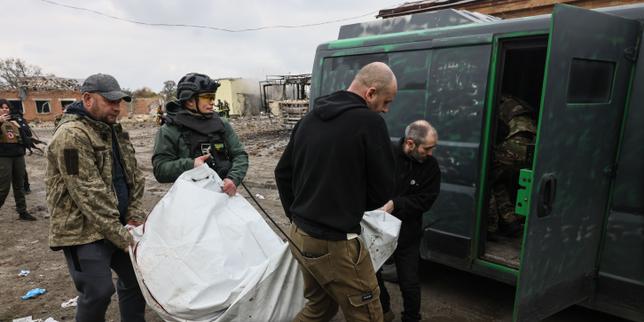
Mass-casualty strikes on civilian aid distribution hubs in active conflict zones are rarely isolated tactical anomalies; they represent a predictable failure mode where predictable civilian aggregation meets asymmetric artillery or missile doctrine. When at least 33 fatalities occur at a humanitarian distribution center in the Zaporizhzhia region, the operational reality extends far beyond a simple casualty tally. Standard live-blog reporting captures the immediate kinetic shock and raw death toll, yet it obscures the underlying structural vulnerabilities of frontline logistics, the legal mechanics of International Humanitarian Law (IHL), and the strategic calculus of infrastructure degradation.
The Structural Vulnerability of Centralized Aid Hubs
Humanitarian relief operations face a fundamental optimization problem: balancing distribution efficiency against physical security. In regions like Zaporizhzhia, where active frontlines bisect supply routes and civilian populations remain tethered to damaged municipal grids, aid agencies default to centralized distribution nodes.
This centralization creates three distinct operational liabilities:
- Temporal Predictability: Aid deliveries require advance communication to reach vulnerable populations. Schedules, even when restricted to local channels, inevitably leak into open-source networks or signal intelligence intercepts, giving opposing forces a fixed temporal window for targeting.
- Spatial Density: To maximize throughput per convoy, organizers concentrate beneficiaries in single locations—often schools, administrative buildings, or warehouse complexes. High human density within a small blast radius exponentially increases the lethality of high-explosive warheads or cluster munitions.
- Thermal and Electromagnetic Signatures: Gathering dozens or hundreds of civilians, alongside transport trucks and communications equipment, generates an unmistakable signature for unmanned aerial vehicle (UAV) reconnaissance. In modern attritional warfare, sensor-to-shooter loops operate in minutes, turning a visible crowd into an immediate target profile.
The competitor’s framing treats the Zaporizhzhia strike solely as a breaking news event. In operational terms, the event demonstrates what happens when high-density logistics models collide with modern reconnaissance-strike complexes without adequate hardening or dispersal.
Deconstructing the Kinetic and Strategic Mechanics
To understand why civilian aid hubs suffer catastrophic casualty rates in southeastern Ukraine, analysts must separate immediate tactical execution from broader strategic intent. While exact munition types and launch coordinates require formal forensic verification, the mechanics of mass-casualty strikes in the Zaporizhzhia sector follow established patterns.
Kinetic Lethality Factors
Standard military munitions used in frontline strikes—ranging from guided glide bombs (FAB series with UMPK kits) to multiple launch rocket systems (MLRS) and short-range ballistic missiles—rely on fragmentation and overpressure. Against unfortified civilian structures or open-air queues, a single 500-kilogram warhead produces a lethal fragmentation radius exceeding 200 meters. Because civilian aid recipients lack personal protective equipment (helmets, body armor) and immediate trauma triage capabilities, the ratio of killed-in-action (KIA) to wounded-in-action (WIA) spikes dramatically compared to entrenched military units.
Strategic Attrition Beyond the Blast Zone
From a cold strategic perspective, striking a humanitarian hub achieves objectives that extend past the immediate loss of life:
- Logistical Paralysis: Humanitarian organizations operate under strict duty-of-care protocols. A mass-casualty event forces immediate operational pauses across an entire sector, severing food, water, and medical supply chains for tens of thousands of non-combatants.
- Forced Displacement: By rendering basic survival logistics lethal, kinetic strikes accelerate civilian depopulation of contested rear areas. Emptying a buffer zone reduces the political and administrative cost of future ground operations while straining the host nation's internal refugee infrastructure.
- Erosion of Institutional Trust: Local populations begin to view state-sponsored or international aid hubs as magnets for fire rather than sanctuaries, fracturing civil-military coordination in frontline municipalities.
International Humanitarian Law and the Attribution Bottleneck
Live reporting routinely invokes war crimes immediately following high-casualty strikes, yet it rarely explains the evidentiary mechanisms required to establish legal culpability under the Geneva Conventions.
Under Additional Protocol I to the Geneva Conventions, belligerents are bound by two primary constraints: the Principle of Distinction (parties must distinguish between civilian objects and military objectives) and the Principle of Proportionality (incidental civilian harm must not be excessive in relation to the concrete and direct military advantage anticipated).
Establishing a violation in the Zaporizhzhia incident requires navigating a rigid forensic and legal bottleneck:
- Target Verification: Investigators must prove the absence of dual-use military activity within or immediately adjacent to the distribution center at the exact time of impact. If military vehicles were parked nearby or personnel were utilizing the facility, the legal threshold shifts from an unlawful direct attack on civilians to a contested proportionality assessment.
- Munition Attribution: Open-source intelligence (OSINT) and on-site ordnance disposal teams must recover serial-numbered missile casings or tail fins to confirm the weapon system, trajectory, and originating unit.
- Command Responsibility: Legal accountability requires linking the tactical strike to a specific chain of command, demonstrating either direct orders to target civilians or a systemic failure to verify targets before authorizing fire.
Without separating verified forensic facts from initial emergency service estimates, public discourse conflates immediate humanitarian outrage with completed legal attribution. Casualty figures in the first 24 to 48 hours remain fluid as rubble clearance continues and critical trauma patients succumb to injuries, making precision in early reporting essential.
Operational Limitations of Frontline Aid Delivery
Recognizing the vulnerabilities of centralized hubs does not yield an easy fix. Every mitigation strategy introduces severe operational trade-offs that limit aid throughput.
Decentralized micro-distribution—delivering smaller aid packages to scattered drop-points or conducting door-to-door deliveries—reduces crowd density and lowers the ceiling on potential casualties per strike. However, this approach increases vehicle transit time in zones saturated with first-person-view (FPV) drones and artillery, multiplying the exposure risk for humanitarian drivers and volunteers.
Shifting operations to underground facilities, such as reinforced basements or subway stations, provides structural protection against fragmentation. Yet Zaporizhzhia’s regional municipalities often lack deep subterranean infrastructure, and moving heavy pallets of bulk food and water underground creates severe bottlenecks for elderly or disabled beneficiaries.
Deconfliction mechanisms—where humanitarian organizations share GPS coordinates of aid hubs with belligerent militaries to prevent accidental strikes—carry an acute paradox. When a party to a conflict disregards IHL, sharing precise coordinates transitions from a protective shield into a pre-vetted targeting database.
Restructuring Frontline Humanitarian Architecture
To prevent further mass-casualty events in Zaporizhzhia and comparable frontline zones, humanitarian agencies and municipal authorities must abandon high-visibility, centralized distribution models in favor of low-signature, asynchronous logistics.
- Eliminate Static Distribution Windows: Replace scheduled public gatherings with staggered, voucher-based local retail redemption where commercial infrastructure survives, or randomized, short-duration mobile drop-offs lasting under 15 minutes.
- Enforce Strict Spatial Separation: Mandate a hard buffer zone between any humanitarian storage or distribution node and military logistics, administrative headquarters, or critical energy infrastructure to eliminate dual-use targeting pretexts.
- Transition to Pre-Positioned Micro-Caches: Distribute bulk supplies during low-visibility weather windows into dispersed, hardened residential basements managed by local neighborhood coordinators, eliminating the need for civilians to cross open terrain to reach a central hub.
- Embed Forward Trauma Stabilization: Require all frontline aid convoys to operate alongside dedicated mobile medical stabilization teams equipped with tourniquets, hemostatic agents, and rapid evacuation transport to compress the lethal window following an impact.
The death toll in Zaporizhzhia demonstrates that traditional humanitarian visibility—marked vehicles, public schedules, and centralized hubs—no longer confers protection in high-intensity attritional warfare. Survival now depends on adopting the same dispersion, concealment, and rapid-mobility principles used by the military forces operating around them.