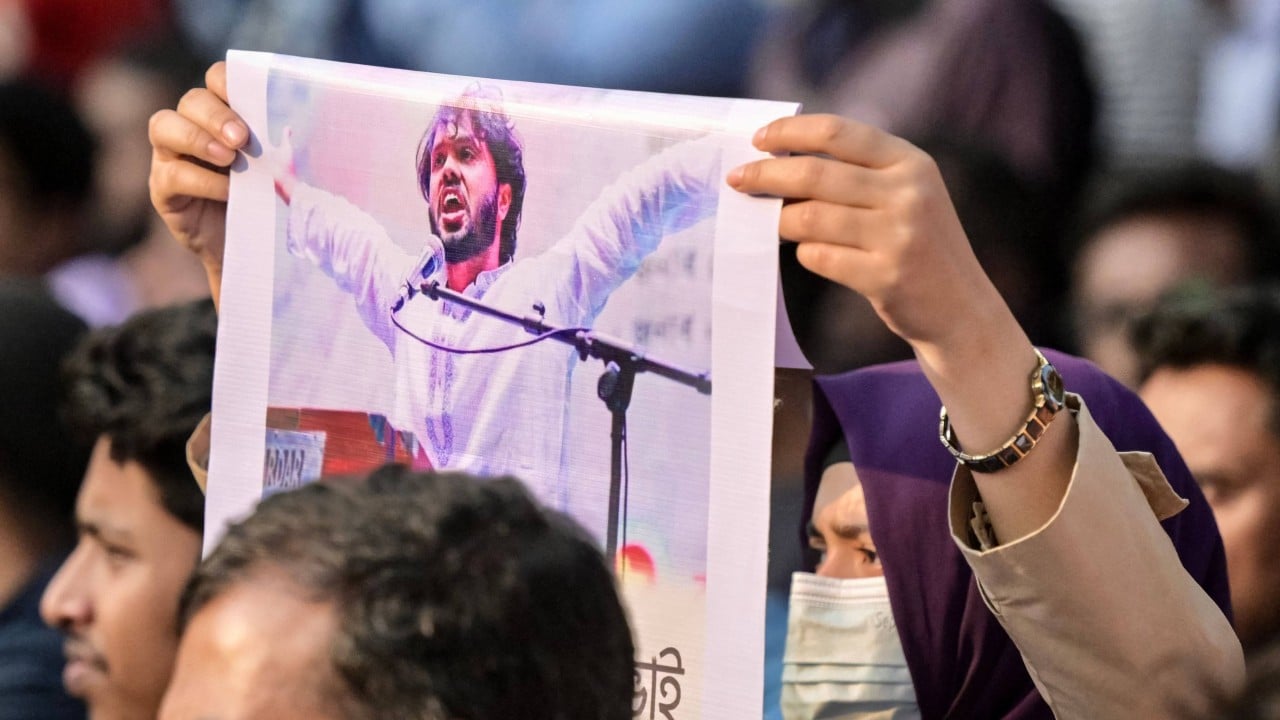
The brutal killing of a student leader in Bangladesh didn't just spark local protests. It sent a shockwave through the entire South Asian diplomatic corridor. For weeks, the relationship between New Delhi and Dhaka felt like it was stuck in a deep freeze, characterized by silence, suspicion, and a lot of finger-pointing. But the recent string of arrests related to that specific tragedy has changed the math. We're seeing a rare window where justice at home is actually creating space for diplomacy abroad.
It's not just about catching the bad guys. It's about showing that the interim administration can actually govern. When a high-profile student leader is murdered, the world watches to see if the system will protect the perpetrators or uphold the law. By moving swiftly on these arrests, Dhaka is signaling a return to some semblance of order. India has been waiting for exactly this kind of stability before it fully re-engages. Learn more on a similar issue: this related article.
Why the Arrests Matter More Than the Headlines Suggest
Most news outlets focus on the crime itself. That's a mistake. The real story is the institutional shift. In the past, political killings in the region often disappeared into a black hole of "investigative delays." This time, the speed of the arrests suggests a break from the old ways of doing business. It shows the interim government isn't just a placeholder. It's an entity capable of exercising authority.
New Delhi was understandably nervous after the sudden change in power in Dhaka. You've got a massive border, shared rivers, and billions in trade. When the dust settled after the protests, India's primary concern wasn't who was in charge, but whether they could keep the peace. Chaos is the one thing no one wants. The arrests prove that the current leadership can maintain internal security, which is the baseline requirement for any serious bilateral talks. Additional journalism by Associated Press delves into similar perspectives on the subject.
If you look at the history of India-Bangladesh relations, it’s always been a seesaw. One side goes up, the other goes down. But the common denominator is always security. India needs a stable eastern neighbor to ensure its own "Seven Sisters" states remain secure. Bangladesh needs India for economic connectivity and as a massive market for its exports. These arrests have effectively removed a massive "instability" tag from the current administration.
Breaking the Cycle of Mutual Suspicion
The tension lately hasn't been one-sided. People in Dhaka have been vocal about their concerns regarding Indian influence. Meanwhile, many in India felt that the new status quo in Bangladesh might be hostile to their interests. It was a classic Mexican standoff. Neither side wanted to blink first.
Justice for the student leader acts as a neutral ground. It's a human rights issue, a rule-of-law issue, and a domestic security issue all rolled into one. By prioritizing this case, Dhaka has given New Delhi a "safe" reason to reach out. It’s much easier for Indian diplomats to engage with a government that is visibly cleaning up its own house. It avoids the awkwardness of appearing to support a regime that can’t or won’t control its own streets.
I’ve talked to analysts who’ve seen these cycles before. They’ll tell you that the biggest hurdle in South Asian diplomacy is often public perception. If the Bangladeshi public sees their government as strong and independent—as shown by these arrests—the government has more political capital to negotiate with India. They don’t look like they’re "bowing" to a neighbor; they look like they’re leading a sovereign nation.
Trade and Transit are Back on the Menu
Let’s talk money because that’s where the reset actually happens. While the politicians were posturing, trade took a hit. Supply chains across the Benapole-Petrapole border slowed down. Indian businesses were hesitant to ship goods into what they perceived as a volatile environment.
With the arrests and the subsequent cooling of tensions, the economic engine is starting to hum again.
- Garment exports from Bangladesh are finding their way back to Indian ports.
- Energy cooperation projects that were on hold are being discussed in whispers again.
- Visa processing, which had become a nightmare for regular citizens, is slowly normalizing.
You can't have a thriving economy if your political relationship is in the gutter. The arrest of the suspects in the student leader’s killing has acted as a pressure valve. It lowered the heat. Now, both sides can look at the balance sheets again without the constant distraction of a looming security crisis.
The Role of the Interim Government
The current leadership in Dhaka is in a tough spot. They have to balance the revolutionary energy of the students with the boring, necessary tasks of running a state. If they leaned too hard into the protests, they risked looking like they couldn't control the mob. If they leaned too hard into the old bureaucracy, they'd lose the streets.
The arrests were a masterstroke of balance. It satisfied the demand for justice from the student groups while using the formal police and legal apparatus to do it. This "middle path" is exactly what a country like India wants to see. It suggests that the future of Bangladesh won't be defined by radical shifts, but by a gradual return to institutional strength.
It's also worth noting the timing. These moves didn't happen in a vacuum. They happened right as international pressure for a roadmap to elections started to build. By securing the domestic front first, the interim government has bought itself time and credibility.
Dealing with the Extremism Narrative
One of the biggest talking points in Indian media recently has been the fear of rising extremism in Bangladesh. It’s a narrative that gets clicks, but it’s often overblown. However, when a student leader is killed and no one is caught, it feeds that fire. It makes it look like the "fringe" is in charge.
By making these arrests, the authorities in Dhaka have essentially debunked the "lawlessness" narrative. They showed that the law still has teeth. This is crucial for India's internal politics too. It allows the government in New Delhi to tell its own skeptical public that Bangladesh is a reliable partner, not a brewing storm of instability.
Honestly, the "reset" isn't going to be a grand ceremony or a signed treaty. It's going to be a series of small, boring meetings about customs duties and water sharing. But those meetings can't happen if the primary news coming out of Dhaka is about unsolved murders. Justice is the lubricant that makes the gears of diplomacy turn.
What Needs to Happen Next
If you're looking for signs that this reset is sticking, watch the border. Not for soldiers, but for trucks. If the volume of trade returns to 2023 levels within the next few months, the reset is real. Also, look for high-level visits. Not necessarily the Prime Minister or the Chief Advisor, but the Foreign Secretaries. Those are the people who do the heavy lifting.
The arrests were a necessary first step. They proved that the interim government is a serious actor. But the momentum has to be maintained. If the legal process for these arrests stalls or if more violence breaks out, we'll be right back where we started.
For now, the air is clearer than it has been in months. New Delhi has stopped holding its breath, and Dhaka has shown it can handle its own business. That’s about as good a foundation for a reset as you’re going to get in this part of the world.
Stop waiting for a formal declaration of friendship. Watch the courtrooms in Dhaka and the trade offices in New Delhi. That's where the real story is unfolding. If you're a business owner or an investor, start looking at those cross-border contracts again. The risk profile just dropped.