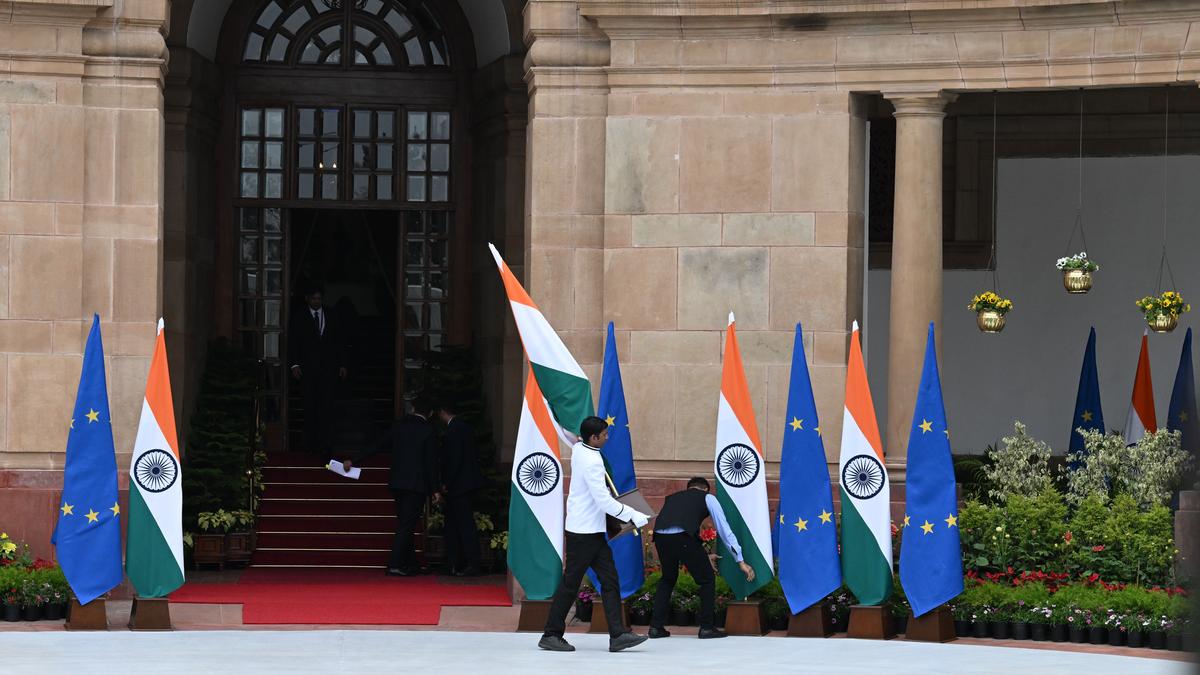
Every financial newsroom from Mumbai to Brussels is obsessing over a calendar date. December 16. They are treating the prospective signing of the India-EU Broad-based Trade and Investment Agreement like the starter pistol for an overnight economic boom.
They are wrong.
If your boardroom is currently drafting expansion budgets based on a December signing ceremony, tear them up. You are falling for the oldest trap in international commerce: confusing a diplomatic handshake with operational market access.
Mainstream coverage loves a clean narrative. Two massive democracies, nearly two billion consumers combined, finally locking in a deal after years of stalled negotiations. It makes for tidy headlines. It also completely ignores how modern trade agreements actually function on the ground, where regulatory friction eats tariff reductions for breakfast.
The Signing Date Illusion
Let us get the mechanics straight right now. A signature on December 16—or any other date—does not lower a single import duty on December 17.
Even if negotiators iron out the final text, a comprehensive trade agreement between New Delhi and the European Union faces a brutal ratification gauntlet. On the European side, depending on whether the agreement is classified as "EU-only" or a "mixed agreement" covering investment protection, it requires consent from the European Parliament and potentially approval from dozens of national and regional parliaments across the 27 member states. We saw how Wallonia nearly derailed the EU-Canada trade deal (CETA) years ago. Europe's internal politics are slower and messier than any press release admits.
I have watched mid-cap Indian manufacturers and European B2B suppliers blow millions setting up premature distribution hubs in Rotterdam and Pune based on "imminent" trade deal timelines. They burned through working capital paying for idle warehouse space and compliance retainers while bureaucrats argued over translation errors in the treaty annexes.
When you celebrate a signing date, you are celebrating the end of the beginning, not the arrival of free trade.
Tariffs Are Dead Distractions
The lazy consensus assumes that slashing customs duties automatically unlocks cross-border sales. That was true in 1995. Today, tariffs are rarely the real wall keeping Indian goods out of Europe or European firms out of India.
The real battleground is non-tariff barriers—the dense web of technical standards, sanitary rules, licensing requirements, and carbon taxes that determine whether your container actually clears customs.
Look at the European Union's Carbon Border Adjustment Mechanism (CBAM). Brussels is steadily pricing carbon emissions on imported steel, aluminum, cement, and fertilizers. Even if the India-EU trade pact drops the nominal import tariff on Indian steel to zero, CBAM acts as a de facto tariff wall unless Indian producers completely overhaul their energy grids and emissions reporting. A trade deal does not magically exempt Indian exporters from Europe's Green Deal regulations.
Flip the map and look at European companies trying to sell into India. Their biggest headache is not the customs duty; it is India's expanding regime of Quality Control Orders (QCOs) issued by the Bureau of Indian Standards (BIS). To sell everything from chemicals to footwear and industrial machinery in India, foreign factories often have to undergo physical inspections by Indian officials. Without BIS certification, your goods do not enter the country, regardless of what tariff rate is printed in a shiny new trade pact.
If you are only modeling tariff cuts, you are blind to the actual cost of doing business.
The Rules of Origin Trap
Here is a term every supply chain director needs tattooed on their desk: Rules of Origin (RoO).
To prevent third-party countries—specifically China—from routing goods through India or Europe to dodge tariffs, trade deals enforce strict RoO criteria. To claim preferential tariff rates under an India-EU pact, a product cannot just be assembled in Gujarat or Bavaria. A specific percentage of its value must be added locally, or it must undergo a substantial transformation defined at the Harmonized System (HS) tariff line level.
Consider the Indian electronics or pharmaceutical sectors. Many Indian manufacturers rely heavily on active pharmaceutical ingredients (APIs) or sub-components imported from East Asia. If the India-EU pact demands high domestic value addition, those exporters will not qualify for the zero-duty benefit anyway. They will end up paying the standard Most Favored Nation (MFN) tariff rate just to avoid the administrative nightmare of proving where every screw and chemical precursor originated.
Economists at institutions like the World Trade Organization and the Centre for European Policy Studies have documented this phenomenon for decades. Utilization rates of free trade agreements frequently lag behind headlines because the cost of compliance outweighs the tariff savings.
What Everyone Gets Wrong About Services and Visas
Whenever Indian media covers the EU trade talks, two demands take center stage: easier Mode 4 visas for Indian IT professionals and Data Secure status under Europe's General Data Protection Regulation (GDPR).
Stop waiting for Brussels to budge on either.
First, immigration and work permits are fiercely guarded national competencies within EU member states. The European Commission cannot simply trade away French or German visa quotas in a commercial treaty. At best, the pact will offer slightly smoother pathways for intra-corporate transferees—meaning senior managers moving between existing offices—not mass mobility for independent contractors.
Second, GDPR adequacy is a legal determination made by the European Commission based on strict privacy jurisprudence from the Court of Justice of the European Union. It is not a bargaining chip you trade for lower tariffs on Scotch whisky or European wines. Until India's Digital Personal Data Protection Act is fully operationalized and tested against European surveillance and data-transfer standards, Indian IT firms will still rely on Standard Contractual Clauses (SCCs) to process European data.
Expecting a trade signature to solve your cross-border HR and data-compliance bottlenecks is pure wishful thinking.
Dismantling the Common Questions
Business leaders keep asking the wrong questions about this agreement. Let us fix that.
Will Indian textiles and leather immediately beat Bangladesh and Vietnam in Europe?
No. Bangladesh currently enjoys duty-free access to the EU under the Everything But Arms (EBA) initiative, and Vietnam already has its own active EU free trade agreement (EVFTA). Even when the India-EU pact eventually takes effect, it will only put Indian apparel exporters on a level playing field with competitors who have spent years locking in European retail contracts. Parity is not an advantage; it is just the baseline cost of entry.
Will European luxury cars and wines suddenly become cheap in India?
Do not count on overnight price drops. India historically protects its domestic automotive and agricultural sectors with aggressive phase-out schedules. Tariff reductions on sensitive goods like automobiles, wines, and spirits are almost always staggered over five to ten years, often capped by strict Tariff Rate Quotas (TRQs) that limit how many units can enter at the lower rate each year. Furthermore, India's state-level excise taxes on alcohol and local registration fees on vehicles remain completely untouched by central trade treaties.
Is this deal a death blow to local Indian MSMEs?
Only if they refuse to upgrade. The biggest threat to small Indian manufacturers is not European price competition—European production costs are far too high for that. The real threat is that European buyers will demand strict Environmental, Social, and Governance (ESG) audits across their entire supplier tier. Small firms that cannot document labor standards, waste management, and supply chain traceability will get cut out of vendor lists long before European imports ever threaten their local market share.
What You Should Actually Do Right Now
If you run an export-import operation, a manufacturing plant, or a cross-border tech firm, ignore the political theater around December 16. Do this instead:
- Audit your HS codes at the 8-digit level. Do not read summary fact sheets. Pull your exact product classifications and check the current EU MFN tariff versus India's current import duty. If the tariff differential is less than 4 percent, the administrative burden of Rules of Origin paperwork will likely wipe out your margin gain.
- Map your Tier-2 and Tier-3 suppliers. Trace every non-originating input in your bill of materials. If more than 40 to 50 percent of your product's ex-works price comes from outside India or the EU, start qualifying local vendors now so you can actually claim preferential origin when the rules kick in.
- Price in carbon and compliance today. If you sell industrial goods to Europe, build a shadow carbon accounting system immediately. Your European buyers are already calculating their CBAM liabilities for the coming years and will drop suppliers who cannot provide verified emissions data.
- Secure your BIS and CE certifications early. Treat regulatory approval as your primary market-entry moat. The companies that win after a trade pact are the ones that already cleared the technical standards barrier while their competitors were waiting for politicians to sign a piece of paper.
The Honest Downside of Playing It Safe
There is a catch to ignoring the hype. If you wait until every parliament ratifies the treaty and every customs portal updates its tariff schedule, your sharper competitors will have already locked up the best distribution partners and long-term supply contracts. Moving too late leaves you fighting for scraps.
The trick is separating diplomatic noise from structural preparation. Spend zero dollars betting on a December signing date, and spend every available resource fixing your supply chain traceability and regulatory compliance.
Politicians sign trade agreements to win news cycles; operators build compliance moats to win markets. Stop watching the calendar in Brussels and start auditing your bill of materials.