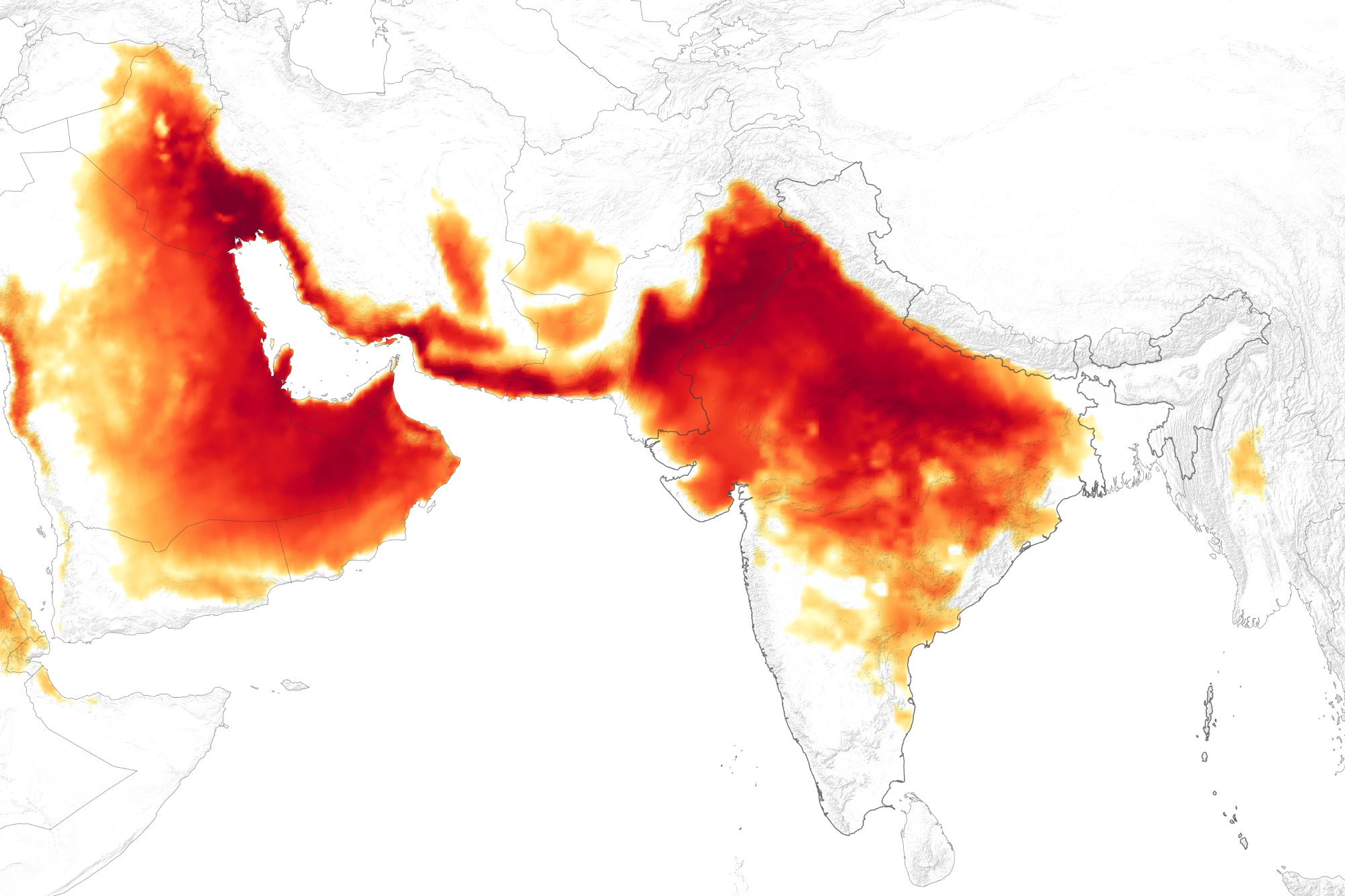
India is baking. If you’ve stepped outside lately, you don't need a thermometer to tell you that. The pavement feels like a griddle, and the air has that heavy, shimmering quality that signals a long, brutal summer. But this isn't just another seasonal spike. The World Meteorological Organization (WMO) just issued a global alert that should make everyone sit up. El Niño is back, or rather, it’s projected to firmly take hold by mid-2026. This isn't just weather nerd talk. It’s a direct threat to India’s food security, water levels, and your electricity bill.
The India Meteorological Department (IMD) isn't sugarcoating things either. They’re already flagging a "below-normal" monsoon for large swaths of the country. When the WMO and IMD align on a grim outlook, it’s time to stop thinking about heatwaves as temporary inconveniences and start treating them as economic shocks.
Why the 2026 El Nino is different
Most people think of El Niño as a simple warming of the Pacific Ocean. It’s more like a massive atmospheric engine that shifts where rain falls. Usually, trade winds push warm water toward Asia. During El Niño, those winds weaken. That warm water sloshes back toward South America. For India, that usually means the monsoon loses its backbone.
We saw this play out in 2015 and 2023, but 2026 feels more aggressive. The baseline global temperature is higher now. We aren't starting from a "normal" cool point. We’re layering a natural warming phenomenon on top of a planet that’s already running a fever. The WMO data shows that the transition from the neutral phase to El Niño is happening faster than previous cycles.
The science behind the scorch
You might hear the term ENSO (El Niño-Southern Oscillation). Think of it as a see-saw. On one side, you have La Niña, which usually brings India decent rain and slightly cooler winters. On the other side is El Niño. We’ve been riding the La Niña/Neutral side for a bit, but the see-saw just tipped hard.
$T_{anomaly} > 0.5°C$ for five consecutive overlapping three-month periods is the standard threshold for an El Niño event. Current projections suggest we’ll blast past that by June. When the central and eastern Pacific warm up, the Indian Monsoon's "Boreal Summer Monsoon Oscillation" gets disrupted. Basically, the moisture that should be dumping rain over Maharashtra and Madhya Pradesh gets trapped elsewhere.
The IMD warning and the monsoon gap
The IMD’s latest briefing is particularly worrying for the "breadbasket" regions. Northern and Central India are looking at a rainfall deficit that could hit 10-15% in the peak months of July and August. That’s a nightmare for Kharif crops. Farmers depend on that early rain to sow rice, pulses, and soybeans. If the rain doesn't show up by mid-July, the yield drops off a cliff.
It's not just about the rain quantity. It's about the timing. El Niño often causes "long break" spells. You might get a week of torrential rain that floods the fields, followed by three weeks of bone-dry, 45°C heat. That kind of volatility kills plants just as effectively as a total drought.
Heatwaves are the new economic predator
We need to talk about the "wet-bulb temperature." It’s a measure that combines heat and humidity. Once the wet-bulb temperature hits 35°C, the human body can't cool itself down by sweating. It’s a hard physical limit. Parts of Odisha and West Bengal are already flirting with these limits during the current pre-monsoon heatwave.
This isn't just a health crisis. It’s an infrastructure collapse in slow motion.
- Power Grids: When everyone cranks the AC, the load spikes. If hydroelectric dams are low because of poor rain, we lose a huge chunk of our "green" power buffer.
- Labor Productivity: You can't ask construction workers or delivery drivers to pull 10-hour shifts in 48°C weather. It’s inhumane and leads to a massive slowdown in the economy.
- Food Inflation: If the monsoon fails, vegetable prices skyrocket. We've seen it with tomatoes and onions repeatedly. In 2026, this could be worse because global grain stocks are already tight.
Urban heat islands are making it worse
If you live in a city like Delhi, Bengaluru, or Hyderabad, you're feeling a "penalty" of about 3-5°C compared to the surrounding countryside. Concrete and asphalt soak up heat all day and radiate it back at night. Your apartment never actually cools down.
I’ve seen cities try to combat this with "cool roofs"—essentially painting rooftops white to reflect sunlight. It works. It can drop indoor temperatures by a few degrees. But it’s a band-aid on a bullet wound if we don't address the lack of green cover. We’re losing trees to "development" exactly when we need their shade the most.
The water table crisis
Poor monsoons mean less groundwater recharge. In states like Punjab and Haryana, the water table is already sinking at an alarming rate. When El Niño hits, farmers pump even more groundwater to save their crops. It’s a death spiral. We’re using tomorrow's water to survive a heatwave today.
What you should actually do
Stop waiting for the government to fix the climate. They won't do it fast enough. You need to harden your own life against these shifts.
First, look at your water consumption now. If the IMD is right about a below-normal monsoon, water rationing in major cities is almost a certainty by early 2027. Install low-flow fixtures. It sounds small, but it matters when the reservoirs hit 10% capacity.
Second, if you're an investor, look at the impact on FMCG and Agri-stocks. A bad monsoon usually means rural demand dries up. People in villages won't be buying new motorcycles or premium soaps if their crops are failing. Diversify away from sectors that are hyper-dependent on rural rain.
Third, check your insurance. This sounds boring, but "extreme weather" clauses are becoming more common and more restrictive. If you own property in areas prone to flash floods (which ironically happen more during El Niño-driven erratic rain), make sure you’re covered.
The reality check
We're entering a period where "record-breaking" temperatures will become the annual baseline. The WMO’s flagging of El Niño for 2026 is a final warning. The heatwaves gripping India right now are just the opening act. We’re looking at a multi-year cycle of dry heat, failing crops, and strained resources.
Prepare for a long, expensive summer. Don't expect the monsoon to bail us out this time. The data says it won't. The only smart move is to assume the worst-case scenario for water and power and plan your finances and health accordingly. Start by auditing your home's insulation and securing your water supply. The heat isn't going anywhere.