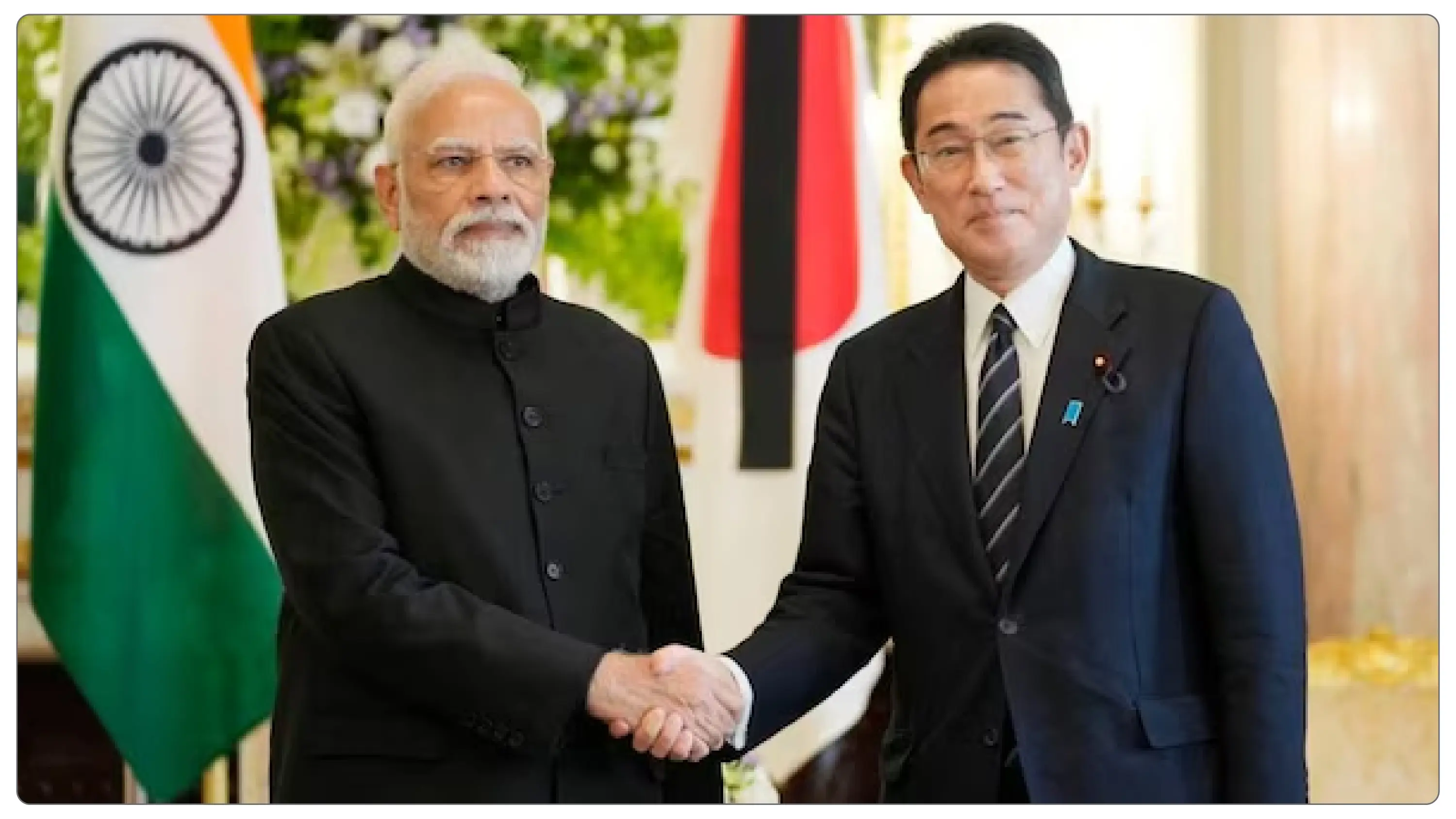
India and Japan just sat down to talk about artificial intelligence for the first time in a formal, high-stakes dialogue. Most people will glance at the headline and think it’s just another diplomatic photo op. They’re wrong. This isn't just about two countries sharing code or trading chips. It’s a calculated, long-term play to build a massive counterweight to the dominant AI models coming out of Silicon Valley and Beijing. If you aren't paying attention to how New Delhi and Tokyo are aligning their digital strategies, you’re missing the blueprint for the next decade of global tech power.
Japan has the hardware and the legacy of precision engineering. India has the scale, the data, and an army of developers. When these two combine forces, they aren't just talking about chatbots. They’re looking at sovereign AI, ethical frameworks that actually mean something, and industrial automation that could redefine manufacturing. I’ve watched these bilateral agreements for years. Usually, they’re full of fluff. This one feels different because the stakes have never been higher for either nation.
Moving Beyond the Hype of Bilateral Tech Talks
The inaugural India-Japan AI Dialogue isn't happening in a vacuum. It’s the result of months of quiet preparation under the India-Japan Digital Partnership. Both nations realize that depending on external AI ecosystems is a massive risk. Japan is terrified of losing its edge in robotics and automotive sectors if it doesn't master AI. India knows its "India Stack" success needs an AI layer to handle the needs of 1.4 billion people.
What makes this partnership unique is the complementary nature of their needs. Japan is facing a demographic crisis with a shrinking workforce. They need AI to keep their factories running and their elderly cared for. India has a massive, young population that needs to be upskilled and integrated into a digital economy. This isn't a competition. It’s a survival pact.
We’re seeing a shift from general-purpose AI toward specialized, industrial applications. The dialogue focused on how AI can be integrated into the Global Partnership on Artificial Intelligence (GPAI) framework, where India recently held the chair. They’re trying to set the rules of the road before the road gets paved by companies that don't care about national sovereignty.
Why India and Japan are Doubling Down on Sovereign AI
The term "Sovereign AI" gets thrown around a lot, but for India and Japan, it’s a necessity. They don’t want to be "digital colonies" of the US or China. During this inaugural dialogue, officials discussed the importance of building Large Language Models (LLMs) that understand local contexts. Think about it. An AI trained on American internet data doesn't understand the nuances of Japanese social etiquette or the linguistic diversity of rural India.
Japan has been investing heavily in "Sakura" and other domestic AI projects. Meanwhile, India is pushing the "Bhashini" project to break down language barriers using AI. By aligning these efforts, they can share research on how to train models with less data or more efficiency. This matters because computing power is expensive. Japan has the supercomputing muscle—think of the Fugaku supercomputer—and India has the massive datasets required to train these systems.
The Hardware Gap and the Silicon Connection
You can't have AI without chips. Japan is currently revitalizing its semiconductor industry with massive subsidies for companies like Rapidus. India is trying to build its own semiconductor ecosystem from scratch. Part of this AI dialogue inevitably bleeds into hardware. If India can become the manufacturing hub and Japan provides the high-end lithography and design expertise, they create a supply chain that’s insulated from geopolitical shocks in the Taiwan Strait.
I’ve seen plenty of "Memorandums of Understanding" that go nowhere. But when you look at the recent investments by Japanese giants like SoftBank or the collaboration between NEC and Indian tech hubs, the money is already moving. This dialogue is just the formal structure catching up to the reality on the ground.
Ethics and Governance Without the Preaching
One of the most refreshing parts of this India-Japan alignment is the approach to AI ethics. While the EU is busy over-regulating everything into oblivion and the US is letting big tech do whatever it wants, India and Japan are looking for a middle path. They call it "Human-Centric AI."
It sounds like a buzzword. It’s not. In Japan, this means AI that assists workers rather than replacing them. In India, it means AI that provides healthcare advice to a farmer in Bihar who doesn't speak English. They’re focusing on "Trustworthy AI" which involves transparent data usage and bias mitigation. During the dialogue, both sides emphasized the need for international standards that reflect the values of democratic societies. They want to ensure that AI doesn't become a tool for mass surveillance or social manipulation.
What This Partnership Means for the Global Tech Order
The world is currently split into tech blocs. You have the American approach, the Chinese approach, and the European regulatory approach. India and Japan are effectively creating a fourth bloc. This bloc is built on the idea of "Open, Safe, and Trusted" AI.
By cooperating, they can influence global policy at the UN and the G7. Japan’s leadership in the Hiroshima AI Process and India’s influence in the Global South make them a formidable duo. They are the bridge between the high-tech West and the developing world. When they agree on technical standards for AI interoperability, the rest of the world has to listen.
Breaking the Monopoly on Innovation
For too long, AI innovation has been concentrated in a few ZIP codes in California. This dialogue is a direct challenge to that. By pooling resources, India and Japan can accelerate breakthroughs in areas like AI-driven drug discovery, climate modeling, and smart city management.
Japan’s expertise in "Edge AI"—putting intelligence directly into devices rather than the cloud—is a perfect match for India’s massive mobile-first population. We’re likely to see more joint ventures between Japanese startups and Indian engineers. This isn't just theory. We’re already seeing it in the way Tokyo is looking to recruit thousands of Indian IT professionals specifically for AI development.
The Practical Realities of the Next Decade
If you're a business leader or a tech enthusiast, you can't ignore this. The next decade of AI development won't just be about who has the flashiest chatbot. It will be about who controls the infrastructure and the standards.
India and Japan are positioning themselves to be the adults in the room. They’re focusing on the "boring" but essential parts of AI: data privacy, interoperability, and industrial application. They’re building a foundation that’s actually sustainable.
Don't wait for the mainstream media to tell you this is a big deal three years from now. The shift is happening now. The inaugural dialogue was the starting gun. If you’re involved in tech, start looking at how your stack interacts with these emerging standards.
- Watch the "Hiroshima AI Process" updates closely.
- Follow the joint research papers coming out of IITs and Japanese universities like University of Tokyo.
- Keep an eye on the Japan-India Startup Hub activities.
The era of US-China dominance in AI is being challenged. India and Japan just signaled that they intend to be the ones holding the pen when the next chapter of the digital age is written. It’s a bold move. It’s necessary. And frankly, it’s about time.