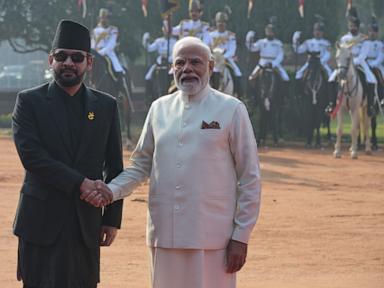
Read any mainstream press release about New Delhi pledging $1.6 billion for Nepal’s flood recovery and you get the exact same sanitized bedtime story. Generous big brother steps in. Neighborly solidarity triumphs over monsoon devastation. Bridges get rebuilt, lives get saved, everyone shakes hands for the cameras.
That narrative is pure diplomatic theater.
When a regional superpower drops ten-figure capital into a smaller neighbor’s waterlogged infrastructure, altruism is never the primary line item. What the standard news coverage completely misses—either out of journalistic laziness or willful naivety—is that cross-border disaster relief in the Himalayas is the ultimate geopolitical arbitrage. You do not spend $1.6 billion fixing someone else’s drainage unless you intend to own the tap.
I have spent over a decade tracking sovereign infrastructure deals and cross-border water treaties across South Asia. I have watched billion-dollar reconstruction pledges evaporate into consultancy fees, tied-procurement traps, and decades-long sovereignty concessions. If you evaluate this package through the lens of humanitarian relief, you are reading the wrong balance sheet entirely.
The Anatomy of Tied Aid and Sovereign Debt Traps
To understand why this $1.6 billion figure is misleading, you first have to strip away the headline number. In international development finance, an "aid package" is almost never a suitcase of unrestricted cash wired to Kathmandu’s central bank.
It is a complex stack of concessional Lines of Credit (LoCs), tied bilateral grants, and export-import bank guarantees.
When India’s Export-Import Bank (EXIM) underwrites a reconstruction credit line, that money rarely leaves the Indian banking system. Under standard tied-aid stipulations, anywhere from 65% to 75% of the goods, engineering services, steel, cement, and heavy machinery used in the recovery projects must be sourced directly from Indian firms.
Think about the mechanics of that transaction.
- New Delhi announces a massive humanitarian credit line to huge diplomatic applause.
- Kathmandu signs the sovereign loan agreement, adding hundreds of millions of dollars to its external debt ledger.
- The capital flows straight from an Indian state-backed bank to Indian engineering conglomerates—the Larsens, the Tatas, the state-owned hydropower and construction giants.
- Nepal gets the physical concrete, pays the interest over twenty years, and absorbs the domestic political fallout when local contractors are locked out of their own country's rebuilding effort.
This is not unique to India. Beijing plays the exact same game under the Belt and Road Initiative, and Washington perfected it through USAID decades ago. The problem is not that New Delhi uses tied aid; the problem is pretending that a domestic industrial stimulus package disguised as foreign flood relief is an act of pure charity.
The Disbursement Illusion
Even when pure grants are included in the mix, historical precedent in the Himalayan belt shows a massive chasm between pledged capital and disbursed capital.
Look back at the 2015 Gorkha earthquake in Nepal. International donors pledged over $4 billion in a frenzy of televised compassion, with India leading the pack at $1 billion ($250 million in grants and $750 million in lines of credit). Five years later, massive chunks of those credit lines remained unutilized, stalled by bureaucratic friction, disputed procurement rules, and shifts in Kathmandu’s governing coalitions.
Pledges buy immediate headlines. Disbursements require political submission. By dangling $1.6 billion in front of a cash-strapped Nepali administration facing angry, displaced voters, New Delhi gains instant leverage over every stalled bilateral negotiation sitting on Kathmandu's desk.
Geography Is Destiny and Upstream Control Is Power
Why does New Delhi care so obsessively about Nepal’s floodplains? Look at a topographic map of the Gangetic plain.
Every major river that floods Bihar and Uttar Pradesh—the Koshi, the Gandaki, the Karnali, the Mahakali—originates in the high Himalayas of Nepal. When cloudbursts and glacial lake outbursts hammer Nepal’s mid-hills, the water does not stay in Nepal. It barrels south at lethal velocity, wiping out crops, railways, and towns across India’s most densely populated states.
Flood recovery in Nepal is domestic flood insurance for northern India.
By funding and designing the reconstruction of embankments, barrages, and river-training infrastructure inside Nepali territory, Indian engineers dictate where the water goes when the next monsoon hits. For decades, Nepali farmers in the Terai plains have accused Indian-built embankments along the border of acting as artificial dams—holding back monsoon runoff on the Nepali side to keep Indian districts dry, turning Nepali villages into seasonal retention ponds.
When you control the engineering specs of the recovery, you decide which side of the border floods next August.
The Hydropower Endgame
You cannot separate flood management from hydropower in the Himalayas. They are two sides of the exact same concrete coin.
High-dam storage projects in Nepal regulate downstream river flow during the dry season, prevent catastrophic flooding during the monsoon, and generate massive amounts of clean baseload electricity. India needs that power to feed its industrial grid and meet its net-zero targets without relying solely on volatile solar imports.
Here is where the $1.6 billion package shows its sharpest teeth. Over the past five years, New Delhi has enforced a ruthless, unwritten rule in South Asia's energy market: India will not buy a single megawatt of electricity from any Nepali hydropower project that involves Chinese capital, Chinese contractors, or Chinese equipment.
By flooding Nepal’s reconstruction sector with subsidized Indian credit right now, New Delhi is crowding out Beijing. If Kathmandu accepts Indian money to rebuild its damaged road networks, transmission corridors, and river basins, it locks itself into Indian technical standards and Indian grid integration. Every kilometer of transmission line rebuilt under this package is another nail in the coffin of Chinese infrastructure influence south of the Tibetan plateau.
Dismantling the Common Myths Around Regional Disaster Relief
When news of these mega-packages breaks, public discourse immediately falls into predictable, shallow traps. Let’s tear down the three most common misconceptions driving the conversation.
Is Nepal actually getting $1.6 billion in free money?
No. Treating the headline figure as a cash gift is financial illiteracy. Unless New Delhi explicitly structures the entire sum as an unconditional, non-reimbursable budget support grant—which it never does at this scale—a substantial portion is debt that Nepali taxpayers must service. Even at concessional interest rates of 1% to 1.75% with multi-year grace periods, currency depreciation of the Nepali Rupee against the US Dollar (or structural trade deficits tied to the Indian Rupee) increases the real cost of repayment over time. Furthermore, project-tied funds mean Kathmandu cannot redirect a single rupee toward urgent social safety nets, healthcare, or direct cash transfers for displaced families.
Does massive foreign aid accelerate post-disaster recovery?
Often, it does the exact opposite. Dumping a $1.6 billion bureaucratic apparatus onto a country with chronically weak municipal absorption capacity creates what economists call institutional paralysis. Local governments stop prioritizing fast, decentralized, community-led repairs because everyone is waiting for the massive central-government-and-foreign-donor tender process to kick off. I have seen entire districts sit in temporary tin shelters for three monsoons while ministries in the capital argue with foreign diplomats over environmental impact assessments and contractor pre-qualifications. Speed requires local cash and local labor; mega-packages breed red tape and paralysis.
Will this finally fix Nepal’s recurring flood crisis?
Not if the money is spent rebuilding the exact same flawed infrastructure. Standard post-disaster aid suffers from a fatal engineering bias: it favors massive, concrete-heavy civil works—higher embankments, wider highways, deeper dredging—because big concrete contracts are easy to audit and profitable for tied contractors. In the geologically young, seismically active Himalayas, rigid concrete walls fighting dynamic, sediment-heavy rivers almost always fail. Without addressing deforestation, unregulated hillside road-cutting by local political syndicates, and early-warning watershed governance, pouring $1.6 billion into concrete embankments just guarantees a more expensive disaster five years from now.
The Strategic Reality New Delhi Won't Print
None of this means New Delhi is acting irrationally. From a cold, realist foreign policy perspective, India’s move is a masterclass in statecraft.
If you are sitting in South Block in New Delhi, watching China build rail links toward Kerung and ink security pacts across the Indian Ocean, you do not wait for a formal alliance to secure your northern buffer. You use nature’s devastation as an opening. You deploy capital faster than Beijing can convene a committee. You bind your neighbor’s physical reconstruction, power grid, and river systems so tightly to your own economy that geopolitical neutrality becomes physically impossible.
And look at the flip side—the harsh reality that makes my own critique complicated.
Without India’s balance sheet, Nepal is trapped. Kathmandu lacks the domestic tax base, the sovereign credit rating, and the heavy engineering capacity to rebuild shattered highways and bridges before the next monsoon cycle hits. Multilateral lenders like the World Bank and the Asian Development Bank move at glacial speeds, bogged down by compliance frameworks that take years to clear. If Kathmandu rejects or delays Indian capital out of nationalist pride, ordinary Nepali citizens pay the price in cut-off supply chains, skyrocketing food inflation, and unpassable mountain roads.
That is the brutal asymmetry of Himalayan geopolitics. Nepal needs the money tomorrow; India needs the leverage forever.
How Kathmandu Should Actually Play This Hand
If Nepali policymakers want to avoid turning a natural disaster into a permanent loss of economic agency, they need to stop acting like grateful recipients and start negotiating like distressed-asset owners holding prime real estate.
- Demand a strict split between grants and credit lines. Kathmandu must refuse to take on sovereign debt for non-revenue-generating social infrastructure like rural roads and embankments. Concessional loans should be strictly ring-fenced for revenue-generating assets—like cross-border transmission lines and storage hydropower—that pay for themselves in hard currency exports.
- Break the tied-procurement monopoly. Nepal should insist on mandatory joint-venture clauses that force Indian prime contractors to sub-contract at least 40% of civil works to domestic Nepali firms, ensuring capital circulates inside the local economy rather than bouncing straight back across the border.
- Separate flood recovery from diplomatic hostage-taking. Every bilateral water treaty—from the Koshi to the Pancheshwar multipurpose project—must be negotiated on standalone commercial and ecological terms, not bundled as an unspoken quid pro quo for disaster relief.
- Shift capital from concrete to watershed resilience. Instead of letting foreign contractors pour billions into fragile river walls, Kathmandu should channel grant components directly to municipal governments for bio-engineering, slope stabilization, and decentralized early-warning systems.
The Verdict
Stop reading billion-dollar aid announcements as acts of international kindness. In geopolitics, there are no gifts—only investments with different maturity dates.
New Delhi just bought itself a seat at the head of every infrastructure, water, and energy table in Kathmandu for the next two decades, and it did it at a bargain price of $1.6 billion. The press releases will talk about brotherhood and rebuilding. The engineers and diplomats know better: when you pay to rebuild your neighbor's house, you get to keep a copy of the front door key.