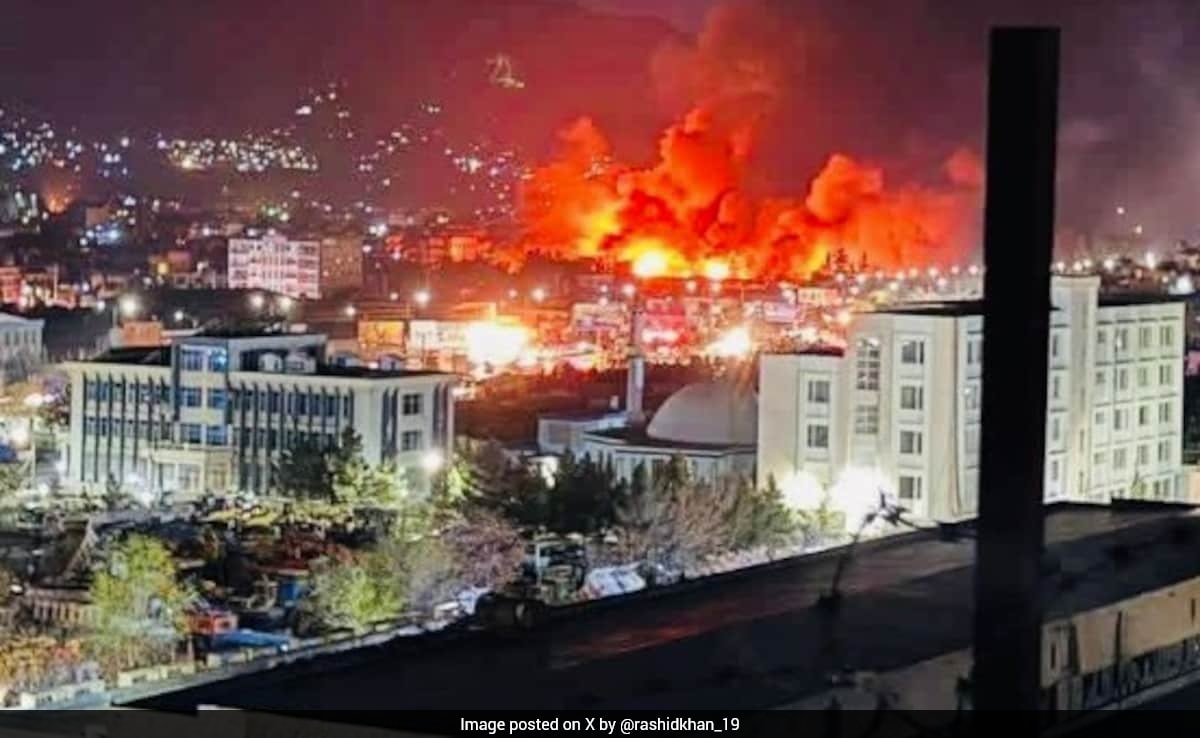
The map to India’s west is currently a collection of flashpoints that refuse to cool down. If you’ve looked at the news lately, you’ve seen the headlines about missiles crossing the Iran-Pakistan border or the Taliban’s ongoing water disputes with Tehran. It’s a mess. For decades, the narrative was about "strategic depth" or shared religious bonds, but those old scripts have been burned. Today, the borderlands between Iran, Pakistan, and Afghanistan are defined by raw survival, ethnic militancy, and a desperate scramble for resources.
Understanding this isn't just an academic exercise for folks in Delhi. It’s a direct security concern. When these three nations fight, the fallout—refugees, drugs, and terror cells—doesn't stay contained within their borders. It spills over.
The Iran and Pakistan Missile Exchange Was No Accident
Back in early 2024, the world watched in shock as Iran and Pakistan traded airstrikes. Iran hit targets in Pakistan’s Balochistan province, claiming to target Jaish al-Adl, a Sunni militant group. Pakistan hit back 48 hours later, targeting "terrorist hideouts" in Iran’s Sistan-Baluchestan.
It looked like the start of a regional war. It wasn't. But it was a massive signal.
Both nations have a "Baloch problem." The Baloch people live across a region that spans Iran, Pakistan, and a bit of Afghanistan. They’ve been fighting for independence or at least better rights for a long time. Pakistan accuses Iran of sheltering Baloch separatists who attack Pakistani soldiers. Iran accuses Pakistan of letting Sunni extremists use its soil to kill Iranian Revolutionary Guards.
The strikes were a way for both regimes to look strong at home. Iran’s government was under pressure after domestic protests and ISIS-K bombings. They needed to show they could strike anyone, anywhere. Pakistan, reeling from economic collapse and political instability, couldn’t afford to look weak. They traded blows, then immediately started talking about "brotherly relations" again. It’s a toxic cycle of suspicion disguised as diplomacy.
The Taliban and Iran Are Fighting Over Water
You’d think two hardline Islamic regimes would get along. They don't. Since the Taliban took Kabul in 2021, the relationship with Tehran has gone from "pragmatic cooperation" to "border skirmishes with heavy artillery."
The biggest beef? The Helmand River.
Afghanistan is building dams. Iran is drying up. The Kamal Khan Dam and the Salma Dam (which India helped build, ironically) give the Taliban the power to turn off the tap. Sistan-Baluchestan, one of Iran's poorest provinces, relies on this water. When the water doesn't flow, Iranian farmers lose their livelihoods, and the government in Tehran faces riots.
I've seen reports of IRGC troops and Taliban fighters trading gunfire over irrigation ditches. It’s gritty, localized, and incredibly dangerous. The Taliban don't play by the rules of international diplomacy. They don't care about 1973 water treaties. They want leverage. For Iran, this is an existential threat. You can't live without water, and you can't govern a thirsty population.
Pakistan and the Taliban The Ultimate Backfire
This is the most "I told you so" moment in modern geopolitics. For twenty years, Pakistan’s military establishment backed the Taliban, hoping for a friendly government in Kabul once the Americans left. They got exactly what they wanted, and it’s been a total disaster for them.
The Afghan Taliban and the Pakistani Taliban (TTP) are two sides of the same coin. The TTP wants to overthrow the Pakistani state and install a caliphate. They use Afghanistan as a base. Pakistan keeps asking the Kabul Taliban to rein them in. The Kabul Taliban basically says, "Not our problem."
The result? A massive spike in terror attacks inside Pakistan. The border, known as the Durand Line, is a fence that neither side respects. Pakistan has even carried out airstrikes inside Afghanistan to hit TTP camps, which infuriates the Taliban. The "strategic depth" Pakistan sought has turned into a strategic nightmare. They’re now fenced in by a regime they helped create but cannot control.
How This Chaos Hits India
India is watching this with a mix of "we saw this coming" and genuine worry.
First, there’s the security angle. Instability in Pakistan usually leads to the military using "external threats" to distract the public. Often, that means ramping up tension on the Line of Control with India. However, right now, Pakistan is so bogged down on its western front with the TTP and Iran that it has less bandwidth for mischief in Kashmir. That’s a temporary win, but a collapsed Pakistan is a nuclear-armed headache no one wants.
Then there’s the trade. India invested heavily in Iran’s Chabahar Port to bypass Pakistan and reach Central Asia. If Iran is constantly bickering with its neighbors or facing internal unrest, that investment stays stalled.
What You Need to Watch For
The dynamics here move fast. If you're trying to keep track of where this goes, don't look at the high-level diplomatic meetings. Look at these three things:
- The TTP Attacks: If the Pakistani Taliban continues to strike deep into Punjab or Karachi, expect the Pakistani military to get more aggressive with the Afghan border.
- Currency and Fuel Smuggling: The border between Iran and Pakistan is a sieve for "black" fuel. When the Pakistani economy dips, this smuggling is the only thing keeping the local Baloch population alive. If the governments crack down too hard, expect an uprising.
- The ISIS-K Factor: This group hates everyone mentioned above. They hate the Taliban, they hate the Iranians, and they hate the Pakistani state. They thrive in the cracks between these fighting neighbors.
The "Western Front" isn't a single conflict. It’s a web of overlapping grudges. Iran wants regional hegemony and water. The Taliban want recognition and total control of their territory. Pakistan just wants to stop its own creation from tearing it apart.
If you want to understand the risks to regional stability, stop looking at the map as a set of fixed borders. Start looking at it as a series of shared problems—water, militancy, and ethnic identity—that none of these three governments have the money or the will to solve.
Keep an eye on the Helmand River levels this summer. If the water stops flowing, the guns will start firing. That's the simplest metric we have right now. Follow the water, and you'll find the next conflict.