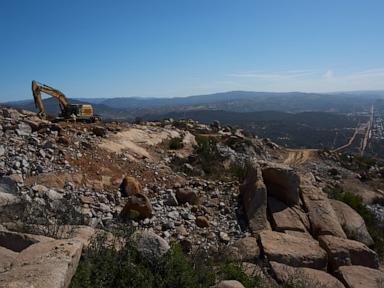
The physical barrier stretching across the southern United States is more than a political statement. It is a scar through ancestral lands. For years, headlines focused on the immigration debate, building costs, and political gridlock. But another crisis played out quietly in the desert dust. Government crews blasted mountains, diverted natural springs, and bulldozed burial grounds.
Indigenous leaders have raised the alarm for over a decade. They are not just protesting a political policy. They are watching the systematic destruction of their heritage. US-Mexico border wall construction is desecrating sacred sites, and federal legal loopholes allowed it to happen with zero accountability. Don't miss our recent post on this related article.
To understand the scale of this loss, look at the geography. The border does not just separate two nations. It cuts directly through the traditional territories of tribes like the Tohono O'odham Nation, the Kumeyaay, and the Carrizo/Comecrudo Nation. These communities lived here long before lines were drawn on a map. Today, their ancestral history is being turned into gravel.
Blasting Monument Hill and the Erasure of O'odham History
One of the most egregious examples of this destruction occurred at Monument Hill within Arizona's Organ Pipe Cactus National Monument. In early 2020, contractors used controlled detonations to clear land for a 30-foot steel bollard wall. If you want more about the background of this, NPR offers an in-depth summary.
This was not empty desert. Monument Hill is a sacred site for the Tohono O'odham Nation. It is the resting place of Apache warriors who clashed with the O'odham centuries ago. Out of respect for their rivals, the O'odham gave them proper burials on the hill.
Ned Norris Jr., who served as chairman of the Tohono O'odham Nation, testified before Congress about the sheer pain of watching this happen. He compared it to bulldozing Arlington National Cemetery to build a fence. Imagine heavy machinery ripping through the graves of your ancestors. That is exactly what happened in the Arizona desert. The government did not consult the tribe before the dynamite was lit. They just blew it up.
The Real Power Behind the Destruction
How did federal contractors legally destroy protected federal lands and Indigenous sites? They used a legislative sledgehammer called the REAL ID Act of 2005.
Section 102 of this law gives the Secretary of Homeland Security the unilateral power to waive any and all federal laws that might slow down the construction of border barriers. It bypasses decades of environmental and cultural protections.
The government waived the Native American Graves Protection and Repatriation Act. They waived the National Historic Preservation Act. They ignored the Endangered Species Act. By using these waivers, federal agencies bypassed the mandatory requirement to consult with sovereign tribal nations before digging up their land.
The legal shield meant that even when tribal members put their bodies in front of construction equipment, the courts could do nothing to stop the bulldozers. The law of the land was effectively suspended for a wall.
The Drying of Quitobaquito Springs
Water is life in the Sonoran Desert, and Quitobaquito Springs is one of the rarest water sources in the region. Located just feet from the border line, this natural oasis has sustained human life for thousands of years. It is home to the endangered Sonoyta pupfish and the Rio Sonoyta mud turtle. It is also deeply sacred to the Hia-C-ed O'odham, a sister tribe to the Tohono O'odham.
During the wall construction rush, contractors pumped millions of gallons of groundwater from local wells to mix the concrete needed for the wall's foundations. The results were immediate and devastating.
- Water levels at Quitobaquito dropped to historic lows.
- Massive cracks appeared in the mud of the sacred pond.
- Ancient burial sites near the spring were disrupted by heavy vehicle traffic.
Tribal elders who used to gather at the springs for ceremonies found themselves staring at a massive steel wall through a chain-link fence, surrounded by security cameras and armed guards. A place of peace became a militarized zone.
The Kumeyaay Resistance at Palo Verde
Further west, in the mountains near San Diego, the Kumeyaay Nation faced a similar invasion. Contractors targeted the rugged terrain around Campo and Jacumba Hot Springs for new wall placement.
The Kumeyaay people have occupied this region for at least 12,000 years. Their creation stories, traditional songs, and burial sites are mapped directly onto these mountains. When the dynamite crews arrived to blast through the rock, Kumeyaay activists and tribal members organized protests. They blocked access roads and held religious ceremonies directly in the path of the construction crews.
La Posta Band of Mission Indians Chairman Gwendolyn Parada filed lawsuits to halt the construction, arguing that the blasting would forever destroy religious sites and ancestral remains. The courts denied the injunctions. The legal waivers held strong. The construction crews kept digging, uncovering cultural artifacts and fragments that activists say were quickly cleared away to keep the project on schedule.
The Illusion of the Border Wall Pause
When the federal administration shifted in 2021, an executive order paused all border wall construction. Many thought the destruction would stop. It did not.
The pause left massive gaps in the wall, but it also left a landscape permanently altered. Unfinished construction sites caused severe soil erosion during monsoon seasons, washing away unmapped archeological sites.
Worse, the Department of Homeland Security later authorized "remediation" projects to fill in the gaps and address safety hazards left by the sudden halt. In practice, this meant heavy machinery returned to places like San Bernardino National Wildlife Refuge and the Otay Mountain Wilderness, continuing to disrupt the fragile terrain. The construction simply changed its official name.
Moving Beyond Symbolic Consultation
If you want to protect what remains of these ancient sites, you cannot rely on federal agencies to do the right thing out of goodwill. History shows they will choose political expedience over cultural preservation every time. True protection requires structural, legislative change.
First, contact your congressional representatives and demand the repeal of the waiver authority within Section 102 of the REAL ID Act. This single clause is the root cause of the legal immunity that stripped tribes of their rights. Without it, federal agencies would be legally forced to follow environmental and cultural protection laws.
Second, support indigenous-led legal funds and activist groups on the ground. Organizations like the International Indian Treaty Council and local tribal preservation offices are constantly fighting these battles in courtrooms and in the dirt. They need funding, legal expertise, and public visibility to keep the pressure on federal contractors.
Finally, demand that the Department of the Interior institute a mandatory, legally binding tribal consultation framework for any future border security infrastructure projects. Consultation cannot be a checklist item completed after the bulldozers have already arrived. It must happen before a single shovel touches the earth.