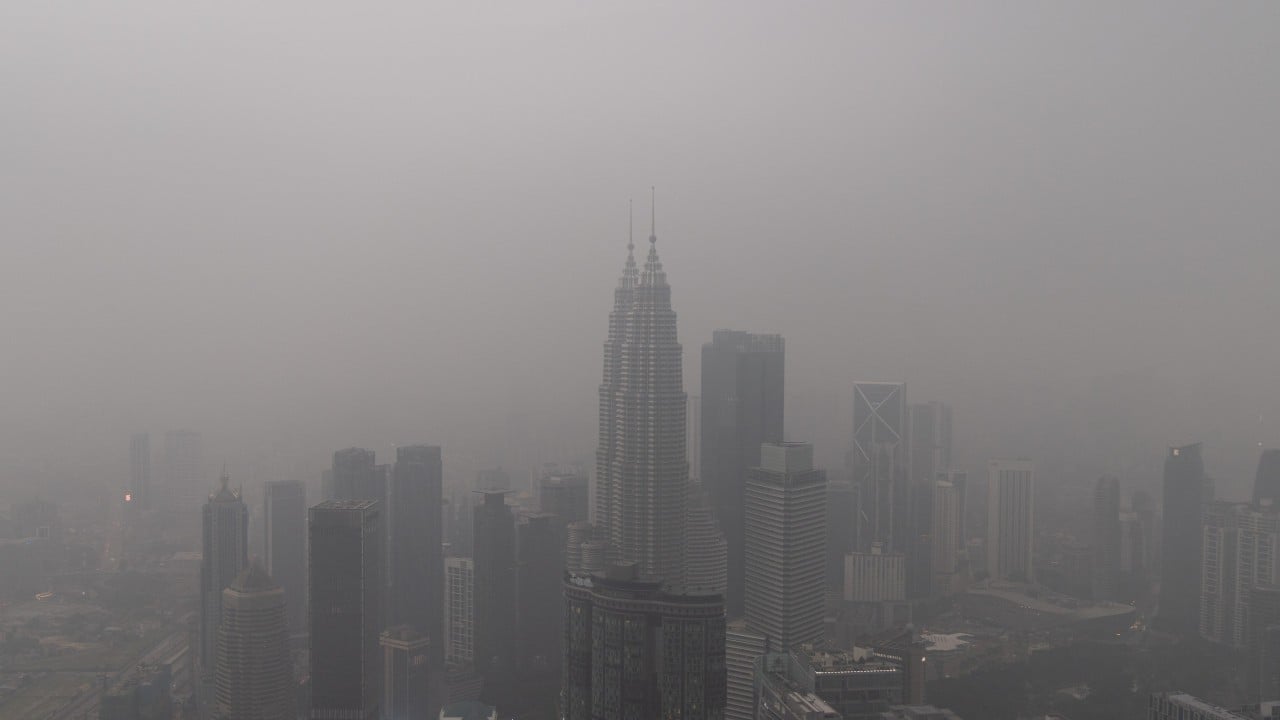
Cross-border smoke doesn't stop at immigration checkpoints, and Malaysia's balance sheet proves it every dry season. A study commissioned by the Federation of Malaysian Manufacturers puts Malaysia's welfare losses from the 2026 transboundary haze at about RM8 billion, or roughly US$1.97 billion, between July 1 and October 22. That number is huge. Still, it barely captures the messy day-to-day reality of factories slowing down, parents scrambling over school closures, and lungs breathing thick smoke for months on end.
Most headlines treat a billion-dollar figure like a single bill someone can pay with a check. Economics doesn't work that way when air turns gray across a whole region. Part of that cost shows up in missed shifts and halted lines. Part of it shows up as statistical health risk rather than cash leaving a bank account. If we want to understand why this keeps happening—and why polite regional diplomacy keeps falling short—we have to look past the headline total and see how the damage actually spreads.
How Indonesian Haze Hits Malaysian Factories and Workers
When smoke rolls over the Strait of Malacca or across Borneo, boardrooms feel it fast. The report commissioned by the Federation of Malaysian Manufacturers combined satellite observations, air monitors, atmospheric modeling, and factory survey data to map what happened during the 2026 fire season. Most survey responses came from Selangor and Penang, industrial heartlands where downtime hurts supply chains quickly, alongside a smaller sample from Sarawak.
Among the 59 sites reporting operational hits, sick leave and health-related absences jumped at 81% of locations. Think about what happens on a production floor when a fifth or a quarter of your crew calls out coughing or wheezing. Even if the plant stays open, rhythm breaks. Quality checks slow down. Supervisors spend hours shuffling shifts.
School closures added another layer of friction. Roughly 63% of impacted sites reported that closed schools affected staff availability. When classrooms shut because air quality turns unsafe for kids, working parents have to make an impossible call on the spot. Either bring a child along or stay home. Fourteen percent of surveyed sites said staff shortages directly disrupted shifts, production runs, or deliveries.
Actual output took a beating too. Thirty-seven percent of affected sites saw lower output, and 27% had to temporarily shut down at least one operation. In my view, those temporary shutdowns are the clearest warning sign for investors and policymakers. Nobody shuts down a line lightly in places like Penang or Selangor. Once air pollution reaches the point where running machinery or keeping staff on-site stops making sense, competitiveness takes a direct hit.
Premature Deaths and the Tricky Math of Health Costs
Numbers around mortality are always sensitive, and honestly, readers deserve straight talk about how economists calculate them. The FMM-commissioned study estimated that prolonged haze exposure between July and October 2026 contributed to roughly 1,700 premature deaths in Malaysia, with around 1,600 linked to smoke originating outside the country.
Crucially, the report stressed that this is a population-level statistical estimate, not a tally of individually confirmed fatalities. Environmental epidemiologists look at spikes in fine particulate matter—especially PM2.5—alongside historical mortality curves to estimate excess risk across large populations. You can't point to a single death certificate and say with certainty that haze caused it, yet you also can't pretend millions of people breathing hazardous air for weeks leaves zero mark.
Valuation gets even trickier. The study separately placed the health burden of those estimated premature deaths between RM3 billion and RM15 billion, using a willingness-to-pay framework that reflects how much people value reducing mortality risk rather than direct lost economic output. That's why the report warns against simply tacking that figure onto other economic loss tallies. Mixing risk valuation with direct output or welfare losses creates double counting and confuses public debate.
Broader regional data shows just how wide the health net stretched in 2026. According to a civil society joint statement reported by Clean Air Asia, Indonesia's Ministry of Health logged more than 400,000 acute respiratory infection cases across seven hard-hit provinces in Sumatra and Kalimantan between mid-August and early November 2026, with nearly half among children aged nine or younger and around 56,000 among older adults. Across the border, parts of Sarawak saw unhealthy to hazardous air readings, Singapore experienced close to 40 days with unhealthy 24-hour pollutant levels in at least one area, and cities in Metro Manila and southern Thailand also saw sharp spikes.
Why Blame Loops Keep Returning Every Dry Season
If everyone knows the harm, why are we still reading about massive losses year after year? Because incentives are wired backward. Clearing land with fire is cheap and fast compared to mechanical clearing, especially on peatlands and contested plots. The person or company lighting the fire reaps quick land savings, while neighbors downwind absorb the respiratory bills, lost productivity, and environmental fallout.
Politics makes accountability even harder. Following the 2026 episode, former Malaysian finance minister Lim Guan Eng publicly urged Indonesia to compensate Malaysia for an estimated RM13 billion in economic and welfare losses. Meanwhile, research from CELIOS published in November 2026 estimated that Indonesia's own wildfires in 2026 could cost its domestic economy between Rp359.58 trillion and Rp565.03 trillion—up to roughly US$30.9 billion—after burning millions of hectares and damaging land, property, and public health at home.
That CELIOS finding is a detail many cross-border stories gloss over. Indonesia isn't winning financially when peat and forest burn. Domestic land loss, crop damage, healthcare strain, and lost economic value inside Indonesia are massive too. Yet cross-border compensation demands often trigger defensiveness over sovereignty rather than shared enforcement.
ASEAN has had transboundary haze agreements on paper for years, and regional monitoring tools have improved. Still, paper commitments don't put out peat fires or police supply chains by themselves. As commentator Ronny P. Sasmita argued in Al Jazeera, real progress depends on changing the economic math so polluters face real consequences instead of shifting costs onto everyone else.
What People Get Wrong About Haze Economics
One common myth is that haze only hurts tourism and flights. Aviation delays and hazy postcards get camera time, sure. In reality, industrial absenteeism, school-driven caregiving gaps, and chronic health strain quietly eat away at daily productivity across entire metro areas.
Another mistake is treating haze as a freak weather fluke rather than a recurring operational risk. Dry spells fluctuate in severity—and 2026 was particularly rough—but seasonal fire risk is structural. Companies and households that treat bad air like a once-in-a-decade shock get caught flat-footed every time winds shift.
Finally, people often assume that any big dollar number in a study equals money vanished from government budgets. Welfare estimates and statistical mortality valuations measure real human and economic harm, yet they aren't identical to tax revenue or corporate profit statements. Reading the methodology behind a headline number saves you from repeating bad arguments.
Practical Steps for Businesses, Leaders, and Households
Waiting around for diplomatic breakthroughs isn't a realistic plan for the next dry season. Whether you run a plant, shape policy, or protect your own family, you can take concrete steps right now:
- Build smoke-day continuity plans into operations: Map critical roles that can shift to remote work or flexible schedules when air quality deteriorates, and stock commercial-grade filtration for essential indoor workspaces.
- Audit supply chains for fire-prone regions: Ask suppliers about raw material sourcing, land-clearing compliance, and contingency plans if regional transport or manufacturing slows down.
- Push for enforceable supply-chain accountability: Support transparent concession monitoring and strict penalties for illegal burning so cheap land clearing stops paying off.
- Upgrade home indoor air protection early: Buy portable HEPA air purifiers and replacement filters before haze season starts, since retail stock tends to vanish once air quality indices spike.
- Track local air quality advisories daily: Pay attention to real-time air quality readings and adjust outdoor exercise or commute habits for children, older adults, and anyone with asthma or heart conditions.