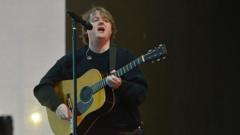
Fally Ipupa’s performance at the Stade de France represents the definitive transition of Congolese Rumba from a localized cultural export to a standardized global entertainment product. This event was not merely a concert; it served as a stress test for the "Rumba 2.0" model—a framework that integrates traditional soukous polyrhythms with Western pop's logistical scale and digital distribution logic. The success of this operation relies on three specific structural pillars: the professionalization of the "Aigle" brand ecosystem, the exploitation of the Congolese diaspora's demographic density, and the technical synchronization of African melodic structures with European stadium-grade production standards.
The Unit Economics of the Stadium Scale
Moving from the Accor Arena (Bercy) to the Stade de France necessitates a fundamental shift in the cost function of a musical production. At the 80,000-capacity level, the fixed costs of security, lighting rigs, and sound engineering increase exponentially rather than linearly. Ipupa’s strategy utilizes a high-volume, mid-margin approach that relies on the "Grand Libulu" effect—a social phenomenon where the physical presence of the crowd becomes a co-authored marketing asset.
The economic viability of such an event is pinned to the Lifetime Value (LTV) of the diaspora fan base. Unlike domestic French artists who rely on radio airplay, Ipupa’s revenue model is driven by direct-to-consumer engagement through social media and localized ticket distribution networks within the African community. This creates a resilient vertical economy that is largely decoupled from mainstream French media gatekeepers.
Structural Evolution of Rumba 2.0
Rumba 2.0 is defined by the deliberate stripping of the "sebene" (the instrumental bridge) of its improvisational bloat to fit the 3.5-minute streaming algorithm. Ipupa has engineered a sonic compromise that preserves the "Rumba Odemba" essence—characterized by its specific vocal harmonies and fluid guitar lines—while introducing the percussive clarity of Afrobeats and Urban Pop.
The Component Parts of the Sonic Pivot
- Rhythmic Quantization: Traditional Rumba often utilizes a loose, "human" timing in its percussion. Ipupa’s 2.0 iteration applies a strict grid-based tempo, making the tracks more compatible with international DJ sets and digital playlists.
- Harmonic Simplification: While the "Congo-style" guitar remains, the chord progressions have been streamlined to mirror global pop trends, reducing the barrier to entry for non-Lingala-speaking listeners.
- The Multi-Generational Bridge: By maintaining the "crooner" persona inherited from predecessors like Madilu System or Franco Luambo, Ipupa captures the older demographic, while his visual branding and fashion collaborations secure the Gen Z and Millennial segments.
Logistics as a Competitive Advantage
The Stade de France event highlights a significant upgrade in the operational maturity of African music management. Historically, major Congolese productions in Europe were plagued by logistical fragmentation and political disruptions—most notably by the "Combattants" (political activists who boycotted artists seen as close to the Kinshasa government). Ipupa’s ability to navigate these geopolitical tensions and secure a venue of this magnitude indicates a professionalization of the diplomatic and security layers of his organization.
The "Aigle" brand operates more like a multinational corporation than a musical act. This involves:
- Centralized Intellectual Property Management: Ensuring that the complex web of samples and influences within Rumba is legally cleared for global streaming platforms.
- Brand Partnerships: Integrating high-fashion aesthetics (notably through the "Sapeur" tradition) into the stage design, which attracts corporate sponsorships that were previously unavailable to Rumba artists.
- Technical Interoperability: The ability to deploy a production that meets the rigorous safety and technical standards of a Tier-1 European stadium.
Demographic Arbitrage and the Diaspora Network
The primary driver of the Stade de France sell-out is the demographic reality of the Congolese diaspora in Europe, particularly in France and Belgium. Ipupa has mastered the art of demographic arbitrage—leveraging the intense cultural loyalty of this group to create a "sold-out" narrative that then attracts mainstream French curiosity.
The audience profile at a Fally Ipupa stadium show is a data point for the "Reverse Crossover" theory. Usually, artists seek to "cross over" from a niche to the mainstream. Ipupa has instead scaled his "niche" (Central African Rumba) to such a degree that the mainstream is forced to pivot toward him. This is achieved through a decentralized marketing strategy where the diaspora acts as a multi-node distribution network, amplifying the event's visibility far beyond what a traditional PR agency could achieve.
The Production Bottleneck: Quality Control in Live Settings
Despite the success, the Rumba 2.0 model faces a persistent bottleneck: the tension between the "show" (choreography, visuals, pacing) and the "performance" (vocal delivery, instrumental virtuosity). In a 500-capacity club, the energy of a Congolese band can mask technical deficiencies. In a stadium, every acoustic flaw is magnified.
The transition to the "2.0" stage requires a departure from the traditional Congolese "marathon" style—where songs can last 10 minutes—toward a tightly scripted, cue-driven production. This necessitates a cultural shift for the backing band and dancers, who must operate within the constraints of a synchronized timecode for lighting and pyrotechnics. The Stade de France performance serves as the benchmark for whether this discipline can be maintained without losing the "soul" that defines the genre.
Strategic Forecast: The Global Expansion of the Kinshasa Sound
The success of the Stade de France operation dictates a specific trajectory for the African music industry. We are moving toward a period of "Genre Consolidation" where Rumba, Afrobeats, and Amapiano will increasingly share the same production pipelines and executive talent.
Ipupa’s model suggests that the next phase of growth for African artists is not "integration" into the Western pop machine, but the "replication" of its infrastructure. This involves:
- Developing Independent Distribution Hubs: Reducing reliance on major Western labels by building localized digital infrastructure.
- Infrastructure Investment in Kinshasa: Bridging the gap between the diaspora’s purchasing power and the domestic Congolese market’s potential.
- Intellectual Property Aggregation: Consolidating the catalogs of legacy Rumba artists to create a "Rumba Classics" ecosystem that can be monetized via Rumba 2.0’s modern channels.
The operational blueprint established by Fally Ipupa at the Stade de France indicates that the "Aigle" strategy is now the industry standard. Future artists attempting to replicate this must prioritize the professionalization of their logistics and the strict quantization of their sound if they hope to scale from the club to the stadium.
To maintain dominance, the Ipupa organization must now focus on diversifying its revenue streams away from live performance and toward algorithmic-ready content and high-fashion licensing. The stadium is the ultimate marketing tool, but the long-term profitability of the 2.0 model lies in its ability to be consumed in 15-second intervals on global social platforms without losing its rhythmic identity.
(mh=rmyKgStFfvJMIowm)14.jpg)