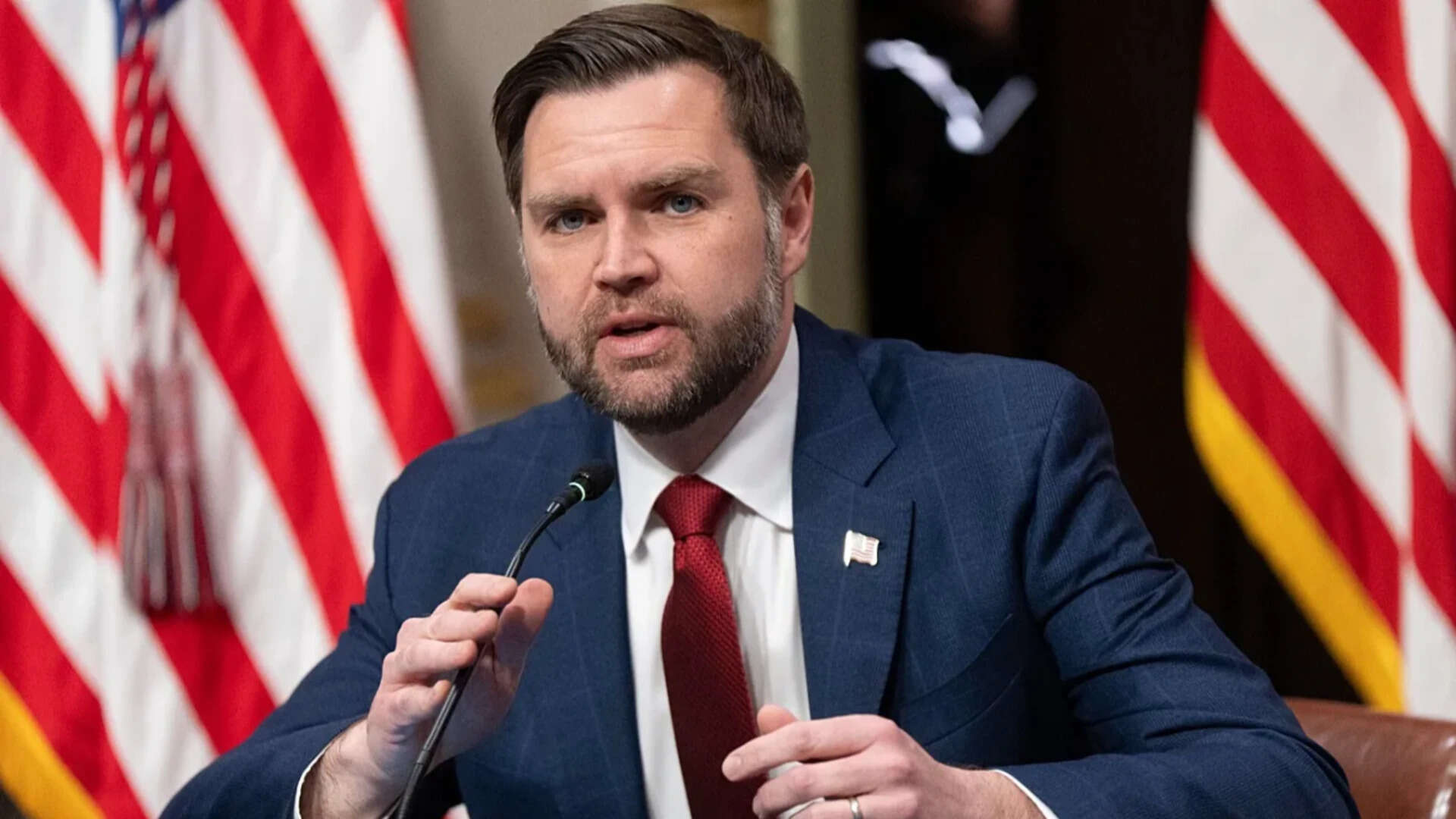
The modern campaign trail functions as a high-velocity information environment where the delta between a kinetic military event and a political response determines a candidate’s perceived competence. When JD Vance was confronted by reporters regarding a strike on Iranian-backed assets, the ensuing friction was not merely a lapse in personal awareness but a failure of the Real-Time Briefing Loop. In high-stakes political operations, the gap between an event occurring and a principal being briefed creates a "vulnerability window." During this window, the opposition and the press can seize the narrative, forcing the principal into a reactive, defensive posture that signals a lack of command over national security apparatuses.
The Taxonomy of the Briefing Failure
To understand why a Vice Presidential candidate might appear uninformed on contemporary military action, we must categorize the breakdown into three distinct structural failures.
1. The Latency of the Vertical Information Chain
In a standard campaign structure, information flows from official intelligence or news aggregates through a communications director to the candidate. A breakdown occurs when the Processing Overhead—the time it takes to verify, summarize, and transmit data—exceeds the speed of the news cycle. If a reporter receives a push notification seconds before a principal takes the stage, the principal enters the engagement with a "data deficit." This deficit is often misidentified as ignorance, when it is actually a failure of the campaign's technical infrastructure to prioritize low-latency monitoring.
2. The Contextual Decoupling of Historical vs. Live Data
The specific friction in the Vance incident involved a conflation of past policy with current kinetic actions. When a candidate is primed to discuss "The Trump Doctrine" or "Historical Deterrence," their cognitive load is indexed toward archival data. Introducing a "Live Event" creates a sudden context switch. The human brain requires a re-indexing period; when this is denied by a rapid-fire questioning format, the result is a visible "loading state" where the principal must check a device or defer to staff. This decoupling breaks the illusion of the "omnipresent leader."
3. Verification Rigor vs. Reaction Speed
A sophisticated campaign operation faces a trade-off: Accuracy vs. Agility. Reacting to a headline that may be unverified or inaccurate carries significant risk. However, silence or a "checking phone" moment carries a different, more visceral risk of appearing disconnected. The Vance incident suggests a prioritization of "wait-and-see" that was outpaced by the aggressive "real-time" interrogation style of the modern press corps.
The Mechanics of Defensive Political Communication
When a principal is caught in an information vacuum, they typically employ one of four defensive maneuvers. Analyzing these reveals the underlying strategy—or lack thereof—in the moment.
- The Deferred Verification: "I need to check the specifics of that report." This is the most honest but most damaging move, as it cedes the role of "expert" to the reporter.
- The Pivot to Principle: Ignoring the specific event to talk about broader strategy (e.g., "Our policy on Iran has always been clear..."). This attempts to regain high ground but often looks like an evasion.
- The Counter-Interrogation: "Who is reporting that? What are the sources?" This shifts the burden of proof back to the press and buys time for the campaign's internal war room to provide a briefing.
- The Operational Silence: Declining to comment until an official statement is drafted. This is safe but cedes the first hour of the news cycle to the opposition's interpretation.
The Vance interaction utilized a hybrid of these, demonstrating a lack of a pre-set "Grey Zone" protocol—a set of responses designed specifically for when a candidate is aware an event is happening but has not yet been fully briefed on the outcome.
The Cost Function of Visible Unpreparedness
In political science, the Competence Heuristic suggests that voters use small indicators of preparedness to judge a candidate's ability to handle large-scale crises. The friction of "checking a phone" is a high-cost signal.
Perception of Direct Access
A Vice Presidential candidate is expected to have a "short-circuit" to the highest levels of information. When they appear to be getting their news from the same public channels as the reporters (Twitter/X, AP wire), it erodes the aura of the "In-Group." The voter begins to view the candidate as an outsider looking in, rather than a leader with a hand on the lever.
The Opportunity Cost of Rebuttal
Every second spent "catching up" to a news story is a second lost in framing that story. If Trump’s strikes are the topic, a prepared candidate uses the moment to project strength. An unprepared candidate spends the moment in a state of cognitive recovery. The "rebuttal window" is usually less than 180 seconds; once that passes, the media narrative is set, and the campaign is forced into a "corrective" cycle, which is mathematically less effective than an "instigative" cycle.
Structural Requirements for an Optimized War Room
To prevent the "Vance Friction," a campaign must move beyond traditional PR and into Information Operations (InfoOps). This requires a shift from a reactive press desk to a proactive intelligence cell.
Real-Time Sentiment and Fact Integration
A campaign war room should function like a trading floor. Monitors must track not just the news, but the metadata of the news. This includes:
- Geospatial Alerts: Automated triggers for any kinetic movement in conflict zones relevant to the campaign's platform.
- Reporter Feed Monitoring: Tracking what specific reporters in the room are tweeting or reading minutes before the Q&A begins.
- The "Huddle" Protocol: A physical or haptic signal sent to the candidate (via an earpiece or a specific staffer) that indicates a "breaking event" has occurred, providing a 30-second summary before the first question is asked.
The Feedback Loop Failure
In the referenced event, the feedback loop was broken. The staff failed to intercept the candidate before he engaged with the press, or the candidate chose to engage despite the lack of a brief. This indicates a breakdown in Operational Hierarchy. In a high-functioning system, the "Body Man" or the Communications Lead has the authority to pause an engagement to deliver a "Flash Brief."
The Strategic Recommendation for Future Engagements
Candidates must move away from the "checking the phone" optics, which visually subordinates the candidate to the device. Instead, the campaign must implement a Tiered Response Framework for breaking news:
- Level 1: General Awareness. If an event is rumored but unconfirmed, the candidate acknowledges the reports but refuses to validate them, maintaining an air of "internal knowledge" that is too sensitive to share.
- Level 2: Confirmed Kinetic Action. If an event is confirmed, the candidate immediately links it to a core campaign pillar (e.g., "This is the direct result of the deterrence vacuum we’ve discussed"). This prevents the reporter from defining the "Why" of the event.
- Level 3: Direct Contradiction. If the reporter’s premise is flawed, the candidate must have the data to refute it instantly. This requires a constant digital uplink.
The Vance incident serves as a case study in the fragility of political personas when stripped of their information advantage. In the absence of data, the principal becomes a spectator. To regain the initiative, the campaign must treat information not as a commodity to be consumed, but as a battlefield to be prepared. The next tactical move is the deployment of an "Early Warning System" that treats the campaign trail as a high-threat information environment, ensuring the principal is never the least-informed person in the room. This requires a dedicated "Data Liaison" whose sole job is to bridge the gap between the wire services and the candidate’s consciousness in under sixty seconds.