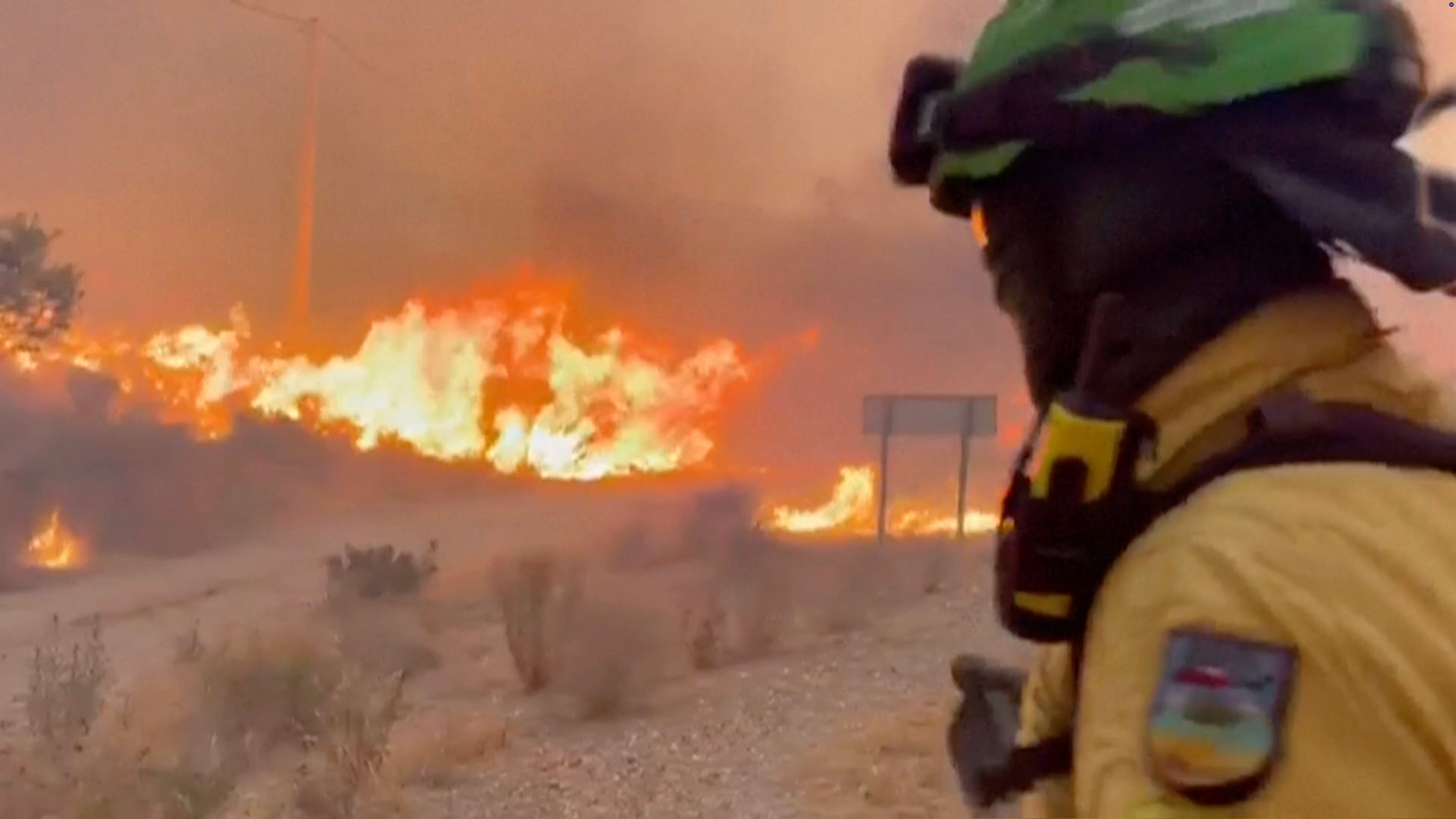
The catastrophic wildfire tearing through Spain’s Almería province has claimed at least 11 lives, left 19 people missing, and reduced over 7,800 acres of woodland to ash. The disaster, which centers around the whitewashed village of Bédar and the town of Los Gallardos, is Spain's deadliest wildfire in over two decades. While early reports focus heavily on the tragedy of the body count, they miss the systemic failures that turned a predictable environmental hazard into a lethal human trap. The high concentration of foreign victims and a series of contradictory evacuation directives reveal a structural failure in how Mediterranean nations manage rural tourism during a climate crisis.
This is not just a story about a heatwave. It is a story about infrastructure collapse and communication barriers.
The Illusion of Safety in the Scrubland
Bédar sits roughly 15 kilometers from the Mediterranean coast. It is exactly the kind of idyllic, rugged enclave sought out by British expatriates and northern European tourists looking to escape crowded beach resorts. On July 9, 2026, that isolation became a liability. Witnesses report the fire ignited when an aging power line collapsed into parched scrubland amid 106-degree Fahrenheit temperatures. Driven by shifting, volatile winds, the flames raced through the ravines with unprecedented speed.
Emergency management teams were immediately overwhelmed, receiving more than 150 calls in a matter of minutes. When a fire moves this fast through broken terrain, traditional firefighting machinery becomes useless. The response relies heavily on ground crews and aerial support, but by the time the Military Emergency Unit deployed, the geography had already dictated the tragedy.
The immediate administrative response was to instruct residents to shelter in place. For many, that directive proved fatal.
The Dry Riverbed Trap
The deadliest aspect of the Almería blaze was not the sheer size of the flames, but the breakdown in communication. Regional authorities have confirmed that the majority of the deceased are foreign nationals. Among them are four British tourists found incinerated inside a right-hand-drive vehicle. Seven other victims died after abandoning their cars to flee on foot.
They chose a path outside the official evacuation route, descending into a local dry riverbed. In a Mediterranean wildfire, a dry riverbed is a chimney. The ravine funneled the heat, smoke, and fire directly into their path, transforming a natural feature into a physical trap.
Regional emergencies minister Antonio Sanz noted that these individuals died after deciding to find an alternative route on their own. What the official narrative omits is why they chose to flee. When a wildfire is visible from a main highway and smoke fills a valley, a shelter-in-place order feels like a death sentence to an untrained civilian. If that civilian does not speak fluent Spanish, the nuance of emergency broadcasts on local radio is entirely lost.
Almería Wildfire Impact Profile (July 2026)
+-------------------------+----------------------------------------+
| Confirmed Fatalities    | 11 (Majority foreign nationals)        |
| Missing / Unaccounted   | 19 individuals                         |
| Displaced Population    | Over 600 residents                     |
| Total Land Scorched     | ~7,800 acres (3,150 hectares)          |
| Primary Catalyst        | Supposed fallen power line in scrub    |
+-------------------------+----------------------------------------+
The Expat Communications Gap
The structural flaw in Spain's rural safety model is the assumption that emergency alerts penetrate language barriers automatically. While local authorities utilized digital platforms and neighborhood networks to coordinate, foreign retirees and transient summer tourists frequently operate completely outside these channels.
When regional president Juanma Moreno acknowledged that most victims were foreigners, he highlighted a recurring issue in Mediterranean disaster management. Spain has spent decades promoting its interior villages to international buyers without updating its emergency infrastructure to protect a non-Spanish-speaking population. A warning translated too late is the same as no warning at all.
Furthermore, the physical infrastructure of rural Andalusia complicates evacuation. Narrow, winding roads built for agricultural carts or light village traffic cannot handle a simultaneous panic-driven exodus. When a right-hand-drive vehicle encounters a smoke-blinded bottleneck on a hillside terrace, room for maneuver drops to zero.
Infrastructure at the Breaking Point
Blaming the disaster solely on a 40°C heat dome is a convenient political out. The reality is that Spain's electrical grid in rural provinces is under severe strain from the massive power demands of peak summer tourism. If investigation confirms that a sagging or poorly maintained power line sparked the Los Gallardos inferno, the conversation must shift from climate abstractness to corporate accountability.
The last time Spain saw a wildfire death toll this severe was in 2005, when 11 firefighters perished in Guadalajara due to an out-of-control barbecue. That disaster forced sweeping reforms in containment tactics and volunteer training. The Almería fire demonstrates that the threat has shifted from human negligence in the forest to structural failures at the wildland-urban interface.
With 19 people still missing, emergency services are searching scorched properties and the surrounding ravines. The final death toll will likely rise. The lesson of Bédar is that rural gentrification without modernized, multilingual emergency systems ensures that the most vulnerable residents are always the ones who do not understand the instructions until the smoke is already in the room.


