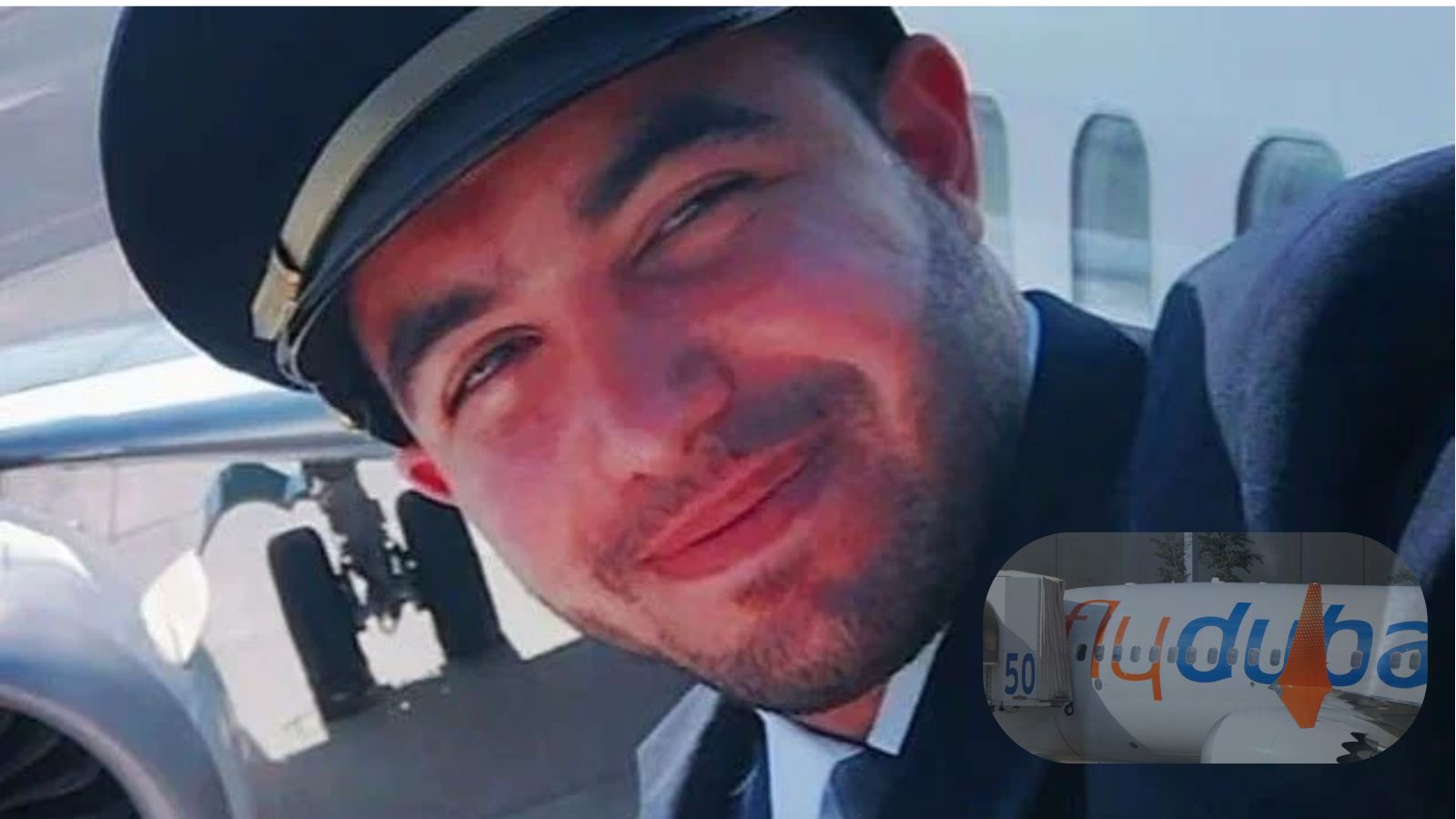
Commercial aviation operates on a terrifyingly fragile premise. We strap ourselves into pressurized tubes hurtling through the stratosphere, placing absolute, unyielding trust in two individuals locked behind a reinforced door. When Hamam al-Hammami, an Omani co-pilot flying for Flydubai, allegedly took an emergency crash axe to Captain Smit Machchhar on a flight bound for Tel Aviv, that premise shattered. This was not a sudden, inexplicable psychotic break. It was the catastrophic culmination of a systemic failure in global aviation vetting, where digital radicalization, virulent misogyny, and geopolitical grievances festered entirely out of sight of background investigators.
The immediate aftermath of the attack triggered a scramble among intelligence agencies spanning the United Arab Emirates, Israel, Australia, and the United Kingdom. Investigators quickly unearthed a digital footprint that should have raised red flags years prior. While completing a remote aviation management course through Britain's Buckinghamshire New University, al-Hammami allegedly maintained an online persona characterized by extremist rhetoric, vehement hostility toward women, and radical geopolitical stances. He advocated for violence against women, describing them in dehumanizing terms and praising physical abuse. Parallel to his descent into misogynistic extremism, his digital footprint reflected a man absorbing radical narratives surrounding international conflicts, including Russia's war in Ukraine and broader anti-Western sentiments.
How did an individual with such a traceable, volatile ideological trajectory secure a commercial pilot's license and a seat in a commercial flight deck?
The answer exposes a profound vulnerability in international aviation security protocols. Background checks for commercial pilots traditionally focus on criminal records, financial solvency, and basic flight competency. They are exceptionally good at catching drug offenses, theft, or explicit ties to designated terrorist organizations on watchlists. They are fundamentally blind to the modern architecture of extremism. Online radicalization rarely happens in physical training camps anymore. It occurs in decentralized chat rooms, encrypted messaging apps, and public forums where individuals consume and propagate violent ideologies without ever crossing paths with law enforcement.
Al-Hammami's trajectory also highlights the dark pipeline between extreme misogyny and broader violent extremism. Security studies have long established that radicalization rarely occurs in a vacuum; individuals who absorb extreme, hateful worldviews regarding gender frequently exhibit a broader susceptibility to authoritarianism and extremist violence. Yet, threat-assessment algorithms used by airlines and civil aviation authorities routinely treat domestic abuse rhetoric and online hate speech as separate from operational safety risks.
The aviation industry's reliance on distance-learning programs further exacerbates the problem. As universities expand remote education options globally, individuals can acquire higher education credentials without setting foot on a campus, interacting with professors face-to-face, or undergoing the behavioral observation that physical academic environments occasionally provide. Al-Hammami completed his degree remotely from Muscat, insulating his radicalizing online habits from institutional intervention.
Airlines operate under immense economic pressure to fill cockpit seats amid a persistent global pilot shortage. While technical training standards remain rigorously enforced, psychological screening is often treated as a compliance checkbox rather than an active, continuous defense mechanism. Annual simulator checks evaluate a pilot's ability to handle engine failures, wind shear, and hydraulic loss. They do not measure ideological drift, psychological decay, or the adoption of violent worldviews.
When Captain Machchhar fought off his co-pilot despite severe injuries, allowing crew members and passengers to intervene before the aircraft could be driven into a catastrophic descent, he saved hundreds of lives. But relying on the raw physical heroism of a flight crew to stop an ideological actor inside a cockpit is an indefensible security strategy.
Preventing a recurrence requires an immediate overhaul of how civil aviation authorities vet flight deck personnel. Security clearances must incorporate open-source intelligence and digital footprint analysis, screening for violent extremism in all its forms—including severe misogyny and radical ideologies. Airlines can no longer treat a pilot's life outside the cockpit as irrelevant to flight safety. Until regulatory bodies bridge the gap between digital threat intelligence and aviation personnel vetting, the cockpit door remains vulnerable from the inside.