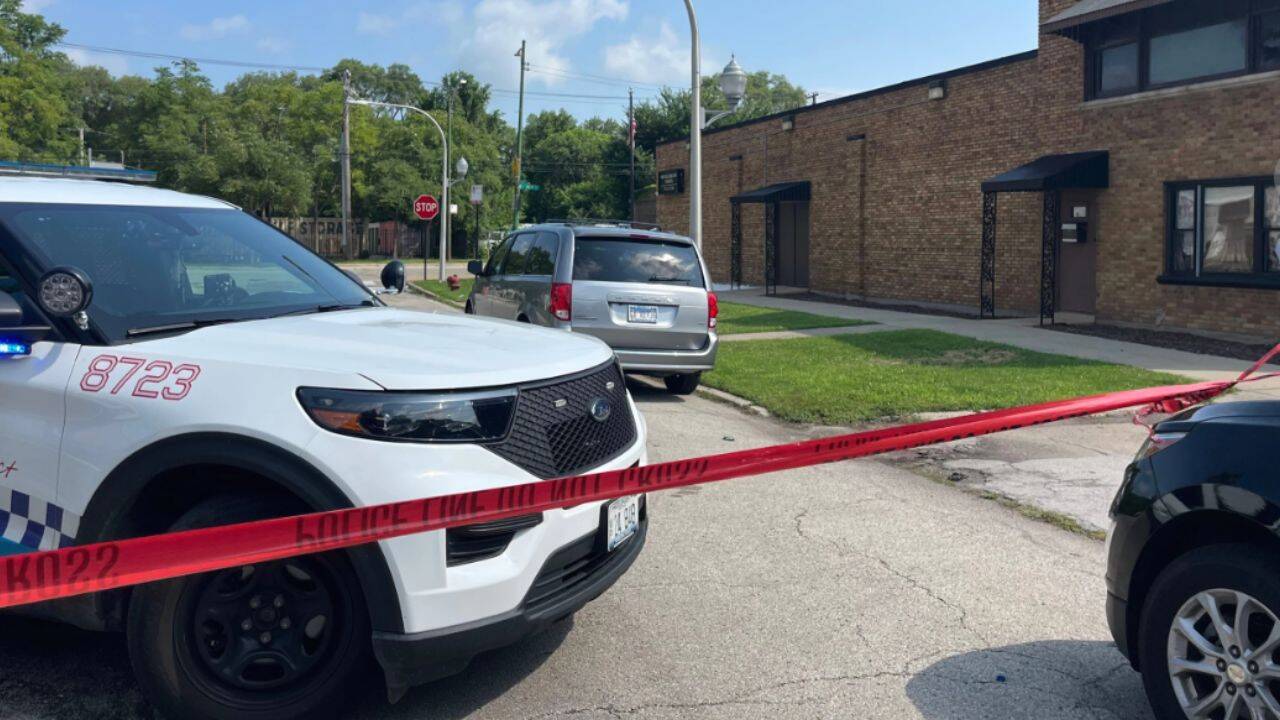
State investigators discovered fifty-six decomposing bodies stacked improperly inside a Chicago funeral home, triggering an immediate suspension of the owner's license and exposing massive regulatory blind spots within the death care industry.
When fifty-six decomposing bodies are discovered neglected inside a single Chicago funeral home, the immediate public reaction is sheer horror. But for anyone who has spent decades tracking the dark underbelly of the death care industry, the shock quickly turns into a familiar, bitter cynicism. This is not an isolated aberration. It is the predictable outcome of an under-regulated market where human grief is treated as a commodity and oversight is often little more than a paper tiger.
The horror unfolded when inspectors arrived at the facility following mounting complaints about foul odors and financial irregularities. What they found inside defies basic human dignity. Embalmed and unembalmed remains were piled haphazardly, refrigeration units had failed or were never turned on, and bodies were left to rot in advanced states of decomposition. The license of the owner was swiftly suspended, and emergency state orders were issued. Yet, suspending a license after fifty-six bodies have turned into biohazards is akin to locking the barn door long after the wolves have consumed the livestock.
The Anatomy of Regulatory Failure
How does a funeral home accumulate over fifty bodies in various states of decay without triggering a state audit? The answer lies in the structural deficiencies of how state agencies monitor death care providers.
Most state licensing boards operate reactively rather than proactively. Inspectors are perpetually overburdened and underfunded. They rely almost entirely on consumer complaints to initiate an investigation. If grieving families do not suspect foul play, or if they are too overwhelmed by their own loss to look closely at the paperwork, rogue operators can function in plain sight for years.
Consider the financial mechanics driving these abuses. Operating a licensed crematory or a dignified storage facility requires strict adherence to environmental laws, proper equipment maintenance, and trained personnel. All of this costs money. When an operator faces financial distress, cutting corners on refrigeration and body storage becomes a grim way to preserve margins.
- Refrigeration maintenance is deferred.
- Third-party cremation services are unpaid and subsequently abandoned.
- Bodies are allowed to accumulate while cash flow dries up.
This economic pressure cooker creates a breeding ground for neglect. The state board looks at compliance paperwork on an annual or bi-annual cycle, but a business can collapse financially and morally in a matter of weeks. By the time an inspector walks through the door, the operation has already transformed from a service provider into a morgue of misery.
The Illusion of Oversight
Families hand over their deceased loved ones under an implicit contract of trust. They assume that because a business wears a solemn facade, displays state-mandated licenses on the wall, and employs professional terminology, it operates under stringent, constant supervision.
The reality is starkly different.
State regulators rarely conduct unannounced, random inspections of preparation rooms and holding facilities. Instead, audits are often scheduled in advance, giving troubled operators ample time to clean up visible messes, clear out overflow, or hide the true scale of their dysfunction. When inspectors do show up unannounced, they frequently lack the specialized forensic training required to spot complex fraud or hidden storage violations.
Furthermore, the disciplinary pipeline is painfully slow. Even when minor violations are caught, administrative penalties usually consist of modest fines or temporary probations. Revoking a license requires a lengthy legal process that gives bad actors months or years to continue operating under appeal or to quietly shift operations to a new shell company.
Bureaucracy moves at the speed of litigation, while decomposition moves at the speed of nature.
This mismatch in velocity is precisely why tragedies like the Chicago funeral home scandal keep repeating themselves across the country.
The Human Cost of Corporate Apathy
Behind every statistic in this investigation is a family robbed of closure. The psychological trauma inflicted upon relatives who learn that their loved one's remains were treated with such blatant disregard is immeasurable.
When a body is left to decompose outside of proper refrigeration, the physical changes are irreversible. Families are denied the option of an open-casket service. Cremation timelines become impossible to verify, leaving lingering doubts about whether the ashes returned in an urn actually belong to their relative.
This erosion of trust damages the entire industry. Thousands of independent funeral directors operate with profound empathy, treating every body that crosses their threshold with rigorous care and respect. Yet, a single predatory operator casts a long shadow over the profession, making the public view every service fee, contract clause, and floral arrangement with deep suspicion.
Rebuilding the System
Preventing future disasters requires a complete overhaul of how state agencies oversee death care. Simple punitive measures after a crisis occurs are completely inadequate.
First, states must mandate real-time tracking systems for human remains. Every body brought into a funeral home or crematory should be logged into a secure state-monitored database from the moment of intake to final disposition. If a body remains unaccounted for or uncremated past a strict statutory window, an automated flag should trigger an immediate, unannounced physical inspection.
Second, inspection frequency must increase dramatically, and these visits must be entirely unannounced. Funding for regulatory boards should be tied directly to licensing fees paid by the industry itself, ensuring that oversight agencies have the resources necessary to police bad actors effectively.
Third, criminal penalties for corpse desecration and consumer fraud within the funeral industry must be elevated to felony levels with mandatory prison time. When the penalty for corporate neglect is merely a suspended license, bad actors calculate that the risk is worth taking. Make the personal cost of failure too high to bear, and the calculus changes overnight.
The fifty-six bodies discovered in Chicago are an indictment of a system that waited until the stench became too loud to ignore. Until regulators abandon their reactive posture and treat death care with the strict oversight reserved for medical facilities, more families will pay the ultimate price for administrative negligence.