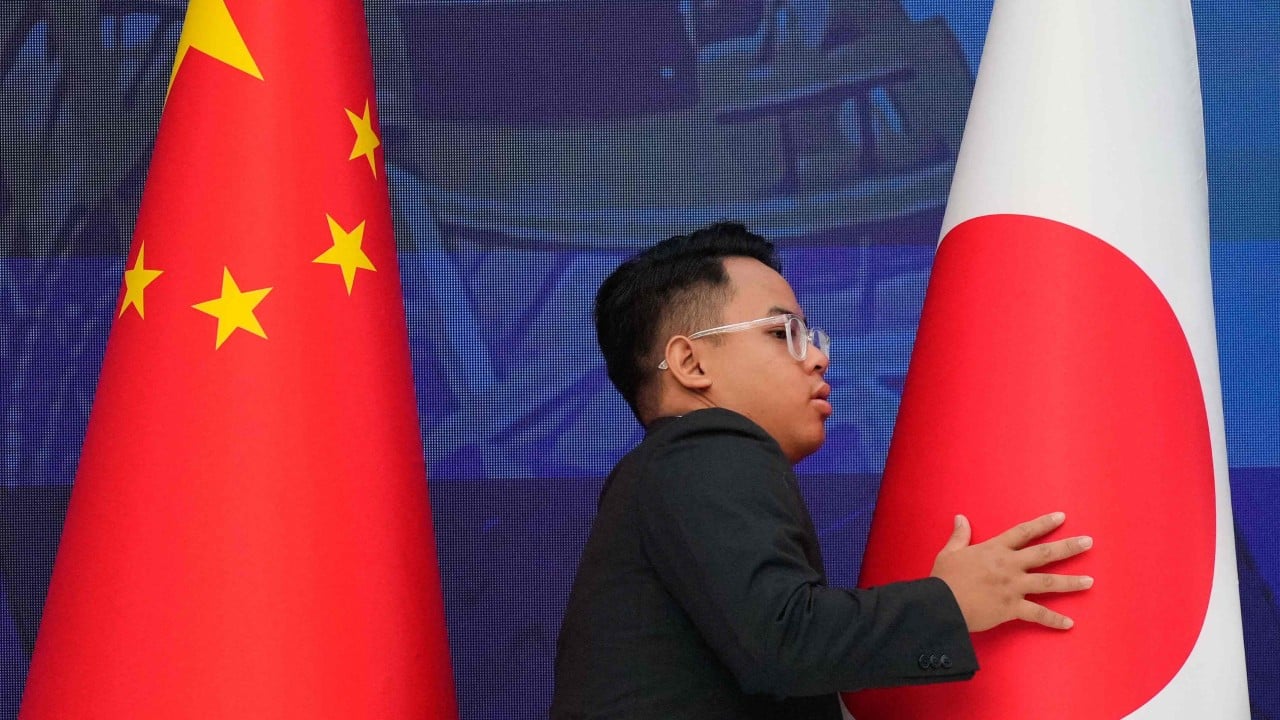
Beijing rarely waves through a large Japanese business mission out of affection or sudden diplomatic warmth. It approves an expanded China Japan trade trip when domestic industrial headwinds, export bottlenecks, or regional security calculations make commercial outreach useful for Beijing's own statecraft and supply chain priorities.
I have spent three decades watching Asian trade delegations board planes in Tokyo and land in Beijing amid frozen diplomatic phone lines and fierce naval friction. Anyone who reads a big business delegation as a sign of political thaw is falling for an old theater trick. Beijing treats commercial diplomacy as a pressure valve and a sounding board, not a concession. When trade officials roll out the welcome mat for Keidanren executives and corporate chiefs, they are usually testing where Japanese capital can absorb Chinese excess capacity, stabilize critical minerals and component flows, or blunt broader Western export controls.
Why Beijing Opens the Door During Diplomatic Chills
Politics freezes. Commerce keeps moving. That tension has defined Sino-Japanese relations for generations, yet observers still act surprised every time Beijing allows a heavy-hitting Japanese trade mission into the capital while territorial disputes, defense budgets, and tariff grievances simmer in the background.
Beijing's calculus is practical and cold-eyed. China's economy has faced persistent domestic demand softness, property-sector drag, and fierce external tariff pressure across North America and Europe. Keeping channels open with major Asian manufacturing partners helps Chinese policymakers gauge foreign corporate appetite before committing to deeper policy shifts. Japanese firms bring precision machinery, specialty chemicals, factory automation, and industrial components that Chinese factories still rely on even as local competitors climb the value chain.
There is also a signaling game at play. By greenlighting a larger business delegation, Beijing can project stability and openness to foreign investors without yielding an inch on sovereignty, maritime patrols, or security red lines. The political chill stays intact. The meeting rooms simply get warmer for a few days.
A larger headcount on a trade mission does not mean Beijing is softening its stance. It means Beijing sees concrete commercial or strategic utility in letting those specific executives talk face-to-face.
- Domestic economic cushion: Chinese ministries want firsthand readouts on whether Japanese manufacturers plan to hold, expand, or trim operations on the mainland.
- Supply chain intelligence: Direct meetings let Chinese officials hear which export controls or licensing rules are hurting Japanese exporters most.
- Diplomatic compartmentalization: Allowing business visits lets Beijing claim pragmatism while keeping formal government-to-government friction under strict control.
- Regional counter-balancing: Engaging Tokyo's business establishment gives Beijing another lever in an increasingly fractured Indo-Pacific economic environment.
The Hidden Mechanics of Japanese Trade Diplomacy
Japanese corporate leaders do not trek to Beijing on a whim. Behind every major delegation sits months of quiet coordination between Keidanren, major trading houses, industrial associations, and Tokyo's own foreign and trade ministries.
For Japanese multinationals, China is neither a simple growth engine nor a place they can casually abandon overnight. Decades of sunk capital, entrenched supplier networks, and massive local consumer and industrial markets make abrupt exit costly and disruptive. At the same time, rising labor costs, regulatory unpredictability, anti-espionage compliance risks, and geopolitical shocks have pushed boards to diversify assembly lines toward Southeast Asia, India, North America, and back home.
That push-pull creates a delicate balancing act. Japanese executives want predictability on visas, data flows, customs clearance, and equal treatment for foreign enterprises. When Beijing agrees to host an expanded delegation, it signals that Chinese officials are willing to listen to those operational complaints—at least on paper—while expecting Japanese firms to stay invested in the Chinese market.
What Executives Actually Press For Behind Closed Doors
Public communiques after a China Japan trade trip sound polite and formulaic. Private exchanges are far sharper.
Japanese business leaders routinely raise concrete friction points that rarely make the headline summaries. They press on arbitrary enforcement of export controls, delays in approvals, intellectual property protection, subsidies that tilt competition toward state-backed rivals, and safety concerns affecting Japanese nationals and staff in China.
Consider a hypothetical example to see how this plays out in practice. Suppose a mid-sized Japanese precision-tooling maker sells high-accuracy bearings and control units used in industrial robotics. If a sudden licensing delay or customs hold stalls shipments for three weeks, factory schedules on both sides slip, margins shrink, and procurement teams start qualifying backup suppliers elsewhere. A senior delegation gives that industry a direct channel to air bottlenecks before minor irritants harden into permanent supply chain rerouting.
Overlooked Factors Most Analysts Miss
Most coverage reduces China Japan trade trip news to a neat cliché about "hot economics and cold politics." That shorthand misses several structural forces reshaping the relationship beneath the surface.
First, competition is replacing complementarity in key sectors. For years, the classic formula assumed Japan made high-end components and machinery while China handled assembly and lower-end manufacturing. That division of labor is eroding fast. Chinese firms now compete head-to-head with Japanese producers in electric vehicles, batteries, industrial robotics, solar equipment, and parts of the automotive supply chain. Cooperation and rivalry now sit inside the very same industry verticals.
Second, economic security has become a permanent boardroom constraint rather than a temporary campaign. Governments in Tokyo and Washington treat semiconductor gear, critical minerals, dual-use technologies, and outbound capital flows through a national security lens. Even when Chinese officials offer a warm reception in Beijing, Japanese executives know their room to maneuver is bounded by domestic regulations, alliance pressures, and shareholder scrutiny on geopolitical risk.
- Asymmetric leverage: Beijing can speed up or slow down administrative approvals, inspections, and market access in ways that immediately test corporate patience.
- Rising domestic substitution: Chinese state industrial policy actively pushes local buyers toward domestic suppliers, shrinking some traditional Japanese advantages over time.
- Currency and cost shifts: Exchange-rate swings and changing wage structures alter where final goods make financial sense to produce.
- Reputational exposure: Japanese firms face intense scrutiny at home over human rights, supply chain transparency, and over-reliance on any single market.
| Dimension | Surface Narrative | Underlying Reality |
|---|---|---|
| Delegation size | Sign of warming diplomatic ties | Sign of targeted economic and tactical utility for Beijing |
| Corporate attendance | Proof of unshakeable business enthusiasm | Balancing act between market protection and supply chain diversification |
| Policy pledges | Immediate breakthrough on trade disputes | Incremental administrative relief with strict security boundaries |
| Industrial dynamic | Purely complementary division of labor | Growing overlap and direct competition in electric vehicles, robotics, and components |
Why Commercial Access Is Not Diplomatic Trust
There is a dangerous habit in business commentary of treating trade meetings as a substitute for trust. They are not. Two sides can trade billions of dollars in goods while holding deeply incompatible views on regional security, maritime law, and technological dominance.
I have seen plenty of upbeat business trips followed within months by sharp diplomatic clashes, sudden regulatory crackdowns, or tense maritime standoffs. Commercial pragmatism keeps channels open, which has real value in preventing total miscalculation. Yet openness to a business delegation does not erase structural distrust, nor does it guarantee immunity from political blowback when a crisis flares.
Japanese boards understand this better than many outside observers give them credit for. They go to Beijing to protect existing operations, gather intelligence directly from policymakers, and keep communication lines from going completely dark—not under the illusion that a handshake in a conference hall fixes deep geopolitical rifts.
What to Watch Next in Sino-Japanese Commerce
Anyone tracking the next China Japan trade trip should look past photo ops and headcount numbers and focus on hard operational details. Watch whether Beijing delivers tangible movement on licensing bottlenecks, data flows, and fair competition for foreign bidders, or merely offers general assurances of market openness.
Pay close attention, too, to what Japanese companies actually do with their capital after the flights return to Tokyo. Watch announcements on factory expansions versus China plus one investments across Vietnam, Thailand, India, and North America, along with shifts in electric vehicles, semiconductors, and critical minerals sourcing. Capital allocation tells the truth long after diplomatic talking points fade.