Abelardo de la Espriella is rewriting Colombia’s civic and cultural playbook at breakneck speed, using aggressive security spectacles, religious appeals, and sharp state retrenchment to dismantle the left-wing agenda of his predecessor, Gustavo Petro. Having taken office in August 2026 after a razor-thin June runoff victory over Senator Iván Cepeda, the lawyer-turned-millionaire president has moved far faster than most observers expected. What looks on the surface like a standard right-wing backlash is actually a coordinated effort to reset Colombia’s moral language, weaken state-backed cultural institutions, and align Bogotá with a harder-edged hemispheric bloc.
Why This Shift Moved So Fast
Elections in Colombia rarely produce quiet transitions. Even so, the sheer velocity of de la Espriella’s opening months caught many political analysts off guard.
After years of Petro’s progressive rhetoric, peace-process ambitions, and emphasis on social inclusion, millions of voters felt exhausted by economic strain, lingering violence, and institutional friction. De la Espriella tapped directly into that frustration by casting himself as "El Tigre"—a combative outsider willing to break protocol and project unfiltered force.
Speed is a deliberate strategy, not an accident. By flooding the public square with shock-value videos, confrontational encounters with captured criminal figures, and immediate fiscal and administrative moves, the administration forces opponents onto the defensive. Critics barely finish digesting one controversy before another demands their attention.
There is also a deeper political calculation at work. De la Espriella won by less than a single percentage point in a deeply divided electorate. A slow, consensus-driven presidency would risk bogging down in a fragmented Congress and losing momentum before coalition-building even began. Moving at a sprint allows the Casa de Nariño to set the terms of national debate while supporters still feel the rush of victory.
Selling a New Moral Identity
Cultural shifts rarely stick through decrees alone. They require a new story about who belongs and what values matter.
De la Espriella has leaned heavily into a striking personal reinvention. Having previously described himself as an atheist and projected a flashy, cosmopolitan lifestyle—complete with private planes, rum and wine ventures, and dual or triple citizenship ties—he has increasingly spoken in religious terms, framing the defense of Christian values as inseparable from restoring public order.
In a country shaped by deep Catholic traditions and growing evangelical influence, moral language does more than signal faith. It draws a sharp boundary between traditional order and perceived progressive excess.
That framing resonates with voters who feel alienated by rapid cultural debates around gender, identity, and historical memory. Yet it also invites sharp pushback from labor leaders, artists, and civil society groups who argue that the administration’s "cultural battle" stigmatizes protesters, sexual minorities, and long-standing peace advocates.
Skeptics point out the tension between the messenger and the message. A millionaire businessman who built a public persona around luxury and sharp-tongued legal combat is now asking social conservatives to see him as a standard-bearer of moral renewal. For his supporters, his pugnacious style is proof of strength; for his detractors, it is pure political theater.
Budgets, Symbols, and Street Pushback
Culture war in Colombia is not fought solely in speeches or social media clips. It shows up in ministries, payrolls, and street clashes.
Shrinking the State Footprint
The administration’s push to trim state payrolls and curb public spending has direct cultural consequences. Cultural programs, community initiatives, and public agencies often sit near the top of the chopping block when governments prioritize fiscal discipline and security outlays.
Labor confederations and cultural workers warn that cutting state personnel strips vulnerable communities of public services and weakens the institutional presence needed to sustain peace and civic trust. Supporter counter-arguments are equally blunt: Colombia cannot afford an oversized bureaucracy while carrying heavy debt and a wide fiscal gap.
Streets as a Counter-Stage
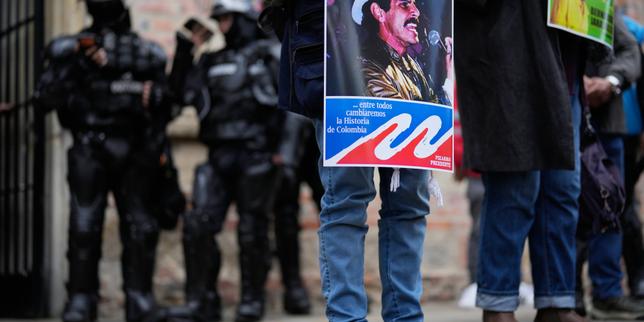
If the presidency controls the official stage, street demonstrations remain the opposition’s strongest megaphone. Major cities including Bogotá, Medellín, Cali, Barranquilla, and Bucaramanga have seen recurring mobilizations against de la Espriella’s economic and social policies, met at times by heavy riot-police deployments.
These clashes reveal a classic political trap. Street protests energize the anti-government base, but prolonged disruptions or tense standoffs can also give a law-and-order president fresh justification to talk tough about public disorder.
The Hemispheric Echo Chamber
Colombia’s cultural turn does not happen in a vacuum. It mirrors a wider ideological realignment across parts of Latin America and Washington.
Observers frequently compare de la Espriella’s combative tone and hardline security posture to figures such as El Salvador’s Nayib Bukele, Argentina’s Javier Milei, and U.S. President Donald Trump. Sharing a playbook does not mean governing in identical conditions, though.
Colombia’s armed conflict is far more complex and entrenched than gang violence in a smaller country. Decades of shifting alliances among guerrillas, paramilitaries, cartels, and local power brokers have repeatedly humbled presidents who promised quick, iron-fisted solutions.
- Diplomatic alignment brings tangible perks, including closer security cooperation and backing from Washington.
- Domestic friction can rise quickly if aggressive tactics alienate moderate voters or trigger broader judicial and institutional pushback.
- Economic constraints limit how much any government can promise on security and stability without addressing sluggish growth and debt pressures.
Consider a hypothetical scenario to see how fragile this balance can be: suppose an anti-crime operation wins applause in urban centers for projecting toughness, yet sparks local displacement or human rights scrutiny in a contested rural corridor. The administration’s cultural narrative of decisive order would collide head-on with Colombia’s stubborn territorial realities.
What Most Commentators Miss
Much of the commentary around de la Espriella focuses on whether he is an ideological zealot or a pragmatic opportunist. The more useful lens is to see him as a political disruptor testing how much institutional friction Colombia’s system can absorb.
His background as a high-profile lawyer and media-savvy operator shaped how he fights. In courtrooms and broadcast studios, escalation and shock often win attention faster than nuance. Yet governing a country of more than fifty million people requires coalition management, administrative follow-through, and steady credibility—especially when approval numbers already show signs of early strain.
Another overlooked factor is the durability of cultural shifts in a polarized society. Leaders can rename priorities, reshape public messaging, and redirect funding overnight. Changing how millions of Colombians view peace, state authority, and social rights takes far longer—and often provokes an equal and opposite reaction.
Watch how the administration handles its legislative negotiations and fiscal trade-offs over the coming months. Spectacle wins headlines, but budgets and coalitions decide what actually survives.