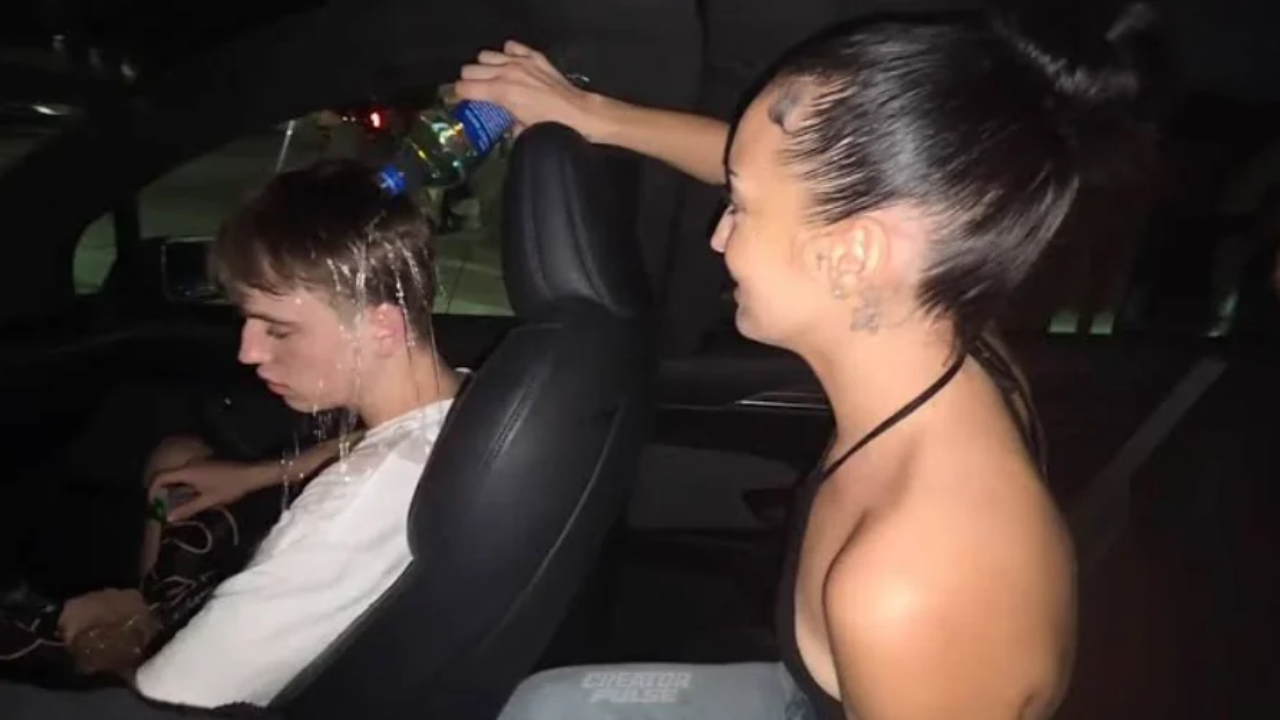
A viral livestream clip showing Kick creator CostaKid physically assaulting a woman during an IRL broadcast has reignited fierce debate over platform accountability, real-time moderation, and the financial incentives driving extreme behavior online. While the footage sparked immediate outrage across social media and prompted calls for permanent bans, the incident exposes a deeper structural issue within the live-streaming economy. Platforms built on permissive content policies and aggressive creator revenue splits often struggle to police unscripted, real-world broadcasts before harm occurs, turning shock value into an unintended engine for algorithmic visibility.
The clip spread rapidly across X and Reddit within hours of the broadcast, stripped of its surrounding context and re-uploaded by clip channels chasing engagement. Viewers watched a heated verbal exchange escalate into physical contact on camera, an unedited moment captured in real time and instantly archived by thousands of screens. For casual observers, it looked like another isolated meltdown from a micro-celebrity chasing clout. For anyone who has tracked the evolution of live video over the past decade, it looked entirely predictable. Learn more on a similar topic: this related article.
The Anatomy of a Viral Livestream Incident
Live broadcasting removes the safety net of post-production. Unlike traditional video platforms where creators record, edit, and review footage before hitting publish, IRL streaming pushes raw human interaction directly to an audience with only a few seconds of latency.
When CostaKid went live, every variable of the physical environment became part of the broadcast. Crowd dynamics, alcohol, fatigue, and the constant pressure to keep chat moving create a volatile cocktail. In these environments, a minor disagreement rarely stays minor. The presence of a camera alters human behavior, encouraging performers to escalate conflicts rather than de-escalate them because silence kills viewer retention. Additional journalism by Deadline delves into related perspectives on the subject.
Once the physical altercation occurred, the mechanics of modern social media took over. Clip accounts—many automated or run by dedicated aggregators—isolated the most shocking ten seconds of the stream. Those clips bypassed traditional editorial filters and landed directly in algorithmic feeds designed to maximize outrage. By the time platform moderators reviewed the original VOD, the footage had already been mirrored across dozens of platforms, generating millions of impressions that no single ban could erase.
Why IRL Streaming Breeds Escalation
To understand why incidents like the CostaKid controversy keep happening, you have to look at the incentives baked into IRL streaming. Desktop gaming streams rely on mechanical skill, humor, or parasocial conversation to hold an audience. IRL creators do not have a video game to fall back on. Their own daily life is the product, and ordinary life is mostly boring.
To fight off boredom and prevent viewers from clicking away, IRL streamers rely on constant stimulation. They walk into crowded bars, provoke strangers, broadcast private arguments, and chase chaotic scenarios. Chat becomes an active participant, spamming messages that dare the streamer to push boundaries further. Text-to-speech donations often inject offensive or inflammatory audio directly into real-world spaces, forcing the creator to react on the fly.
This dynamic creates a feedback loop where bad behavior gets rewarded immediately. Viewership spikes during moments of conflict. Subscription notifications roll in faster when tension rises. Even negative attention translates into higher concurrent viewer counts, which in turn boosts a channel's placement on discovery pages. When a creator realizes that calm, respectful behavior causes metrics to flatline while volatility doubles their audience, the editorial direction of the stream writes itself.
Kick and the Permissive Moderation Gamble
Kick entered the live-streaming market by positioning itself as the anti-Twitch. Backed by the founders of the crypto-gambling platform Stake, Kick lured high-profile talent and thousands of smaller creators with a 95/5 revenue split and a promise of lighter moderation. Where established platforms enforced strict community guidelines that frequently resulted in sudden suspensions, Kick marketed itself as a haven for unfiltered expression.
That strategy worked brilliantly for user acquisition. Creators frustrated by opaque enforcement policies migrated to the platform, bringing their audiences with them. However, a permissive brand identity attracts a specific tier of content creator—individuals whose styles rely on shock, confrontation, and boundary-pushing stunts that would never survive on mainstream networks.
Running a lightly moderated platform works until real-world harm enters the frame. Physical assault is not a gray area of free speech or edgy humor; it is a clear violation of both platform terms of service and criminal law. Yet when a platform builds its reputation on hands-off governance, its moderation infrastructure often lags behind its user growth. Reviewing thousands of concurrent live streams in real time requires massive human capital and sophisticated automated detection tools. Without both, enforcement becomes purely reactive, happening only after a clip goes viral on an external site and forces a public relations response.
The Economics of Outrage and Clip Farming
A common misconception is that a ban destroys a controversial streamer's career. In reality, high-profile controversies often act as a springboard.
Consider how clip farming operates in the current media ecosystem. Streamers intentionally engineer high-tension moments knowing that third-party accounts will splice them into short-form vertical videos for TikTok, YouTube Shorts, and X. Even when the clip depicts reprehensible behavior, the resulting name recognition is immense. Before the viral altercation, CostaKid was known primarily within specific pockets of the IRL community. Afterward, millions of people knew his handle.
For platforms, this creates an uncomfortable financial conflict. Controversial creators drive traffic, and traffic drives valuation and cross-platform engagement. While advertisers generally flee from toxicity, platforms funded by alternative revenue streams—such as affiliated gaming or crypto ecosystems—face far less pressure from traditional brand sponsors. They do not have to answer to blue-chip marketing executives demanding brand-safe environments. That insulation allows platforms to tolerate higher levels of chaos than competitors reliant on conventional ad networks, shifting the burden of accountability onto public outcry rather than internal compliance.
Legal Realities Versus Platform Policy
When an assault happens on a livestream, platform penalties are actually the least significant consequence. A suspension or permanent ban affects a creator's digital livelihood, yet the video itself remains permanent, timestamped evidence.
Law enforcement agencies increasingly treat livestream VODs and viral clips as primary evidentiary records. Unlike traditional street altercations that rely on blurry CCTV footage or conflicting eyewitness accounts, an IRL stream captures high-definition audio and video from inches away, often complete with location data shared voluntarily by the broadcaster earlier in the stream.
This reality highlights a massive blind spot among younger creators who treat live broadcasting like a lawless video game. The screen creates an illusion of separation, making participants feel as though actions taken for "content" exist outside normal civic rules. They do not. Assault captured on a smartphone gimbal carries the exact same legal weight as assault captured on a security camera, with the added complication that thousands of witnesses have already downloaded the file.
Where Live Moderation Hits a Wall
Critics often demand that platforms simply ban problematic creators faster or use artificial intelligence to cut feeds the second violence occurs. Those demands underestimate the technical difficulty of moderating live video.
Automated systems excel at detecting copyrighted music, nudity, and specific slurs in audio transcripts. Detecting physical violence in real time is exponentially harder. A camera shaking violently during a sprint, a consensual wrestling match between friends, and an actual physical assault look remarkably similar to computer vision models. Raising the sensitivity of automated cutoff switches leads to thousands of false positives, terminating legitimate broadcasts and infuriating creators.
Human moderation remains the gold standard for context, but human review does not scale easily across millions of hours of daily live video. Platforms rely heavily on user reports to flag live emergencies. However, in communities built around shock value, viewers rarely report the stream while it is happening; they screen-record it so they can post it elsewhere for clout. By the time a moderator sees the report, the broadcast has ended and the clip is already trending.
The Audience Complicity Problem
Blaming platforms and creators alone ignores the third pillar of the live-streaming triangle: the audience.
Platforms do not manufacture demand out of thin air. They optimize for what viewers actually watch, click, and share. Every time a viral clip of a livestream assault racks up millions of views, recommendation algorithms interpret that engagement as a signal to surface similar content. Outrage clicks look identical to endorsement clicks in a database. When commentators quote-tweet a clip to express disgust, they inadvertently amplify the creator's reach and validate the business model of shock broadcasting.
True accountability in live streaming requires friction at every level—strict enforcement from platforms, legal consequences from authorities, and a refusal from viewers to turn real-world harm into spectator sport. Until the financial and algorithmic rewards for chaos disappear, cameras will keep rolling while boundaries continue to break.