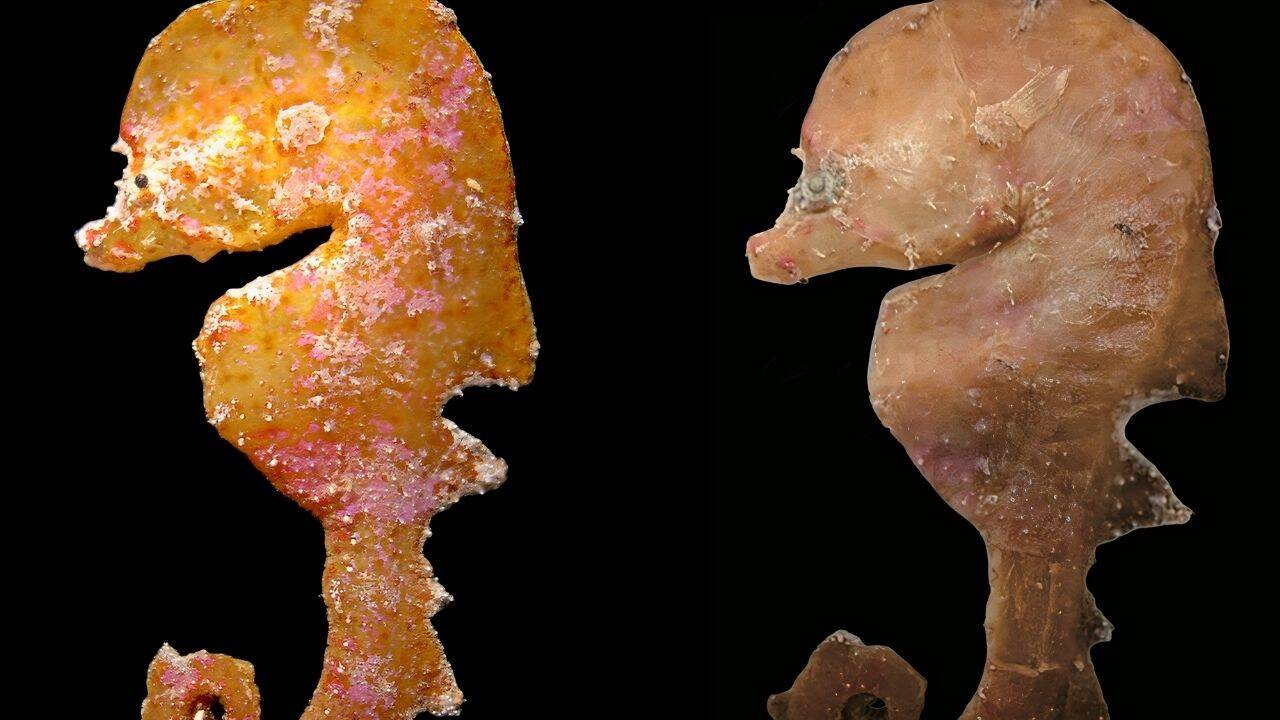
In 2006, a tiny, thumb-sized fish pulled from the deep waters off South Australia was tossed into a jar, misidentified, and quietly forgotten inside a museum drawer for nearly twenty years. That specimen was not a known relative of seahorses, as cataloguers originally assumed, but an entirely unrecorded genus and species christened Australyichthys aegis.
This oversight reveals a quiet crisis within modern marine biology. Thousands of unique organisms sit mislabeled in damp basement archives across the globe, waiting for someone to look past outward appearances and examine the physical and genetic reality hiding underneath.
The Cost of Misidentification in Institutional Archives
Natural history museums function as secular temples of biodiversity, yet they frequently double as bureaucratic black holes. When an expedition dredges the seafloor between fifty and one hundred and twenty-meters down, scientists pull up a chaotic mix of target samples and accidental bycatch.
During a 2006 natural history voyage near the mouth of South Australia's Spencer Gulf, a dredge meant to collect small shelled invertebrates swept up an unusual vertebrate. Because the expedition focused on shells and worms, the fish was mistakenly routed into an invertebrate collection at the South Australian Museum.
It received a hasty visual assessment, a generic label, and a permanent home on a crowded shelf. Visual taxonomy relies heavily on quick morphological matches. If an organism looks like a seahorse and shares a general silhouette, it gets binned alongside its supposed taxonomic cousins.
This shortcut saves time in the short term, but it corrupts ecological data for generations. When specimens are misfiled, they drop out of modern conservation calculations entirely. They become scientific ghosts, physically present in a building yet functionally nonexistent to researchers studying shifting marine ecosystems.
Moving Past External Appearance with Micro CT Scans
Relying on how an organism looks from the outside is a flawed practice in marine biology. Nature loves convergent evolution, often shaping entirely distinct genetic lineages into similar physical forms.
To prove that Australyichthys aegis belonged to its own unique genus rather than the seahorse family, researchers could not rely on superficial traits. The single specimen was far too precious for old-school dissection, forcing scientists to deploy advanced technology.
They turned to micro-computed tomography, utilizing the same high-resolution X-ray scanning found in modern hospitals.
These scans allowed researchers to construct three-dimensional digital skeletons without damaging the rare physical artifact. True seahorses possess a rigid cage of fused bony plates supporting their bellies and a distinct bony crown on their heads known as a coronet.
The digital scans revealed that Australyichthys aegis possessed neither feature. Its internal skeletal architecture pointed to an entirely different evolutionary path. Fortunately, because the specimen had been fixed in ethanol rather than harsh formalin decades prior, its genetic material remained intact. DNA sequencing confirmed the physical scans. The bones and the genes told the exact same story.
The Reality of Undiscovered Life Hiding Near the Coastline
The public often assumes that finding new species requires plunging into unexplored abyssal trenches or hacking through uncharted rainforests. Yet this discovery highlights a humbling truth. Unprecedented biodiversity hides right beneath commercial shipping lanes and historical fishing grounds, meters away from some of the most heavily studied coastlines on earth.
Southern Australia boasts an extraordinary rate of marine endemism, with a vast percentage of its underwater inhabitants existing nowhere else on the planet. Yet, the entire genus of Australyichthys is currently known from a meager seven specimens gathered across sixty-five years and scattered over two thousand five hundred kilometers of coastline.
Not a single live specimen of this genus has been collected in nearly two decades. When species are this rare or inhabit environments this difficult to access, every single preserved museum sample represents an irreplaceable historical baseline.
If researchers had discarded or ignored the 2006 specimen indefinitely, science would remain completely blind to an entire branch of the marine family tree. The discovery serves as an urgent reminder that protecting global oceans requires funding the unglamorous, slow-moving work of archival taxonomy just as aggressively as funding flashy new expeditions out on the open water.