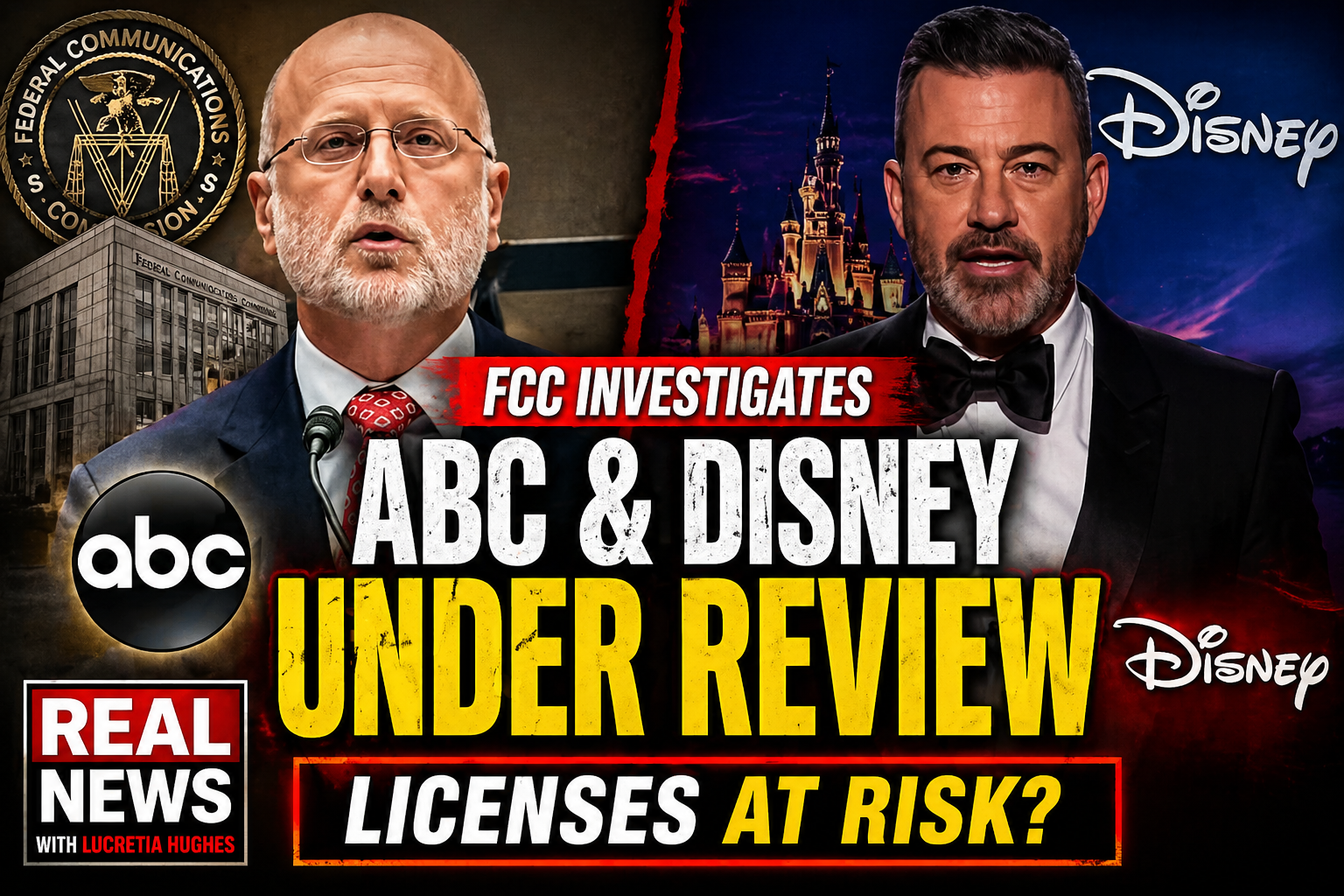
The federal courthouse in Washington, D.C., rarely hosts corporate showdowns with the constitutional gravity of the complaint filed against the federal media watchdog. The Walt Disney Company and its subsidiary ABC took the extraordinary step of suing the Federal Communications Commission, aiming to block an unprecedented acceleration of broadcast license reviews.
At stake is far more than regulatory paperwork. The core battle centers on whether the executive branch can weaponize public airwaves regulation to punish a media network for political speech.
The Anatomy of an Accelerated Threat
Federal broadcast licenses run on standard eight-year cycles. Under normal administrative operations, the licenses for the eight major local television stations owned and operated by ABC—including flagship stations in New York, Los Angeles, and Chicago—were not due for renewal until between 2028 and 2031.
Then came April. Federal Communications Commission Chairman Brendan Carr ordered an accelerated, early review of all eight Disney-owned stations.
This move shattered a half-century regulatory precedent. The commission had not forced early license renewals of this scale in more than fifty years.
The regulatory agency publicly tied the extraordinary mandate to an ongoing inquiry into corporate diversity and inclusion policies. Yet the timing drew immediate scrutiny from media analysts and legal scholars alike.
The order arrived mere days after network late-night host Jimmy Kimmel delivered a monologue that triggered sharp public criticism from the White House. President Donald Trump openly demanded that ABC fire the comedian and repeatedly urged the commission to strip the network of its broadcast privileges.
Constitutional Collisions
The forty-five-page federal complaint filed by ABC's legal team paints a stark picture of state coercion. The filing argues that the administration has engaged in a systematic retaliatory campaign.
The grievance points directly to a conflict over editorial content, news reporting, and satirical commentary. Broadcasters operate under a unique legal framework because they utilize public airwaves.
This technicality has long given the government statutory leverage. However, Supreme Court precedent has consistently insulated broadcasters from direct content-based censorship under the First Amendment.
By forcing early renewals under a cloud of political animus, the regulatory framework shifts from a neutral public interest check into a compliance tool. The legal filing describes this pressure as an existential threat.
When a regulatory body with the power to terminate a network's broadcast capacity signals displeasure with specific comedic segments or journalistic investigations, the chilling effect is immediate. Stations face a grim binary choice. They can either alter their programming to appease political appointees or endure punishing administrative hurdles.
The Broader Media Ecosystem
The corporate posture of the House of Mouse has historically favored settlement over protracted public conflict. Only months prior, Disney chose to resolve a separate defamation dispute involving network coverage by paying a multimillion-dollar settlement.
The decision to break that pattern and challenge the regulator directly signals a shift in corporate survival strategy. Other major networks have navigated similar pressures through quieter diplomatic channels or legal concessions.
CBS previously resolved a high-stakes dispute concerning editorial cuts to a political interview. Yet the wholesale targeting of local station licenses crosses a structural line.
If an administration can successfully truncate license cycles to penalize a corporate parent for the words of a late-night comedian or the tone of a daytime talk show, the implications extend far beyond a single media conglomerate. Independent local affiliates, regional newsrooms, and smaller broadcast groups watching from the sidelines recognize the precedent.
The commission defended its actions by emphasizing that every broadcaster holds a legal obligation to operate strictly within the public interest, dismissing the litigation as an attempt to evade regulatory scrutiny.
The Judicial Road Ahead
The immediate procedural question rests on a motion for a temporary restraining order. Disney and ABC are asking a federal district judge to halt the expedited renewal proceedings before the commission can formalize any adverse administrative actions.
A favorable ruling would freeze the regulatory maneuver and establish a strong judicial shield for editorial independence. An unfavorable outcome would invite an aggressive wave of administrative penalties and prolonged appeals that could reach the Supreme Court.
The defense is anchored by elite appellate representation, bringing decades of constitutional litigation experience to counter the commission's moves.
The outcome will redefine the boundaries of executive oversight in modern American media. The airwaves belong to the public, but the fight over who controls the microphone is now entirely in the hands of the judiciary