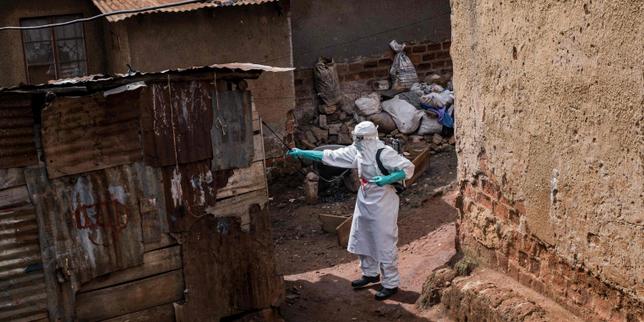
The World Health Organization recently slashed its official tally of suspected Ebola cases across the Democratic Republic of Congo and Uganda, a statistical adjustment that superficially suggests a crisis under control. It is an illusion. While bureaucratic data-cleansing has scrubbed hundreds of unverified reports from the ledgers, the number of laboratory-confirmed, highly lethal infections is quietly climbing. The true narrative is not one of containment, but of a dangerous gap widening between chaotic reality on the ground and the sanitized metrics processed in Geneva.
Health ministries and international bodies are falling into a familiar trap, celebrating a drop in "suspected" cases while the actual pathogen gains traction in highly mobile populations.
The Disconnect Between Field Labs and Geneva Spreadsheets
Bureaucracy moves slowly. Viruses move fast. The sudden downward revision of suspected Ebola cases in Central Africa is the result of a retrospective data cleanup, not a medical victory. For months, local surveillance networks flagged anyone with a high fever and hemorrhagic symptoms as a suspected case. This aggressive tracking is necessary, but it floods the system with false positives from malaria, typhoid, and dengue.
When mobile laboratories finally deployed to these remote border regions to run polymerase chain reaction (PCR) tests, they ruled out hundreds of these suspected cases. The spreadsheets were adjusted accordingly.
Yet, the headline numbers obscure a far more dangerous metric. Among the remaining pool of patients, the rate of laboratory-confirmed positive cases rose significantly.
This means the virus is circulating with high efficiency, but within a smaller, more concentrated cluster of the population than previously estimated. Public health officials are essentially looking at a map where the total area colored in red has shrunk, but the red patches remaining have turned a deep, burning crimson.
The Mechanics of Transmission in Border Zones
The border between the eastern Democratic Republic of Congo (DRC) and western Uganda is a porous, highly fluid geographic line. It exists on paper, not in the daily lives of local populations.
- Cross-border trade: Thousands of merchants move daily through informal crossing points to sell agricultural goods, completely bypassing health screening infrastructure.
- Displacement: Armed conflict in North Kivu continues to push vulnerable populations across the Ugandan border, creating overnight settlements with zero sanitation infrastructure.
- Traditional healing networks: Sick individuals frequently travel across borders to seek care from trusted traditional practitioners rather than presenting at state-run Ebola Treatment Centers (ETCs).
When a confirmed case emerges in a major transit hub like Kasindi or Mpondwe, tracing contacts becomes nearly impossible. A trader exposed to a patient in a DRC market can board a motorcycle taxi, cross into Uganda via a dirt track, and develop symptoms days later in a crowded urban center. By the time that individual is tested and confirmed, they have already generated a new web of transmission.
Why Data Revisions Stifle Emergency Funding
Donors watch trends, not nuances. When international financing bodies see an official report stating that overall cases are decreasing, the political will to release emergency capital evaporates.
[Donor Perception] -> "Cases are down" -> Fund redirection
                                               |
                                               v
[Ground Reality]   -> "Confirmed cases up" -> Resource starvation
This funding lag is fatal for outbreak responses. Deploying an Ebola response team requires immense upfront logistical capital. You cannot fight a filovirus on a budget.
Securing the cold chain for vaccines requires specialized freezers that keep doses at temperatures below -60 degrees Celsius. In regions without a stable power grid, this means shipping massive quantities of fuel and generators into the jungle. When international donors pull back because the "suspected case count" looks favorable, the supply chain breaks down. Fuel runs out, generators fail, and irreplaceable vaccine doses spoil in the tropical heat.
The Resistance to Isolation Centers
We must confront the persistent failure of communication. Decades into the fight against Ebola, international response teams still arrive in affected villages with a heavy-handed, militaristic approach that alienates the very people they are trying to save.
To a villager in a remote district, an Ebola Treatment Center looks like a place where people enter alive and leave in a body bag. The high fences, the staff encased in faceless personal protective equipment (PPE), and the immediate, forced isolation of loved ones spark deep psychological terror.
When health authorities rely strictly on coercion to isolate suspected patients, the community reacts by hiding the sick. Families construct false walls, move infected relatives to forest encampments, or falsely claim a deceased family member died of malaria to avoid a supervised, non-traditional burial.
This distrust directly drives the surge in confirmed cases. Every hidden patient is a highly infectious source of transmission, contaminating caregivers who then spread the pathogen further into the community before their own symptoms trigger medical intervention.
The Mathematics of a Concentrated Outbreak
To understand why a drop in suspected cases combined with a rise in confirmed cases is terrifying, we must look at the basic reproduction number ($R_0$).
If an outbreak has a high number of suspected cases but a low confirmation rate, the $R_0$ is effectively diluted. The virus is hitting dead ends. However, when the suspected cases drop but confirmed cases rise, the effective transmission rate within the affected network is accelerating.
$$R_0 = \tau \cdot c \cdot d$$
Where:
- $\tau$ represents the transmissibility (probability of infection per contact).
- $c$ represents the contact rate between infectious and susceptible individuals.
- $d$ represents the duration of the infectious period.
In the current environment, the contact rate ($c$) among close family units and traditional healers is skyrocketing because individuals are avoiding formal healthcare channels. The duration of the infectious period ($d$) in the community is stretching longer because patients are only being identified at the point of death, maximizing the window of time they have to pass the virus to others.
Rebuilding the Surveillance Architecture
Fixing this crisis requires dismantling the current top-down reporting system. Geneva needs to stop prioritizing clean data over actionable field reality.
First, funding must be decoupled from total case counts and instead indexed to positivity velocity. If the ratio of confirmed cases to total tests administered is rising, emergency funding should unlock automatically, regardless of whether the gross number of suspected cases was revised downward.
Second, field diagnostics must be decentralized. Waiting days for a sample to travel from a remote village to a centralized reference laboratory in Goma or Kampala is an archaic practice that costs lives.
Response teams need immediate access to battery-powered, ruggedized GeneXpert systems at the village level. A diagnosis delivered in hours, rather than days, allows for immediate, localized ring vaccination before an entire village is exposed.
The Fallacy of the Magic Bullet Vaccine
Vaccines are highly effective tools, but they are not a standalone strategy. Relying solely on ring vaccination campaigns assumes that response teams can accurately map every contact of an infected person. In highly mobile, conflict-ridden border zones, that assumption is a dangerous fantasy.
If a vaccine team cannot reach the contacts of a confirmed case because those contacts have fled an armed militia or crossed an unsecured border, the vaccine ring breaks. The tool becomes useless. True containment relies on old-fashioned, grueling public health infrastructure: clean water, trusted community liaisons, adequate PPE for local clinics, and transparent communication that respects local customs instead of criminalizing them.
The World Health Organization's statistical adjustments may look tidy on a briefing memo in Switzerland, but they are completely divorced from the biology of the virus in the mud of the DRC border. The virus does not care about data reconciliation. It cares about finding the next unprotected host, and right now, the systemic failure to read between the lines of these numbers is giving the pathogen exactly what it needs to expand its reach.



