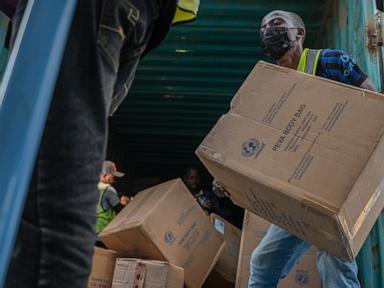
The World Health Organization recently declared a public health emergency of international concern regarding a rapidly expanding Ebola outbreak in the Democratic Republic of the Congo and Uganda, warning that while the global risk remains low, the national and regional danger is exceptionally high.
This bureaucratic distinction masks a catastrophic reality on the ground. A rare, lethal strain known as the Bundibugyo virus spread completely undetected for weeks in eastern Congo because local laboratories were testing for a different, more common variant. By the time health officials realized they were tracking the wrong killer, the virus had already entered high-density mining communities and crossed an international border into Kampala, the capital of Uganda.
Western capitals remain complacent because their sophisticated thermal scanners and airport isolation pods can easily intercept a sick traveler. The current crisis is not a threat to London or New York. It is an immediate, existential threat to the fragile stability of Central Africa, fueled by a perfect storm of diagnostic failure, global funding cuts, and active warfare.
The Blind Spot that Allowed the Virus to Move
The outbreak began quietly. On April 24, a patient died in Bunia, a major hub in the Ituri province of the DRC. Local medical teams performed standard diagnostic panels for the Zaire strain of Ebola, the variant responsible for the largest historic epidemics and the only one for which commercial vaccines exist.
The tests came back negative.
Believing the immediate danger had passed, authorities allowed the deceased individual’s family to repatriate the body to Mongbwalu. This is a sprawling, informal gold mining zone characterized by massive population density, transient labor, and minimal sanitary infrastructure. Traditional funeral rituals involving close contact with the body went ahead as normal.
The negative test was technically accurate but functionally disastrous. The patient was infected with the Bundibugyo virus, a distinct species within the Ebolavirus genus. Because initial diagnostic protocols lacked the specific primers required to flag this rare variant, the virus spent weeks amplifying silently in the community.
By the time the National Institute of Biomedical Research in Kinshasa ran confirmatory sequencing on a cluster of community deaths, the damage was done. The official count stands at 51 confirmed cases and nearly 600 suspected infections, including 139 suspected deaths. The true scale is much larger.
The Therapeutic Vacuum
Public health agencies frequently reassure the public by pointing to the medical advancements achieved since the West African epidemic of 2014. They point to Ervebo, the highly effective single-dose vaccine, and monoclonal antibody treatments like Inmazeb.
None of these tools work against the Bundibugyo virus.
Medical countermeasures designed for the Zaire strain do not cross-protect against Bundibugyo due to structural differences in the viral glycoprotein. Health workers currently confronting this outbreak have no approved vaccines and no proven therapeutic drugs. They are practicing nineteenth-century medicine: isolation, fluid replacement, and hope.
Ebola Species Comparison
┌──────────────────────┬──────────────────────────┬──────────────────────────┐
│ Feature              │ Zaire Ebolavirus         │ Bundibugyo Ebolavirus    │
├──────────────────────┼──────────────────────────┼──────────────────────────┤
│ Approved Vaccines    │ Yes (Ervebo)             │ None                     │
│ Target Therapeutics  │ Yes (Inmazeb, Ebanga)    │ None                     │
│ Historic Lethality   │ ~60% to 90%              │ ~25% to 50%              │
│ Current Outbreak Status│ Inactive                 │ Active (DRC / Uganda)    │
└──────────────────────┴──────────────────────────┴──────────────────────────┘
An experimental multi-valent vaccine developed by researchers at Oxford is currently being shipped from the United States and Britain. It arrives with a heavy caveat. Virologist Jean-Jacques Muyembe noted that teams will administer the vaccine in the field to observe who develops the disease. It is a live-fire clinical trial conducted in the middle of a war zone.
When Bio-Security Meets Guerrilla Warfare
Managing an epidemic requires meticulous contact tracing, rapid isolation, and secure burial teams. These tasks become nearly impossible when the geographic epicenter is actively contested by armed rebel groups.
Parts of North Kivu and Ituri are under the effective control of various militia factions. These groups view government health officials and international aid workers with profound suspicion. Humanitarian infrastructure in these regions has been systematically depleted by a sharp drop in international funding over the past year.
The consequences are visible at local clinics. In Bunia, teams from Doctors Without Borders recently discovered suspected Ebola cases sitting in general wards at Salama Hospital because the facility lacks a dedicated isolation unit. When workers attempted to transfer these patients to alternative facilities, every clinic reported the same thing: they were completely full of suspected cases and had no physical space left.
Meanwhile, daily life continues without interruption. In the mining town of Mongbwalu, the gold fields remain fully operational. Thousands of miners work in close proximity, share cramped housing, and move freely across the porous land border into Uganda. Public handwashing stations, which were critical in stopping previous outbreaks, are largely absent due to budget shortfalls.
The Global Cost of Regional Isolation
The designation of a "low global risk" by international bodies creates a dangerous policy paradox. It keeps the financial markets calm and prevents disruptive travel bans, but it also dries up the political will necessary to fund expensive emergency interventions.
Epidemics do not stay contained merely because a risk assessment scale labels them regional. The virus has already demonstrated its mobility by appearing in Kampala via two infected travelers from the DRC. The East African transport corridor connects these mining zones directly to major shipping ports on the Indian Ocean.
Relying on the geographic isolation of eastern Congo as a natural barrier is a flawed strategy. Containment relies entirely on supporting the local medical personnel who are currently buying the rest of the world time with their lives. At least four healthcare workers have already died after treating patients without proper personal protective equipment.
The international community must pivot away from monitoring this crisis from a distance and move immediately toward aggressive procurement of basic isolation infrastructure, rapid field-diagnostic distribution, and direct logistical support for frontline clinics. Waiting for the experimental Oxford vaccine to prove its efficacy in the field is a luxury that the crowded medical wards of Ituri do not have.