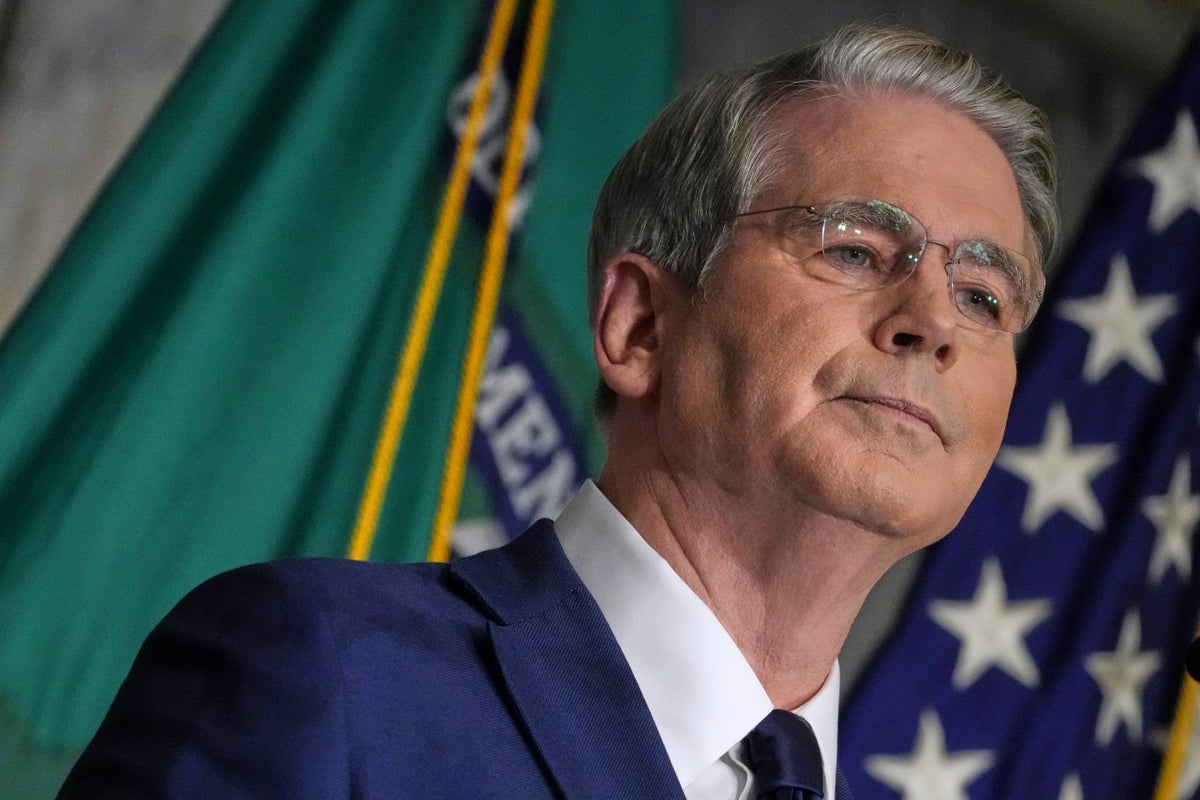
The United States has launched what Treasury Secretary Scott Bessent terms the largest financial offensive ever directed against a sovereign adversary, aiming to force Tehran's capitulation through total economic asphyxiation. This aggressive escalation targets not only Iran's remaining financial lifelines but also introduces sweeping secondary penalties designed to penalize any international entity, bank, or trading partner caught doing business with the regime.
As the Iranian rial plummets past historic lows—reaching roughly two million rials to the dollar—Washington is betting that maximum financial pressure can achieve what years of fragmented diplomacy failed to do. Yet, beneath the rhetoric of an imminent economic collapse, a more complicated structural reality governs global energy markets and international compliance.
The Anatomy of the New Financial Siege
Treasury’s latest directives expand far beyond traditional petroleum embargoes. By explicitly bringing digital assets, gold transfers, aviation corridors, and shipping logistics into the crosshairs, the White House has weaponized the architecture of global commerce.
The strategy relies heavily on the extraterritorial reach of secondary sanctions. Financial institutions worldwide face an immediate ultimatum. Any institution found laundering money or facilitating transactions for Iranian entities will find itself entirely severed from the U.S. dollar clearing system.
For global banks, compliance is no longer a matter of administrative overhead. It is an existential threat.
The mechanism is designed to starve the state of foreign currency while concurrently backing up an active naval blockade in the Persian Gulf. With oil exports severely constrained and vital import channels choked off, the Iranian economy faces compounding structural failures.
The Secondary Target Problem
Washington's ultimatum is clear, but enforcement exposes severe geopolitical tripwires. The primary dilemma facing the Treasury Department involves major industrial economies that rely heavily on foreign energy imports or maintain complex trade corridors with the Middle East.
Consider a hypothetical scenario where an independent refinery in East Asia continues purchasing discounted petroleum through convoluted maritime transfers. Under the new guidelines, the Treasury can theoretically lock that refinery's executive leadership and corporate parents out of Western markets.
Executing this policy against smaller intermediaries is straightforward. Applying the exact same standard to major trading partners like China, India, or Turkey carries immense systemic risk.
If Washington aggressively targets primary financial institutions in major sovereign states, retaliatory measures or total financial decoupling could destabilize global markets far beyond Tehran's borders. The White House has signaled that no nation is exempt from the mandate, but the diplomatic friction required to enforce compliance among unwilling trading partners remains extraordinarily high.
Cracks in the Domestic Iranian Facade
Inside Iran, the compounding weight of structural sanctions and military strain has triggered visible panic within state institutions. Domestic inflation has eviscerated the purchasing power of the middle class, turning basic household goods into luxury commodities.
Iranian leadership faces a narrowing window of survival. Public dissent, fueled by economic collapse, has repeatedly threatened internal stability, forcing security forces into harsher suppression campaigns.
At the same time, fractures are appearing among political elites regarding how to handle the crisis. Some factions advocate for immediate de-escalation and diplomatic engagement while the state retains a vestige of leverage, while hardline factions demand continued resistance regardless of civilian cost.
The administration in Washington is banking entirely on these internal fractures widening into an institutional collapse. By choking off revenue streams that fund both domestic subsidies and regional proxy networks, the White House hopes to induce a systemic tipping point before domestic fatigue sets in across Western capitals.
The Limits of Financial Warfare
History suggests that comprehensive financial isolation rarely yields predictable political outcomes. While total embargos degrade state capacity and cripple industrial output, they frequently fail to alter the core calculus of entrenched authoritarian regimes. Instead, targeted states often adapt by cultivating illicit black-market networks, deepening barter arrangements with sympathetic neighbors, and shifting domestic economic activity toward informal sectors that escape state taxation and Western tracking alike.
Furthermore, aggressive financial enforcement accelerates efforts by rival global powers to de-dollarize their bilateral trade. When Washington turns the reserve currency into a punitive instrument, secondary nations have a powerful incentive to build alternative clearing mechanisms that bypass Western oversight entirely.
The current campaign represents a high-stakes gamble. If the economic offensive forces a sudden capitulation or paralyzes the regime's operational capabilities, the strategy will be hailed as a masterclass in modern statecraft. If it merely deepens humanitarian misery without shifting strategic outcomes, the U.S. will find itself locked into an indefinite containment posture with diminishing returns. The clock is ticking down, and global markets are bracing for the fallout of a financial war with no clear off-ramp.