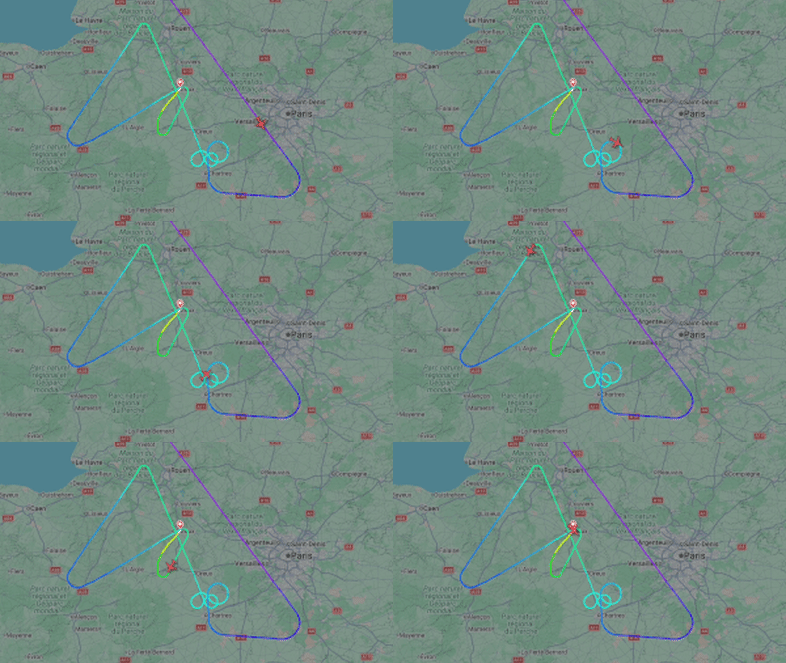
Multiple commercial flights across European airspace have been forced into emergency diversions following a wave of anonymous bomb threats, triggering fighter jet scrambles, runway closures, and thousands of stranded passengers. While airlines and national aviation authorities treat every electronic warning as a live security emergency, the underlying reality is an asymmetric financial and operational trap. A single spoofed email sent from an encrypted server can ground a wide-body jet, burn tens of thousands of euros in jettisoned fuel, and ripple across continental flight schedules within minutes.
European aviation operates on a zero-margin-for-error security doctrine forged over decades of hard lessons. When a threat arrives—whether via an airport contact form, a social media account, or an automated phone call—air traffic controllers and airline security operations centers do not have the luxury of gambling on probability. They execute immediate containment protocols. The aircraft is rerouted to the nearest suitable diversion airport, often escorted by quick-reaction alert military interceptors, and parked at an isolated remote stand away from terminal infrastructure.
The Anatomy of a Modern Diversion
The physical mechanics of a bomb threat diversion are brutal, fast, and expensive. Consider a hypothetical scenario involving a standard single-aisle airliner cruising at 36,000 feet over central Europe with 180 passengers on board. The moment a threat is deemed non-dismissible by ground security assessors, the flight crew receives priority vectors from air traffic control.
First comes the rapid descent. Pilots configure the aircraft for an expedited drop to get the hull on the ground before a potential barometric or timed device can detonate. Cabin crew secure the galley, brief passengers for an emergency landing, and prepare for a potential slide evacuation.
If the aircraft is a long-haul wide-body heavy with transoceanic fuel, the pilots face a secondary weight crisis. Landing an aircraft significantly above its maximum structural landing weight risks collapsing the landing gear or causing a runway overrun. To shed mass quickly, the crew must execute a fuel dump over a designated unpopulated zone, spraying thousands of liters of refined aviation kerosene into the upper atmosphere before touching down.
Once on the tarmac, the aircraft is isolated. Local tactical police units, bomb disposal squads, and explosive-detection canine teams surround the perimeter. Passengers are deplaned—sometimes via mobile stairs, other times down inflatable evacuation slides if the threat carries an imminent timeline—and bussed to secure holding areas for secondary screening. Every piece of checked luggage is pulled from the cargo hold, laid out on the apron, and inspected individually. The aircraft remains out of service for hours, breaking the airline's tightly wound fleet rotation.
Why Airlines Cannot Ignore Anonymous Noise
A common question from frustrated travelers stuck on a tarmac in a foreign city is simple. Why do airlines react to obvious hoaxes sent from anonymous webmail addresses?
The answer lies in threat assessment triage and legal liability. Aviation security teams classify incoming threats into three tiers—green, amber, and red—based on specificity, credibility, and intelligence cross-referencing. If a message lacks flight numbers, uses generic language, or matches a known spam signature, intelligence analysts may clear it without disrupting operations.
However, the moment a sender includes specific, verifiable details—such as a tail registration number, a departure gate, or a passenger manifest detail scraped from public flight-tracking databases—the threat escalates immediately. Under international civil aviation regulations, specifically ICAO Annex 17, states and carriers are legally obligated to protect passengers against acts of unlawful interference. No flight operations director will ever sign off on ignoring a targeted threat when the downside risk is a catastrophic hull loss.
This creates a glaring asymmetry. The cost of launching an attack on the aviation network has dropped to zero, while the cost of defending against it remains astronomical.
The Economics of Disruption
To understand the scale of the damage, you have to look at airline unit economics. Commercial aviation runs on razor-thin margins, relying on high aircraft utilization to turn a profit. A modern commercial jet only makes money when its doors are closed and its wheels are in the air.
When a single flight diverts due to a bomb threat, the financial bleed happens across five distinct channels:
- Direct Fuel Burn and Dump Costs: Burning extra fuel during low-altitude holding patterns or dumping fuel prior to an overweight landing easily costs between €10,000 and €40,000 per incident, depending on the airframe.
- Diversion Airport Fees: Unscheduled landings incur emergency handling charges, remote stand parking fees, tactical security surcharges, and firefighting standby costs.
- Crew Duty Time Expirations: Strict European aviation safety rules cap how many hours pilots and cabin crew can work. A four-hour security sweep on a remote apron frequently causes the crew to "time out," forcing the airline to fly in a relief crew or cancel the onward leg entirely.
- Passenger Duty of Care: Under EU Regulation 261/2004, airlines must provide meals, hotel accommodations, and rebooking for stranded passengers. While security threats generally exempt carriers from paying flat-rate cash delay compensation under "extraordinary circumstances," the logistical cost of housing and feeding 200 to 300 people overnight still hits the airline's balance sheet directly.
- Downstream Network Contagion: The diverted aircraft was scheduled to fly three more legs that day. Now, hundreds of passengers at downstream airports are stranded, forcing the airline to wet-lease spare capacity at punitive spot-market rates.
A single coordinated wave of false threats across five or six European hubs can quietly erase millions of euros in quarterly operating profit over a single weekend.
The Attribution Problem in European Airspace
Catching the perpetrators behind these disruptions is notoriously difficult, largely because of how digital anonymity collides with fragmented European jurisdictions.
A threat targeting a flight departing from Frankfurt, operated by a French carrier, flying over Austrian airspace, and diverting into Prague triggers a bureaucratic tangle across multiple national police forces, aviation regulators, and intelligence agencies. While Europol and Eurocontrol facilitate cross-border data sharing, legal warrants to unmask IP addresses still move at the speed of diplomatic paperwork.
Bad actors exploit this friction. Many recent waves of European aviation and school bomb threats have utilized layered obfuscation techniques:
- Bulletproof Hosting and VPN Chaining: Traffic is routed through multiple offshore servers in jurisdictions that do not cooperate with European law enforcement requests.
- Encrypted Email Providers: Offenders use zero-access encryption services based outside the European Union, leaving investigators with empty metadata logs.
- Spoofed Caller IDs and VoIP: Automated voice threats are placed through compromised Voice-over-IP switches, making real-time call tracing nearly impossible.
- Public OSINT Exploitation: Perpetrators pull live flight data from open-source radar tracking platforms, tailoring their threats with real-time altitude and routing coordinates to make their messages appear credible to ground controllers.
Even when law enforcement successfully traces a campaign back to a specific region or state-sponsored hybrid warfare group, extradition is often politically dead on arrival.
Military Scrambles and Sovereign Airspace
When a commercial airliner declares a security emergency over Europe, the response extends well beyond civilian air traffic control. National air forces maintain Quick Reaction Alert (QRA) fighter jets on 24/7 standby specifically for rogue or threatened aircraft.
Within minutes of a diversion alert, supersonic interceptors—such as Eurofighter Typhoons, Dassault Rafales, or F-16s—are scrambled to intercept the airliner. Breaking the sound barrier over populated areas to reach an aircraft quickly often triggers sonic booms that rattle windows across entire provinces, sparking secondary waves of public panic on social media.
The military pilots conduct a visual inspection of the airliner's exterior, check cockpit responses, and escort the flight down to the diversion runway. Each QRA scramble costs taxpayers tens of thousands of euros in military flight hours, maintenance cycles, and aviation fuel. When hoaxes occur in clusters, they act as a low-cost stress test on European air defense readiness, draining military budgets without a single shot being fired.
The Flaws in Current Threat Filtering
The aviation industry is caught between two competing pressures: maintaining absolute safety and preventing malicious actors from paralyzing the continent's transport grid at will. Right now, the filtering mechanisms are struggling to keep pace with automated threat generation.
Most airport and airline public communication channels—customer service emails, web feedback forms, and social media inboxes—were designed for frictionless customer engagement, not counter-terrorism triage. They allow anonymous users to submit text without identity verification. When an automated script blasts identical threat templates to fifty airport web forms simultaneously, human analysts are forced to manually verify every single instance.
Some security experts argue for stripping anonymity from airline and airport digital contact portals, requiring verified booking references or strong digital authentication before a message can reach an operational inbox. Yet determined attackers simply pivot to calling local emergency numbers, emailing airport press offices, or flooding air traffic control administrative lines.
Artificial intelligence and linguistic forensics are increasingly deployed to spot synthetic, mass-generated threats. Algorithms analyze syntax, metadata headers, and server routing patterns to flag known hoax campaigns before they reach flight operations. Still, automated filtering carries a terrifying margin of error. If an algorithm mistakenly flags a genuine threat as spam, the consequences are irreversible. Human operators will always default to caution, and attackers know it.
What Passengers Actually Face During a Diversion
For travelers caught inside a security diversion, the experience is defined by sudden isolation and an information vacuum. Once the pilots receive diversion instructions, they intentionally withhold the nature of the threat from the cabin until the aircraft is safely on the ground. Announcing a bomb threat at 35,000 feet risks triggering mass panic, injuries in the aisles, or interference with flight crew duties.
Passengers simply see the moving map take a sharp turn, feel the steep pitch of an emergency descent, and look out the window to see military fighter jets flying off the wingtip. Upon landing, mobile networks are occasionally jammed or restricted near the remote stand to prevent remote detonation signals, cutting passengers off from family and news updates for hours.
Luggage is routinely held back for days after the passengers are cleared, as forensic teams clear cargo containers one by one. Airlines prioritize moving people over bags, leaving thousands of suitcases piled in temporary storage facilities across secondary European airports.
Until European aviation regulators, intelligence services, and telecommunications providers close the anonymity loopholes that allow zero-cost digital threats to trigger high-cost physical protocols, airlines remain vulnerable to the simplest weapon in modern disruption—a single line of text sent into an unguarded inbox.