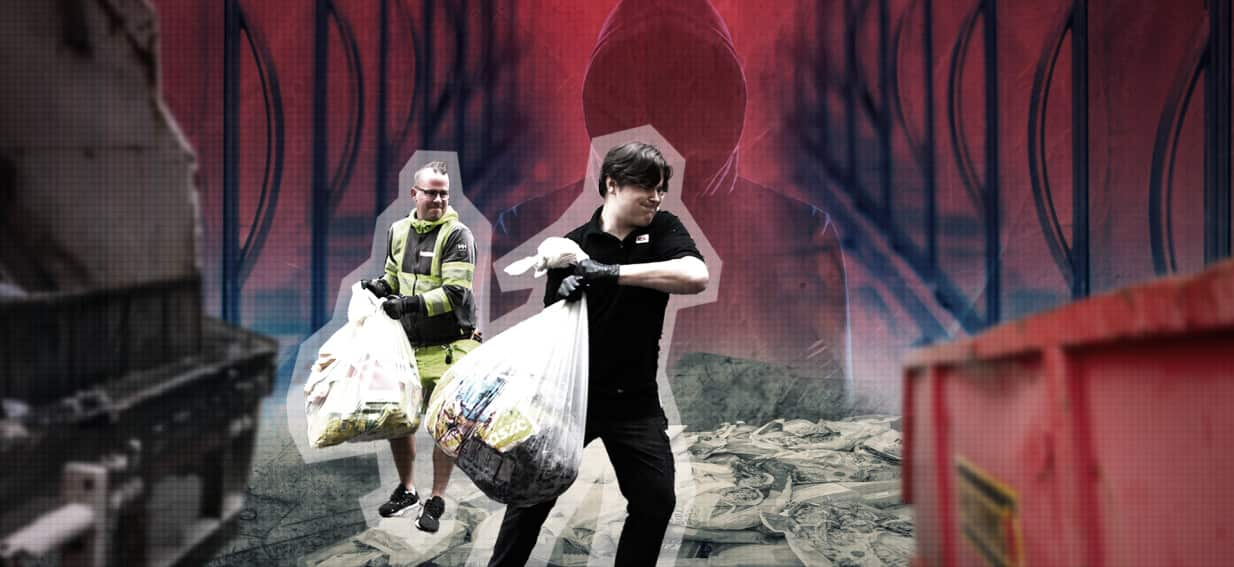
Cybercriminals are compromising industrial refrigeration systems across Europe, disrupting the cold-chain logistics that keep British supermarket shelves stocked. According to warnings from UK cybersecurity leadership, attackers are exploiting internet-connected cooling infrastructure—known as operational technology—to hold perishable food supplies for ransom. Because Britain relies heavily on integrated European distribution networks for fresh and frozen goods, a digital breach at a continental cold-storage facility can trigger immediate physical shortages across the English Channel.
For decades, the cold chain was a mechanical problem. If a warehouse lost power, an engineer grabbed a wrench or fired up a diesel backup generator. Today, those massive sub-zero facilities are run by automated Programmable Logic Controllers (PLCs) and Supervisory Control and Data Acquisition (SCADA) systems. They are wired directly into corporate networks so managers can monitor temperatures from a smartphone in London while goods sit in a warehouse in Rotterdam. That convenience created an open door.
How a Digital Breach Melts Physical Inventory
Modern industrial freezers do not fail silently, nor do they fail cheaply. When ransomware groups penetrate a logistics provider's network, they rarely target the cooling compressors directly on day one. Instead, they lock down the enterprise IT systems that manage inventory tracking, automated pallet retrieval, and temperature telemetry.
Consider a hypothetical example of how this unfolds during a peak distribution weekend. Attackers deploy encryption malware across a third-party logistics hub in northern Europe. Suddenly, the automated cranes inside the minus-twenty-degree storage bays freeze in place. Nobody can enter the bays safely for extended shifts without heavy thermal gear, and without the digital manifest, workers have no idea which pallets hold raw poultry expiring on Tuesday and which hold frozen peas good until next year. Even worse, if the attack severs communication with the Building Management System (BMS), engineers lose visibility into rising internal temperatures. A single degree of drift across thousands of tons of dairy or meat forces food safety regulators to condemn the entire batch.
The ransom math is brutal. A traditional manufacturing plant might lose a few days of production during a cyberattack and catch up by running weekend shifts. A cold-storage operator does not have that luxury. Once the thermal envelope fails, the product turns into hazardous waste. Attackers know this. They time their strikes for Friday afternoons or holiday weekends, knowing that every hour of delay brings the victim closer to total inventory write-off.
Why Britain Remains Uniquely Exposed
Geography and trade structure leave the United Kingdom especially vulnerable to continental infrastructure shocks. Despite domestic agricultural production, Britain imports roughly forty percent of its total food supply, with a heavy concentration of fresh produce, meat, and dairy flowing through European Union transit hubs.
The efficiency of just-in-time logistics leaves almost zero buffer for prolonged disruption. Supermarkets operate on razor-thin margins and tight replenishment cycles. Goods harvested or processed in Spain, France, or the Netherlands move through consolidated cold-storage depots before boarding ferries or Eurotunnel freight trains bound for Kent.
When a cyber incident hits one of those continental nodes, the ripple effect reaches British distribution centers within forty-eight hours. We saw a preview of how fragile this choreography is during the post-Brexit border adjustments and the pandemic driver shortages. A cyberattack achieves the exact same physical blockade without a single truck breaking down on the highway.
The Third-Party Blind Spot
Large British grocery chains spend tens of millions of pounds securing their own digital perimeters. They hire elite red teams, enforce strict multi-factor authentication, and segment their internal networks. None of that stops an attack on a mid-sized refrigeration contractor in Belgium.
Supply chain security is only as strong as the least funded vendor in the routing table. Many regional cold-storage operators run legacy industrial hardware designed to last twenty-five years. The computers controlling those compressors often run outdated operating systems—sometimes Windows 7 or older embedded variants—because upgrading the software requires taking the freezer offline. Taking a commercial freezer offline means emptying it, warming it up, servicing the electronics, and spending days bringing it back down to operating temperature. For a facility running at ninety-five percent capacity year-round, scheduled downtime barely exists.
The Anatomy of an Industrial Refrigeration Attack
To understand why these breaches are escalating, you have to look at how Operational Technology (OT) and Information Technology (IT) collided over the last fifteen years. Historically, industrial equipment lived on air-gapped networks. The machines talking to the ammonia chillers had zero physical connection to the office computers handling payroll and email.
Then came the push for energy efficiency and predictive maintenance. Refrigeration consumes massive amounts of electricity—often the single largest operational expense for a cold-storage warehouse. Operators installed smart sensors on compressors, valves, and condensers to tweak power usage based on real-time grid pricing. They gave equipment manufacturers remote VPN access so technicians could troubleshoot faults without flying across Europe.
Those remote maintenance tunnels became superhighways for ransomware affiliates. Once an attacker buys stolen credentials from an initial access broker on a dark web forum, they slip through the vendor portal, pivot from the corporate billing server into the industrial control network, and deploy their payload.
| Vulnerability Layer | Common Weakness | Real-World Consequence |
|---|---|---|
| Remote Access Portals | Shared vendor passwords and lack of multi-factor authentication | Attackers enter the network disguised as routine maintenance technicians |
| Legacy Control Hardware | Unpatched operating systems tied to long-life mechanical chillers | Known exploits allow trivial lateral movement across facility floors |
| Network Flatness | No firewall separation between office email servers and cooling PLCs | A single phishing click in accounting can halt warehouse operations |
| Telemetry Blindness | Cloud-dependent temperature dashboards | Locking the cloud account leaves operators guessing about internal heat spikes |
The Quiet Culture of Non-Disclosure
If you have not heard the names of the specific European logistics firms hit over the past year, that is by design. The food and agriculture sector has historically been one of the quietest industries regarding cyber extortion.
Publicly admitting a breach carries immediate commercial punishment. A supermarket buyer who learns that a logistics partner suffered a network intrusion will immediately begin shifting volume to a competitor to protect their own shelf availability. Furthermore, any hint that cold-chain integrity was compromised invites intense scrutiny from food standards agencies and insurers.
As a result, many operators pay the ransom quietly, restore their systems under non-disclosure agreements, and write the expense off as an operational contingency. This silence starves threat intelligence analysts of crucial data. Without shared indicators of compromise, the same ransomware crew can reuse the exact same exploit against three different cold-storage facilities in the same industrial park within a single month.
Why Standard Cybersecurity Advice Fails in Sub-Zero Warehouses
Security consultants love to tell executives to patch their systems, segment their networks, and run regular backups. On paper, that sounds straightforward. Inside a working cold-storage facility, every one of those steps hits physical friction.
Patching an industrial controller is not like restarting a laptop. If a software update introduces a bug into the refrigerant valve timing, pressure builds up in the pipes. Industrial refrigeration frequently relies on anhydrous ammonia—a toxic, corrosive gas that poses severe life-safety risks if leaked. Facility managers are rightfully terrified of applying untested software updates to systems keeping tons of pressurized ammonia stable.
Similarly, backups do not thaw frozen inventory. Having a clean backup of your warehouse management database on an offline tape drive is great for recovery next week. It does not help you move four hundred pallets of fresh salmon out of a warming warehouse tonight before the bacteria count spikes.
Manual Overrides Are Disappearing
The most troubling trend in modern logistics is the removal of manual fallbacks. Older warehouses had physical switches, analog pressure gauges, and clipboards. If the computers died, veteran floor managers could keep the compressors running manually and track pallets with pen and paper until IT sorted out the mess.
Newer, high-density automated warehouses are built like giant vending machines. The racking is forty feet high, packed tightly together with no aisles wide enough for a human-driven forklift. Only robotic shuttles can reach the goods. If the software commanding those shuttles gets encrypted, the inventory is physically entombed inside the building until the code is restored.
What Needs to Happen Before the Next Disruption
Securing the food supply chain requires treating cold storage with the same regulatory seriousness as power grids and water treatment plants. Voluntary guidelines have failed because thin margins force logistics operators to prioritize immediate throughput over long-term resilience.
First, regulators across both the UK and the European Union need to enforce strict network segmentation for critical food infrastructure. Corporate email, invoicing, and external vendor portals must be physically or cryptographically isolated from the PLCs governing temperature and automated retrieval. If an office worker clicks a malicious link, the compressors should never know it happened.
Second, operators must invest in analog survival capabilities. Every automated cold-storage facility needs an out-of-band, non-networked method to verify internal temperatures and keep basic cooling loops running at a safe baseline. If the digital brain goes dark, the mechanical heart has to keep beating on simple thermostats.
Finally, major retailers must audit their third-party logistics partners on operational resilience, not just price per pallet. Pushing suppliers to cut costs year after year forces them to defer infrastructure upgrades and run aging control systems past their safe lifespan. Resilience costs money upfront, while a broken cold chain costs far more at the checkout counter.
Until food executives start viewing cybersecurity as a core food-safety issue rather than an IT problem, Britain's dinner table will remain just one compromised European server away from an empty shelf.