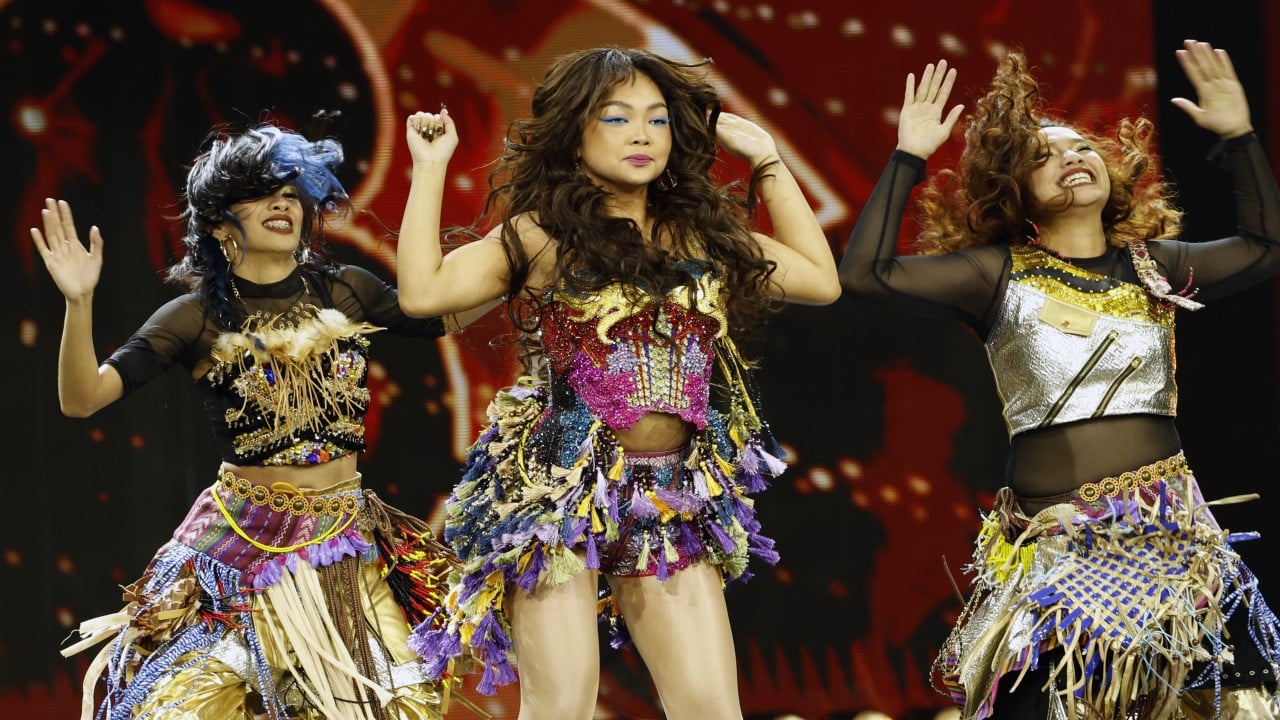
The Philippines just pulled off what European television executives spent nearly a decade trying and failing to engineer. When Filipino vocalist Carmelle claimed the inaugural crown of the first Eurovision contest in Asia, the victory did more than hand Manila another trophy in a country already obsessed with singing competitions. It validated a regional broadcast experiment that had stalled in boardrooms since 2016, proved that Asia-Pacific audiences will rally behind a multi-nation live music format, and exposed the structural fault lines between Western television franchising and Asian pop economics.
Most coverage of Carmelle’s win treats the night like a standard talent show coronation. That misses the actual story. Anyone who has spent twenty years watching international television formats succeed or die in the Asia-Pacific market knows that importing a European institution into Asia rarely works without friction. Eurovision was built for a dense continent of neighboring public broadcasters sharing time zones, political baggage, and a specific appetite for camp spectacle. Asia has none of those uniform conditions. Yet Carmelle’s triumph turned a logistical gamble into a cultural flashpoint, transforming a long-delayed spinoff into an immediate commercial benchmark for regional entertainment.
Why Eurovision Took So Long to Reach Asia
To understand why Carmelle’s win carries weight beyond a single night of television, you have to look at the wreckage of earlier attempts to bring the Eurovision brand east. The European Broadcasting Union first floated the idea of an Asian adaptation years ago, envisioning a sprawling contest that would unite broadcasters from Sydney to Seoul and Mumbai to Manila. On paper, the math looked irresistible. Asia holds more than half the world’s population, the fastest-growing streaming markets on earth, and fan cultures capable of mobilizing millions of votes in minutes.
Reality proved far messier.
Unlike Europe, where the European Broadcasting Union operates as a cohesive network of state-funded or public-service broadcasters, the Asia-Pacific television sector is fragmented across fiercely competing commercial conglomerates, state-run networks with strict content rules, and digital platforms that bypass linear television entirely. Time zones stretch across eleven hours, making simultaneous live voting a scheduling nightmare. Geopolitical tensions between major regional powers also complicated the basic premise of friendly musical competition. For years, the project sat in development purgatory while skeptics argued that Asia already had its own transnational pop engines, led by South Korea’s idol industry and Japan’s domestic music machine.
What finally broke the deadlock was a shift in how regional broadcasters approached the format. Rather than forcing Asia to mimic Geneva’s exact bureaucratic template, organizers leaned into live performance mastery, digital fan voting, and cross-border streaming distribution. By the time the inaugural contest went live, the stakes were clear. If the broadcast flopped, the Eurovision brand in Asia would be dead for a generation. Instead, Carmelle walked onto the stage and gave the format an instant, undeniable reason to exist.
The Anatomy of Carmelle’s Victory
Filipino singers winning international vocal competitions is hardly news to anyone who tracks global live entertainment. From West End theater productions to American network talent shows, performers trained in the Philippines have dominated technical vocal contests for decades. What separated Carmelle’s performance in the first Eurovision contest in Asia was how deliberately it bridged two very different musical expectations.
European Eurovision voters notoriously reward theatricality, high-wire vocal runs, and emotional immediacy that translates across language barriers within thirty seconds. Asian pop audiences, by contrast, often split between hyper-polished choreography, ballad traditionalism, and indie authenticity. A song that pleases a jury in one territory can easily fall flat with televoters two thousand miles away.
Carmelle’s winning entry threads that needle with surgical precision. Rather than relying on empty vocal gymnastics, the arrangement built slowly around restraint before opening into a chorus engineered for arena-scale catharsis. Watch the staging again and you see every lesson of modern broadcast production at work. The camera blocking emphasized intimacy during the verses, keeping the framing tight enough to register micro-expressions on mobile screens, before pulling back into wide geometric lighting sweeps at the vocal peak.
That distinction matters more than casual viewers realize. Today’s televised music contests are no longer designed solely for living room television sets. They are engineered to generate fifteen-second vertical video clips that detonate across TikTok, Instagram Reels, and YouTube Shorts before the final voting window even closes. Carmelle’s performance delivered both the old-school broadcast money note and the modern social media hook.
How the Voting Math Favored Discipline Over Hype
Behind every Eurovision-style result lies a voting architecture designed to prevent any single population giant from steamrolling smaller nations. In a region where countries range from micro-states to nations of over a billion people, raw popularity votes alone would turn any contest into a census exercise.
The split between professional juries and public voting forced contestants to earn credibility on two fronts. Jury panels evaluate vocal control, arrangement originality, and live execution under pressure. Public voters respond to charisma, national pride, and replay value. Carmelle’s margin of victory came from refusing to sacrifice one constituency for the other. While several flashier acts racked up early online buzz only to stumble on pitch under live broadcast conditions, the Philippine entry held steady across both scorecards.
In broadcast competitions, consistency is the most underrated weapon in the room. Singers routinely lose major finals not because they lack talent, but because the physical toll of rehearsals, media obligations, and adrenaline erodes their vocal stamina by the final night. Carmelle peaked when the red light turned on.
What the Philippines Gets Right About Live Vocal Culture
If you want to understand why the Philippines produced the first winner of Eurovision in Asia, stop looking at record label boardrooms and start looking at neighborhood culture. The country’s musical infrastructure operates differently from almost anywhere else in the region.
In South Korea, pop stardom is largely built through multi-year corporate trainee academies that emphasize synchronized group performance, visual branding, and tight narrative control. In Japan, domestic music thrives on massive physical sales, niche fan clubs, and self-contained media ecosystems. In the Philippines, live singing remains a participatory public sport.
From local barangay fiestas to late-night television variety marathons that run for hours every weekend, Filipino performers grow up singing live in front of unforgiving crowds. There is nowhere to hide behind heavy backing tracks when an audience expects full-throated delivery in real time. That cultural conditioning produces vocalists who treat live television not as a terrifying anomaly, but as home turf.
The Economics Behind Manila’s Talent Export
There is also an economic reality that Western commentators frequently gloss over. For decades, live performance has served as one of the Philippines’ most reliable cultural exports, with Filipino bands, cruise ship headliners, session vocalists, and theater leads working across Asia, the Middle East, and Europe. That constant circulation created an informal conservatory system. Young singers learn phrasing, breath control, and audience command from relatives and mentors who have spent years working international stages.
Yet for all that vocal firepower, the Philippine music industry has historically struggled to convert individual performer acclaim into sustained global chart dominance for Manila-based labels. International audiences applauded the voices, while foreign companies owned the masters, the distribution pipelines, and the intellectual property.
Carmelle’s win arrives at a moment when that old power dynamic is starting to crack. Streaming algorithms have flattened geographic gatekeeping, allowing Original Pilipino Music to find listeners far beyond the overseas Filipino diaspora. Winning a high-profile Asian broadcast title puts a spotlight not just on a single vocalist, but on Filipino songwriters, vocal arrangers, and creative directors who have spent years working behind the scenes.
The Geopolitics and Business of an Asian Song Contest
Celebrate the music all you want, but a cross-border television event of this scale is never just about songs. It is about soft power, advertising inventory, and regional media influence.
Every participating broadcaster entered the inaugural contest with its own agenda. For tourism boards, a prime-time showcase beamed across multiple Asian territories offers priceless destination marketing. For streaming platforms and telecom sponsors, live event television remains one of the few formats capable of commanding simultaneous appointment viewing in an era of on-demand fragmentation.
Look closely at the commercial mechanics of live music broadcasts:
- Appointment viewing still commands premium ad rates. While scripted dramas lose audiences to delayed streaming, live voting results create real-time urgency that keeps viewers glued through commercial breaks.
- Cross-border fan mobilization drives engagement metrics. When viewers in Manila, Bangkok, Jakarta, and Sydney argue online over jury scores, platforms capture hours of organic conversation that no paid marketing campaign can buy.
- Catalog discovery turns one-night broadcasts into long-tail revenue. Artists who perform well see immediate spikes in back-catalog streams across Spotify, Apple Music, and YouTube, extending the financial life of a three-minute performance for months.
Still, the inaugural edition also exposed tensions that organizers cannot afford to ignore if they want this contest to survive past its novelty phase.
The Structural Flaws Organizers Must Fix Next
Veteran industry watchers know that the hardest year for any new broadcast franchise is never the first. The first year runs on curiosity and launch hype. The second year tests whether the machinery actually works.
Several vulnerabilities stood out during the inaugural run. First, language politics remain delicate. English served as the de facto bridge language for hosts, interviews, and several choruses, which helped accessibility across diverse markets. Yet leaning too heavily on English risks diluting the very thing that makes a regional Asian contest compelling. Europe learned long ago that songs performed in native languages often carry sharper emotional identity than generic international pop written in English for committee approval.
Second, voting transparency will face fierce scrutiny as the stakes rise. Asian pop fandoms are among the most organized digital communities on earth. They track streaming numbers, voting windows, and jury patterns with forensic intensity. If future editions fail to publish clear, auditable breakdowns of regional televotes and jury rankings, conspiracy theories will overshadow the music within minutes of the trophy presentation.
Third, broadcaster commitment remains uneven across the continent. For Eurovision in Asia to mature into an annual institution rather than an occasional special event, major networks in East, Southeast, and South Asia must treat it as flagship programming rather than off-peak filler. That requires serious production budgets, national selection shows that build hometown attachment months in advance, and local music industry buy-in.
Why Carmelle’s Win Changes the Regional Playbook
Despite those growing pains, the immediate impact of the Philippine victory is unmistakable. By delivering a winner whose appeal rested on unmistakable vocal authority rather than algorithmic gimmickry, the inaugural contest established a credible artistic standard from day one.
Other participating nations now have a clear benchmark. You cannot treat this stage like a regional warm-up act or send underdeveloped novelty entries expecting easy sympathy votes. To beat a Philippine vocalist on a live microphone, competing delegations will have to bring songs built for real-time vocal excellence and stagecraft that holds up under unforgiving close-ups.
For Manila, the challenge shifts immediately from celebration to execution. Hosting or defending a title brings intense pressure, higher production expectations, and a spotlight that magnifies every organizational misstep. The Philippine music industry has spent generations proving it can produce world-class voices on demand. Now comes the harder test of turning Carmelle’s breakthrough into lasting regional leverage, ownership, and creative control while the rest of Asia scrambles to catch up.