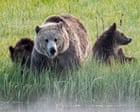
Under a federal regulatory reversal finalized by the Trump administration, hunters in Alaska's National Preserves are once again legally permitted to bait brown bears using human food scraps—including doughnuts, bacon grease, and pastries—alongside previously banned practices like spotlighting hibernating bears in their dens and shooting swimming caribou from motorboats. The rule, issued by the National Park Service (NPS) in mid-2020, dismantled a 2015 Obama-era ban and realigned federal preserve regulations with the far more permissive hunting laws set by the State of Alaska.
On paper, this looks like a bizarre clash over culinary waste and wildlife ethics. In reality, it is the latest front in a decades-long jurisdictional war between Washington, D.C., and Juneau over who controls the vast, untamed acreage of the Last Frontier.
The Anatomy of the Rule Reversal
To understand why doughnuts and bacon ended up in the Federal Register, you have to look at how Alaska manages its wildlife compared to the rest of the United States. The 2020 National Park Service rule did not invent bear baiting out of thin air. Rather, it eliminated specific federal prohibitions that had overridden state hunting regulations inside roughly 20 million acres of National Preserves—lands that sit adjacent to National Parks like Denali, Katmai, and Wrangell-St. Elias, where sport hunting is strictly forbidden.
When the Obama administration enacted its ban in 2015, federal officials argued that state-sanctioned practices such as baiting brown bears, using artificial light to shoot black bear sows and cubs inside winter dens, and hunting wolves and coyotes during denning season violated the core conservation mandate of the National Park Service. Federal law requires the NPS to maintain natural and healthy populations of wildlife, free from human manipulation designed to artificially inflate game numbers.
The Trump administration's Department of the Interior saw things differently. Citing secretarial orders aimed at expanding recreational access and deferring to state wildlife agencies, the NPS stripped away the 2015 restrictions. By stepping back, the federal government allowed the Alaska Board of Game's existing rules to take effect inside the preserves. Under Alaska state law, registered bait stations are a standard tool for hunters navigating dense, nearly impenetrable boreal forests where spotting a bear without an attractant is extraordinarily difficult.
Why Hunters Use Doughnuts and Bacon
To an urban observer, dumping a fifty-gallon drum of stale pastries and frying oil in the woods sounds less like rugged sportsmanship and more like an ambush at a garbage dump. Yet the mechanics of bear baiting are rooted in basic biology and the brutal realities of northern terrain.
Bears emerging from winter hibernation are driven by an intense caloric deficit. Their sense of smell is vastly superior to that of a bloodhound, capable of detecting high-fat, high-sugar scents from miles away on a shifting breeze. Commercial pastries, honey, bacon grease, and dog food provide an immediate, calorie-dense reward that holds a bear in a predictable location.
In the thick spruce forests and alder thickets of interior Alaska, sightlines rarely exceed thirty yards. Spot-and-stalk hunting—the method preferred in open tundra or mountain terrain—is often impossible in dense timber. Baiting solves two problems for the hunter. First, it brings the animal into a clear shooting lane. Second, it gives the hunter time to positively identify the bear's sex and size, reducing the risk of accidentally shooting a protected sow with cubs or a younger, smaller animal.
Critics, however, point out a glaring ecological flaw in this logic. Bait stations do not selectively attract only the bears a hunter intends to shoot. They condition every bear in the watershed—including grizzlies, sows, and cubs—to associate human scent and human food with an easy meal. Wildlife biologists have spent half a century trying to break this exact conditioning in national parks, where food-conditioned bears inevitably become aggressive, raid campsites, and have to be killed by rangers in the name of public safety.
The Predator Control Engine
The friction between federal and state regulators goes much deeper than hunting ethics. It stems from fundamentally incompatible missions written into law.
The Alaska Department of Fish and Game (ADF&G) operates under a constitutional mandate to manage wildlife for sustained yield. In practice, this means maximizing populations of moose, caribou, and Dall sheep so that both rural subsistence users and urban sport hunters have abundant meat for their freezers. When moose or caribou numbers dip, the Alaska Board of Game routinely authorizes intensive management—state-sanctioned predator control programs designed to aggressively reduce bear and wolf populations.
Bear baiting, denning, and long hunting seasons are key levers in that predator-reduction strategy. From Juneau's perspective, fewer bears and wolves mean more calves surviving the spring, which translates directly into higher harvest quotas for human hunters.
The National Park Service operates under a completely different statutory playbook. Under the 1916 Organic Act and the 1980 Alaska National Interest Lands Conservation Act (ANILCA), the NPS is prohibited from manipulating wildlife populations to boost game numbers for hunters. Federal preserves are supposed to function as intact ecosystems where predators and prey fluctuate naturally, without human engineering.
When the 2015 rule was drafted, NPS biologists concluded that Alaska's liberalized predator hunting rules were bleeding into federal preserves, effectively turning national lands into predator-control zones. The 2020 reversal rejected that premise, arguing that state regulations did not threaten overall species viability and that federal uniformity with state law reduced confusion for hunters crossing invisible boundary lines in the wilderness.
Subsistence vs. Sport Hunting
One of the most persistent misconceptions surrounding the Alaska bear baiting controversy is that the rule was necessary to protect Indigenous food security. It was not.
Under ANILCA, rural Alaskans—predominantly Alaska Native communities—already possess a protected federal priority to harvest fish and wildlife for customary and traditional subsistence uses on federal lands. Those subsistence rights are governed by a separate federal board and were never curtailed by the 2015 NPS sport-hunting ban.
In fact, several tribal organizations and Indigenous leaders opposed the 2020 rollback. Many Alaska Native cultures hold deep spiritual and traditional prohibitions against disturbing hibernating bears in their dens or tampering with wildlife using unnatural attractants. To many rural residents, the practices legalized by the rule reflected the priorities of commercial hunting guides and sport-hunting lobbies rather than traditional subsistence harvesters.
For the guiding industry, however, the stakes are financial. Out-of-state clients pay tens of thousands of dollars for guided brown bear hunts in Alaska. Access to National Preserves—some of the wildest, most scenic terrain in North America—is a major selling point. When federal rules restrict methods like baiting, guides operating on preserve permits face lower success rates compared to competitors operating on adjacent state or private lands.
Safety Risks and the Public Safety Paradox
Beyond the ethical debate lies a tangible threat to hikers, anglers, and backcountry campers. National Preserves are multi-use landscapes. The same river corridors and ridges used by bear hunters in the spring and fall are traversed by float-plane tourists, kayakers, and backpackers throughout the summer.
Under Alaska state regulations, a bear bait station must be located at least one-quarter mile away from publicly maintained roads and trails, and at least one mile away from houses, cabins, and developed campgrounds. In the lower 48 states, a quarter-mile buffer might keep bait away from casual hikers. In Alaska, where there are virtually no maintained trails and backpackers travel cross-country across open valleys and river bars, a quarter-mile is nothing.
A hiker stumbling onto an active or recently abandoned barrel of rotting meat and pastries is walking directly into a high-risk encounter. Bears fiercely defend high-value food caches. Furthermore, because federal preserves do not always require the same level of public notification or signage that state lands might, backcountry travelers often have no way of knowing whether a drainage they plan to camp in has been baited for months.
Even after a hunter packs out the barrel at the end of the season, the scent lingers in the soil. Bears return to those exact coordinates for years, digging up dirt saturated with bacon grease and corn syrup, creating lingering hotspots of aggressive behavior in areas meant to remain wild.
The Pendulum of Regulatory Whiplash
The story of bear baiting in Alaska's preserves is also a case study in the instability of modern executive rulemaking. Because Congress has refused to clarify the exact boundary between state wildlife authority and federal land management in ANILCA, every presidential administration treats the Federal Register like a pendulum.
- 2015: The Obama administration finalizes a rule banning brown bear baiting, denning, and predator-control tactics in National Preserves, citing ecological integrity and public safety.
- 2020: The Trump administration overturns the 2015 rule, restoring state-aligned hunting practices under the banner of states' rights and regulatory consistency.
- 2024: Following years of litigation from conservation groups and tribal coalitions, the Biden administration moves to reinstate the ban on bear baiting in Alaska's National Preserves, specifically targeting the public safety hazards of food-conditioned bears and the ecological distortion caused by artificial attractants.
This regulatory whiplash leaves everyone in the field frustrated. State wildlife managers argue they cannot effectively manage mobile animal populations when federal rules flip every four to eight years. Hunting guides struggle to book clients years in advance when the legal methods of harvest remain tied to the outcome of national elections. Meanwhile, conservationists and federal biologists are forced to spend millions of taxpayer dollars drafting, defending, and rewriting environmental impact statements over the exact same set of regulations.
What the Doughnut Debate Really Reveals
Focusing solely on the absurdity of feeding pastries to apex predators misses the larger truth about Alaska's public lands. The battle over bear baiting is not really about how many bears are killed each year—the actual harvest numbers inside National Preserves are relatively small compared to statewide totals.
It is a proxy war over sovereignty. Alaska entered the Union in 1959 with a fierce sense of autonomy, yet more than sixty percent of its land remains owned and managed by the federal government. To many Alaskans, every restriction issued by the National Park Service feels like colonial overreach from bureaucrats who have never stepped foot in the bush. To national conservation advocates, Alaska's preserves represent the last intact ecosystems in the United States—places that belong to every American citizen and should never be managed like a commercial game farm.
Until Congress steps in to resolve the statutory friction between state sustained-yield mandates and federal preservation laws, the rules governing Alaska's wilderness will remain hostage to political transitions in Washington, leaving bears, hunters, and backcountry travelers caught squarely in the crossfire.