Federal election monitors are heading into Los Angeles County while a 9th U.S. Circuit Court of Appeals panel delivers a legal victory to Donald Trump’s campaign in an ongoing ballot dispute. That is the surface headline. Underneath it sits a collision between federal oversight authority, California’s expansive mail-in voting architecture, and the aggressive pre-election litigation strategy that now defines modern American campaigns.
To understand why these two developments are happening at the exact same moment, you have to separate the administrative machinery of the Department of Justice from the judicial mechanics of federal appellate courts. They operate on different tracks. Yet when they converge on the largest local election jurisdiction in the United States, the political shockwaves travel far beyond Southern California.
The Machinery Behind Federal Election Monitoring
When the Justice Department announces it is deploying personnel to monitor elections, partisan commentators immediately reach for dramatic language. Some frame it as a federal takeover. Others treat it as a routine checkup. Neither description captures how the law actually works on the ground.
Federal election monitoring stems primarily from the Voting Rights Act of 1965, alongside companion statutes like the Help America Vote Act and the Americans with Disabilities Act. Under these laws, the Civil Rights Division dispatches attorneys and staff to jurisdictions across the country to observe compliance with federal guarantees—language access, physical accessibility at polling centers, and adherence to provisional ballot rules.
Los Angeles County is a perennial focal point simply because of its scale. With more than five million registered voters spread across dozens of municipalities and unincorporated communities, the Los Angeles County Registrar-Recorder/County Clerk manages an operation larger than most state-level election systems.
Monitors do not run voting machines. They do not touch ballots, adjudicate signatures, or override local poll workers. Their job is observational and preventative, documenting whether county officials follow federal statutes regarding bilingual ballot materials or curbside voting accommodations.
However, the optics of federal deployment shift dramatically depending on who sits in the White House and what lawsuits are active in the surrounding circuits. When a Justice Department under a Republican administration—or during a cycle dominated by Republican legal challenges—sends teams into a heavily Democratic jurisdiction like Los Angeles, local officials view the presence through a lens of heightened scrutiny.
The friction is rarely about whether monitors are allowed inside a vote center. Federal law settles that question clearly. The friction is about how observations gathered by federal attorneys might later be weaponized in courtrooms, congressional hearings, or post-election certification battles.
What the 9th Circuit Ruling Actually Changes
While federal monitors prepare to observe vote centers, the 9th U.S. Circuit Court of Appeals has altered the legal terrain around how ballots are handled and contested. Historically viewed as one of the most liberal appellate benches in the nation, the 9th Circuit has undergone substantial ideological shifts following dozens of judicial appointments during Trump’s first term. A three-judge panel siding with Trump’s legal team in a California ballot dispute is no longer the statistical anomaly it would have been a decade ago.
To grasp the weight of an appellate ruling on ballot procedures, you have to look at the Purcell principle. Derived from a 2006 Supreme Court decision, this legal doctrine holds that federal courts should generally refrain from altering election rules close to an election because sudden changes confuse voters and burden administrators.
When the 9th Circuit rules in favor of a Trump-backed challenge during active voting or immediately preceding it, the panel is doing one of two things. Either it is halting a lower court’s attempt to loosen state rules, thereby preserving strict statutory deadlines, or it is enforcing an existing statutory safeguard—such as signature verification protocols or chain-of-custody transparency—that plaintiffs argue local officials neglected.
California’s voting system relies heavily on universal vote-by-mail. Every active registered voter automatically receives a ballot weeks before Election Day. That volume creates an enormous administrative pipeline involving outer envelope scanning, signature matching against registration files, curing notices for mismatched signatures, and bipartisan adjudication boards.
Trump’s legal strategy across Western states has targeted the exact pressure points of that pipeline:
- Signature Verification Standards: Pushing for strict enforcement of human and automated signature checks rather than broad presumptions of validity.
- Observer Access: Demanding closer physical proximity for partisan poll watchers during ballot opening, flattening, and tabulation phases.
- Receipt Deadlines and Postmarks: Challenging extended grace periods for ballots arriving after Election Day without clear postal cancellation marks.
- Voter Roll Maintenance: Litigating the speed and thoroughness with which counties remove inactive registrants under the National Voter Registration Act.
A favorable 9th Circuit decision gives conservative legal groups an immediate appellate precedent. Even if the ruling applies narrowly to a specific procedural motion in California, attorneys in Nevada, Arizona, and Oregon—all of which sit inside the 9th Circuit’s geographic footprint—can cite that reasoning within hours.
Why Los Angeles Is the Ultimate Stress Test
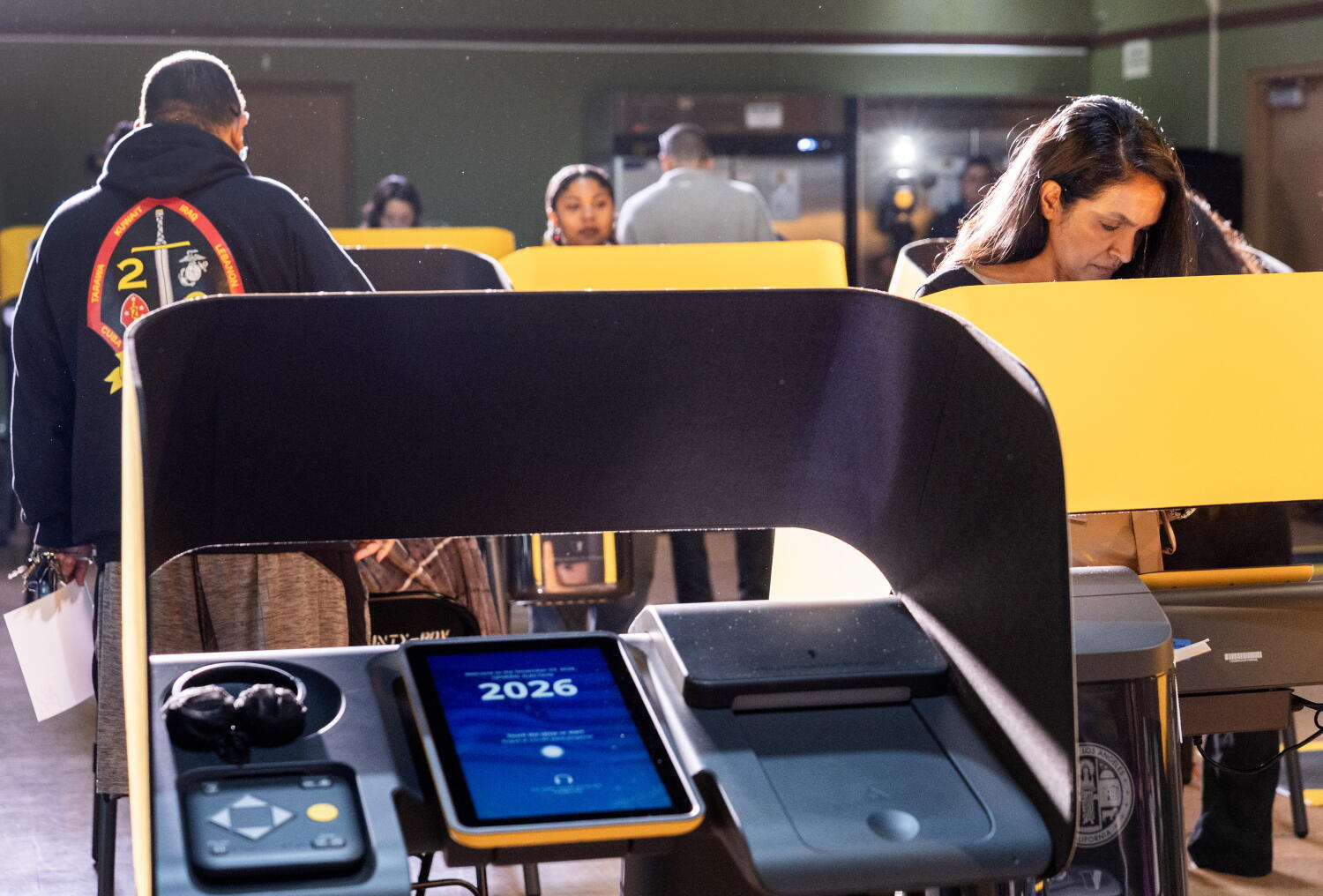
No county in America illustrates the logistical complexity of modern election administration better than Los Angeles. Years ago, the county scrapped traditional neighborhood precincts in favor of the Voter’s Choice Act model. Instead of assigning voters to a single church basement or school gymnasium on one Tuesday, the county operates hundreds of multi-day vote centers where any resident can cast a ballot, register conditionally, or drop off a mail-in envelope.
That flexibility increases turnout convenience, but it multiplies the surface area for administrative errors and legal challenges. Consider a hypothetical example of how a minor operational hiccup turns into a federal flashpoint. Suppose a vote center in the San Fernando Valley experiences a two-hour connectivity lag on its electronic poll books, forcing staff to issue provisional ballots to dozens of voters. Under California law, those ballots are completely valid once verified. Yet to partisan observers watching from behind a stanchion, a sudden spike in provisional envelopes looks like an irregularity. If federal monitors are standing ten feet away taking notes on a clipboard, every routine contingency protocol suddenly carries the weight of a federal investigation.
Local election administrators in Southern California operate under relentless pressure. Since 2020, veteran county clerks across the country have resigned at record rates, exhausted by public records floods, targeted harassment, and nonstop litigation. Those who remain run their offices like fortified compliance operations, knowing that every ballot box seal, courier log, and software patch will be audited by adversarial lawyers.
The Strategic Convergence of Courts and Monitors
It is easy to treat the Justice Department’s monitor deployment and the 9th Circuit’s ruling as unrelated news items that happened to cross the wire on the same afternoon. That would be a mistake. In modern American politics, administrative oversight and appellate litigation function as complementary gears in a single machine.
Campaigns no longer wait until after Election Night to build a legal record. They construct it in real time.
When an appellate court affirms stricter oversight or tighter procedural compliance, it sets the legal standard. When federal monitors enter the room, their presence signals to local administrators that compliance with federal floor requirements is actively being watched. Even though Justice Department monitors are bound by strict non-interference rules and cannot enforce state-level partisan observer demands, their physical presence changes the room's temperature.
County supervisors and registrar officials become hyper-cautious. Decisions that might once have been resolved informally at a precinct table—like how close an observer can stand to a ballot adjudication screen—get escalated immediately to county counsel. Every escalation slows down processing. And in a state like California, where counting millions of mail-in ballots routinely stretches weeks past Election Day, any slowdown feeds national narratives about delayed results.
The Blind Spots in Partisan Narratives
Both sides of the political divide routinely misrepresent what these developments actually mean for ballot security and voter access.
On the political right, there is a tendency to treat a 9th Circuit procedural victory or a federal monitor deployment as proof that massive fraud was caught in the act. That leaps far beyond the record. Appellate rulings in pre-election posture typically address statutory interpretation, standing, or preliminary injunctions—not proven cases of illegal voting. Similarly, the presence of federal monitors in Los Angeles is standard practice across presidential cycles; the Justice Department regularly deploys teams to dozens of jurisdictions in both red and blue states.
On the political left, elected officials frequently dismiss any Republican-led ballot lawsuit or federal scrutiny as pure voter suppression theater. That dismissal ignores genuine administrative vulnerabilities. When a county processes millions of mail-in ballots across shifting rules, inconsistent signature-curing practices or ambiguous chain-of-custody logs erode public confidence even when zero malicious intent exists. Tightening procedural clarity—ensuring observers can genuinely see the process without disrupting it, or enforcing uniform standards across counties—protects the legitimacy of the final tally.
The gray area is where actual election governance lives. Ensuring every eligible citizen can cast a ballot easily while maintaining airtight, verifiable audit trails is an engineering problem, not a slogan.
The Precedent Ripple Across the West
The immediate operational impact in Los Angeles will play out in vote centers and tabulation warehouses over the coming days. The longer-term impact belongs to the lawyers.
Because the 9th Circuit governs nine Western states, including battlegrounds like Arizona and Nevada, any published opinion clarifying ballot dispute rules becomes binding law across the region. Legal teams for both the Republican National Committee and the Democratic National Committee dissect every footnote of these rulings to recalibrate their rapid-response playbooks.
If the court signals lower tolerance for last-minute administrative adjustments by local clerks, election officials across the West will be forced to stick rigidly to statutory text, even when unexpected logistical disruptions hit. Conversely, if the ruling narrows who has legal standing to challenge ballot procedures before votes are counted, it raises the bar for future pre-election injunctions.
What happens in Los Angeles rarely stays in Los Angeles. Between the federal attorneys walking the floors of Southern California vote centers and the appellate judges rewriting the boundaries of ballot litigation in San Francisco, the rules governing how American elections are policed are hardening in real time. Every county registrar in the country is watching to see which side blinks first when the counting begins.