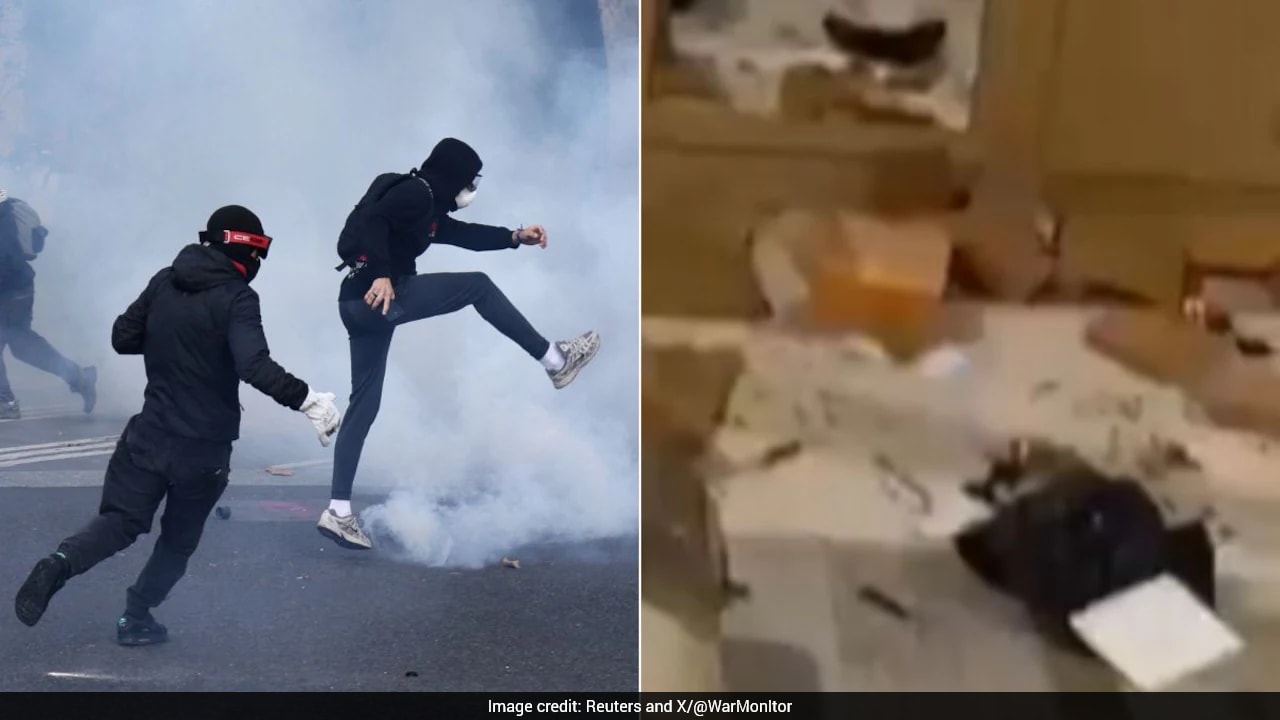
When France protests spill into high-end commercial corridors, the viral clips of shattered glass and grabbed handbags tell only half the story. Luxury stores including Apple and Hermès become lightning rods during civil unrest not by accident, but because their flagship locations sit at the exact intersection of visible wealth, urban transit hubs, and street-level anger. For retail security directors and brand executives who have watched these patterns repeat across decades of French street demonstrations, the real shock is rarely the broken window itself. It is how predictable the operational breakdown has become once crowd dynamics shift from political march to opportunistic disorder.
A quick scroll through social media during major unrest in Paris, Lyon, or Marseille usually serves up dramatic footage of boutiques breached and merchandise carted away while sirens echo in the background. That framing satisfies an appetite for outrage, yet it skips the structural mechanics underneath. A demonstration might start over pension rules, policing, cost-of-living pressures, or contested legislation, drawing tens of thousands of peaceful marchers along wide boulevards. Once night falls or police lines stretch thin across multiple flashpoints, smaller breakaway groups treat high-margin retail as an easy target with immediate resale value.
Why Flagship Stores Become Targets During Civil Unrest
High-end storefronts are engineered to invite people in, not keep an angry crowd out. Floor-to-ceiling glass, open sightlines, minimalist marble displays, and prime corner real estate along avenues like the Rue Saint-Honoré or the Champs-Élysées make a brand feel prestigious on a normal Tuesday. During a volatile evening of France protests, those exact same design choices turn a store into a glass bowl filled with high-value inventory.
Consider a hypothetical example to see how quickly exposure compounds on the ground. Imagine a flagship boutique located three blocks from a major protest assembly square has a large street-facing glass facade, a single heavy security shutter that has been stuck halfway for months, and a stockroom whose rear door opens onto a narrow side alley. Even if local police deploy tear gas and crowd-control units along the main boulevard, opportunists slipping down side streets can bypass the main line in under two minutes if perimeter access is not physically hardened.
Brands like Hermès and Apple face distinct versions of this vulnerability because their products serve different purposes after a smash-and-grab. Luxury leather goods, watches, and accessories carry high street value, compact size, and immediate desirability in informal resale channels. Consumer electronics from Apple also attract thieves, though enterprise lockouts, serial tracking, and activation controls complicate long-term monetization compared to unserialized physical goods. Still, to a crowd moving fast in the dark, high-end tech and luxury leather share one defining trait: both signal status and wealth right on the sidewalk.
- Visibility along march routes: Prestige avenues sit directly along traditional protest corridors, putting flagship windows in the path of dispersing crowds.
- Glass-heavy architecture: Expansive glazing prioritizes window shopping and natural light over impact resistance.
- Delayed municipal containment: When clashes erupt across several neighborhoods at once, fixed retail guards cannot hold off organized groups without street-level policing.
- Liquid resale appeal: Compact, recognizable items are far easier to move quickly than bulky appliances or heavy furniture.
The Economics Behind Smash and Grab Looting
Casual observers often assume looters are simply a subset of political demonstrators who lost their temper. Years of watching urban unrest across Europe suggest a messier reality. Political protesters and opportunistic looters frequently overlap in time and space without sharing the same motive. Some people come for the march and stay when things turn chaotic; others arrive specifically because police resources are stretched thin elsewhere in the city.
Once a storefront is breached, the economics shift from ideological anger to rapid extraction. Items that can be stuffed into a backpack or tote bag—small leather goods, scarves, phones, tablets, or display units—disappear first because weight and portability govern speed. Bulky inventory tends to be ignored unless a crowd lingers long enough to load vehicles, which happens less often when riot police move in quickly.
Physical shrinkage is only one slice of the financial hit luxury and tech operators absorb. Board-up crews working on emergency call-outs during curfew hours charge steep rates, temporary steel shutters are expensive to fabricate and install on short notice, and lost trading days hurt high-margin flagship locations disproportionately. A single flagship store on a prime Paris street generates far more revenue per square meter than a suburban outlet, so even two or three days of forced closure or restricted hours cuts deeply into monthly performance.
Insurance helps cushion major retailers, yet coverage is never a free pass. Deductibles can be substantial, underwriters scrutinize repeated claims in high-risk zones, and policy terms often require documented security measures—such as functioning shutters, alarm monitoring, and inventory protocols—before payouts flow smoothly. Over time, repeated exposure nudges commercial insurers to raise premiums or tighten conditions for properties along chronic protest corridors.
| Cost Category | Immediate Street Impact | Lingering Business Drag |
|---|---|---|
| Stolen Merchandise | Loss of high-margin stock and display units | Inventory gaps and serial or warranty tracking headaches |
| Storefront Damage | Shattered glass, pried doors, smoke or water harm | Emergency boarding, custom glazing lead times, facade repairs |
| Lost Foot Traffic | Same-day walkouts and early closures | Cautious shoppers avoiding central districts during unrest |
| Security & Risk Costs | Overtime guards and rapid-response call-outs | Higher insurance deductibles and stricter underwriting terms |
What Security Footage Misses About Crowd Dynamics
Short video clips shared online rarely show what happened ten minutes before the glass broke or ten minutes after. A ten-second clip of people running out of a store with shopping bags or boxes feels complete on a phone screen, stripping away context about crowd density, police positioning, and whether the breach was a fleeting opportunistic rush or a sustained takeover.
In dense urban environments, crowd momentum behaves like fluid pressure. When a large group surges down a street pushed by tear gas or dispersing from a square, individuals near the front or edges can be funneled into recessed doorways and glass alcoves. A handful of people testing a door or throwing a rock can trigger a chain reaction in seconds, pulling bystanders and opportunists alike into a gap that did not exist a moment earlier.
Law enforcement faces its own tactical trade-offs during large-scale France protests. Officers tasked with protecting government buildings, transit hubs, and human life must weigh where to hold a hard line and where to clear a street. If police concentrate heavily on holding a key intersection or plaza, side streets housing upscale retail can become softer flanks until mobile units are redirected. Blaming officers solely for a broken boutique window ignores the basic math of urban crowd control when dozens of incidents flare up simultaneously.
There is also a quiet ethical tension that brand executives rarely discuss in public. Hardening a flagship store to look like a bunker—heavy bars, steel plates, armed-style security posturing—can protect inventory while clashing sharply with the welcoming, aspirational image luxury and tech brands spend billions cultivating. Too little protection invites repeated breaches; too much visible fortification can make a store feel hostile on ordinary days when no protests are happening at all.
How Retailers Adapt When Unrest Becomes Cyclical
Veteran operators who have weathered multiple waves of street unrest in France no longer treat security as an afterthought bolted onto retail operations. Instead, they treat civil disruption as a recurring operational risk similar to severe weather or transit strikes, building playbooks long before a protest call appears on social media.
Early warning and rapid shuttering make a measurable difference. When labor unions, student groups, or activist networks announce major demonstrations along familiar routes, store managers and regional security teams watch crowd movement in real time rather than waiting for glass to break. Closing early, pulling high-value items out of street-facing displays, and lowering protective shutters ahead of peak evening clashes stops many breaches before they start.
- Pre-planned early closures: Shutting doors and securing cash registers or display stock well ahead of dusk when protests carry historical risk of escalation.
- Layered physical barriers: Pairing laminated or tempered glass with rapid-deploy shutters, reinforced doors, and clear sightlines for remote monitoring.
- Inventory discipline: Keeping back-of-house stock secured behind controlled access points rather than stacked near public exits.
- Cross-brand intelligence: Sharing real-time street observations among neighboring retailers and property managers along the same commercial stretch.
None of these measures eliminate risk completely during intense France protests. Determined crowds with heavy tools can still defeat standard commercial glazing if left unchallenged long enough, and no retail security team replaces public law enforcement. Still, retailers that combine disciplined store-level readiness with realistic expectations about urban policing recover faster and lose less when the streets quiet down.
The next time viral footage shows Apple, Hermès, or another flagship store hit during unrest in France, look past the shock of the broken glass to see how the building was exposed, how fast the crowd moved along the block, and whether the store was caught off guard or already closing its shutters.