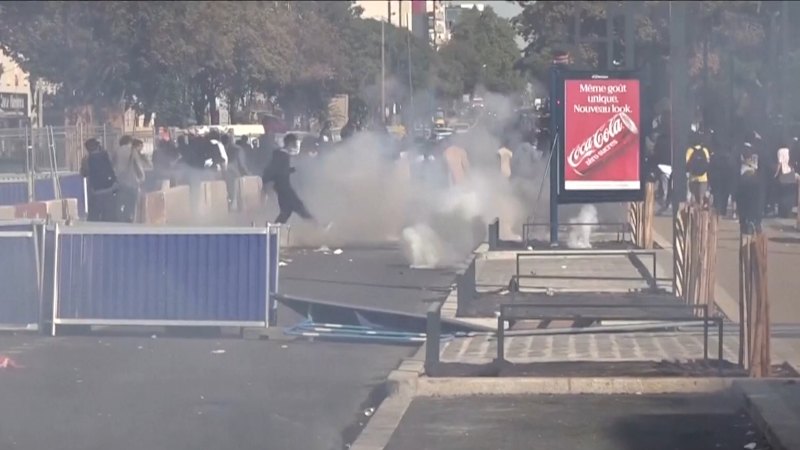
The French republic prides itself on the universal equality promised by its public education system, but that foundational myth is currently cracking open on the streets. For months, high schools from the Parisian banlieues to provincial centers like Marseille and Rennes have turned into flashpoints of civil unrest. Wheelie bins, wooden pallets, and iron gates form makeshift blockades outside hundreds of institutions. Teenagers stand shoulder-to-shoulder with striking educators, demanding something as basic as a functioning classroom. This is not a fleeting teenage rebellion or a casual skip day. It is a structural revolt born from decades of institutional neglect, chronic understaffing, and decaying concrete.
To understand why thousands of French students are occupying school entrances and facing off against riot police, one must look past the superficial headlines of urban violence. The crisis ignited quietly in mid-September at a high school in Créteil, a southeastern suburb of Paris. Teachers walked off the job to protest vacant positions and unreplaced absences. When students realized they were spending entire semesters without permanent instructors for core subjects, they joined the picket lines. Official statistics reveal a quiet rot: nearly ten percent of teaching hours in public secondary schools go untaught due to chronic shortages and unfulfilled substitutions. When an adolescent sits down to take a crucial national exam after months of self-study because their classroom lacked an assigned teacher, the social contract of public education fractures.
The geographic divide amplifies the rage. In central Paris, historic institutions receive consistent upkeep, while secondary schools in working-class peripheral zones suffer from severe infrastructural decay. During heatwaves, classrooms in poorly insulated buildings transform into saunas where students fall ill. Fewer than fifteen percent of French public school buildings have undergone major renovations over the past decade. Ceiling leaks, broken heating systems, and overcrowded rooms housing upwards of thirty-five pupils create an environment hostile to learning. When students demand resources over empty promises, they are reacting to an educational assembly line that treats working-class youth as an afterthought.
The government's response has relied heavily on old playbooks of containment and crowd control. Prime Minister Sébastien Lecornu's administration has attempted to appease the movement with phased concessions, promising structural reviews of the contentious Parcoursup university admissions algorithm and incremental funding injections. Yet these bureaucratic nods fail to address the immediate reality on the ground. Meanwhile, the deployment of security forces has escalated tensions. Heavy-handed policing tactics outside blockaded schools—including the use of tear gas and flashballs—have left numerous teenagers and security personnel injured, transforming administrative grievances into a broader crisis of civil liberties.
As the movement enters its second month, fatigue is setting in among some teachers and parents worried about missed instructional time ahead of major examinations. Yet the teenagers manning the barricades argue that returning to quiet compliance guarantees further decline. They have forced a national reckoning on the state of public infrastructure that politicians can no longer ignore through temporary cabinet meetings. Until the state addresses the fundamental deficit of teachers and decaying facilities, the barricades will remain a permanent fixture of the French landscape.