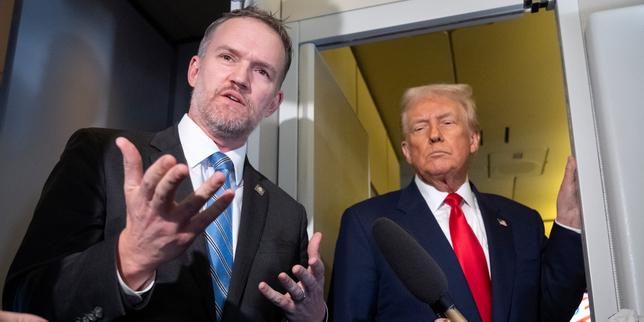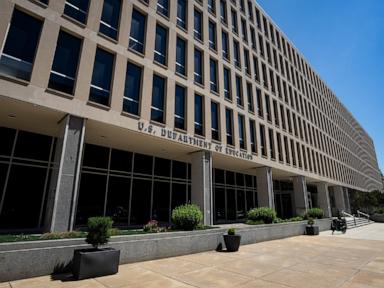
A sweeping legal battle erupted across the American healthcare landscape after a coalition of 25 states and a dozen national nursing organizations filed twin federal lawsuits against the Department of Education. The legal action attempts to halt a newly finalized rule scheduled to take effect July 1, 2026, which slashes federal student loan borrowing limits for graduate students in vital medical fields. By excluding advanced practice nurses, physician assistants, and physical therapists from the federal definition of a professional degree, the Trump administration effectively halved their lifetime borrowing capacity from $200,000 to $100,000. Under Secretary of Education Nicholas Kent defended the policy as a necessary mechanism to control escalating tuition costs and rampant academic debt. However, healthcare leaders counter that the policy will choke the supply of specialized clinicians at a time when the medical infrastructure is already fracturing from severe staffing shortages.
The legal filings expose a fundamental ideological clash between fiscal conservatism and the economic realities of modern medical training. At its core, the dispute stems from the One Big Beautiful Bill Act, a piece of legislation passed by Congress in July 2025 and signed by President Trump. The statute aimed to curtail federal spending and reign in inflation by imposing strict annual and lifetime caps on what graduate students could borrow.
Congress designed a bifurcated framework within the law. Students pursuing standard graduate degrees face an annual borrowing cap of $20,500 and a lifetime maximum of $100,000. Meanwhile, individuals enrolled in designated professional degree programs can access up to $50,000 annually, with an aggregate ceiling of $200,000.
The real damage occurred during the regulatory implementation process. When the Department of Education finalized its rules on April 30, 2026, it restricted the higher-tier professional designation to just 11 historic fields. Law, medicine, dentistry, pharmacy, veterinary medicine, chiropractic, clinical psychology, optometry, osteopathic medicine, podiatry, and theology made the cut.
Conspicuously absent from this list are the exact professions keeping regional health systems operational. Nurse practitioners, certified registered nurse anesthetists, physician assistants, and physical therapists were entirely relegated to the lower-tier graduate category.
The Anachronistic Definition Crippling Modern Medicine
The Department of Education claims its hands were tied. Regulators stated they simply relied on a long-standing federal definition to distinguish between standard graduate coursework and advanced professional practice.
The litigation filed in the U.S. District Court for the District of Maryland exposes the flaw in that logic. The state attorneys general point out that the department’s list of professional programs relies on a regulatory framework that has remained largely untouched since the 1950s. This creates a severe historical disconnect.
During the mid-20th century, advanced practice nursing and specialized physician assistant tracks barely existed. The healthcare sector has evolved dramatically over the last seventy years, but federal lending policy remains frozen in the Eisenhower era. Today, a nurse practitioner or a certified registered nurse anesthetist undergoes years of rigorous, post-baccalaureate clinical training. They diagnose illnesses, prescribe controlled substances, and manage intensive care units. To classify their education as a generic graduate degree rather than a professional clinical program ignores the statutory reality of modern medical licensing.
The financial math quickly breaks down for prospective students. Consider a standard, competitive Master of Science in Nursing or Doctor of Nursing Practice program at a major public university.
| Educational Track | Pre-2026 Loan Access | New Federal Limit | Projected Shortfall |
|---|---|---|---|
| Advanced Practice Nursing | Cost of Attendance | $100,000 Lifetime | $40,000 - $80,000 |
| Physician Assistant Studies | Cost of Attendance | $100,000 Lifetime | $30,000 - $60,000 |
| Physical Therapy (DPT) | Cost of Attendance | $100,000 Lifetime | $50,000 - $90,000 |
When federal aid covers less than the actual cost of tuition, housing, and mandatory clinical rotations, students face a grim choice. They must either abandon their education mid-way or turn to the private lending market.
Private student loans lack the critical safety nets built into the federal system. They offer no income-driven repayment plans, no public service loan forgiveness options, and possess highly volatile interest rates. For a student from a working-class background, taking on high-interest private debt to fill a $50,000 funding gap is a massive financial risk.
The Collateral Damage to Rural Health Systems
The Department of Education has attempted to minimize the blowback. Education Secretary Linda McMahon testified before Congress that the caps would affect only a small minority of students attending excessively expensive private institutions, noting that 80 percent of the aggregate nursing workforce does not hold a graduate degree.
That statistic is intentionally misleading. While it is true that the majority of bedside nurses hold associate or bachelor’s degrees, those are not the professionals targeted by this rule. The rule explicitly harms the top tier of the workforce: the advanced clinicians who supply primary and specialized care to underserved communities.
This policy hits rural America hardest. In thousands of rural counties across the United States, there is a severe shortage of primary care physicians. Family doctors are increasingly concentrated in affluent suburban and urban centers.
Who keeps the clinic doors open in rural communities? It is almost always a nurse practitioner or a physician assistant. These clinicians operate with a high degree of autonomy, managing chronic diseases, delivering babies, and serving as the sole medical point of contact for entire towns.
By cutting off the financial pipeline required to graduate these specific providers, the federal government is inadvertently accelerating the collapse of rural healthcare access. If a student cannot secure the federal loans needed to complete an advanced practice degree, the pipeline dries up. The result is a predictable spike in untreated chronic illness and a heavier burden on already overflowing metropolitan emergency rooms.
Administrative Overreach and the Grandfathering Trap
The legal challenge spearheaded by California Attorney General Rob Bonta and New York Attorney General Letitia James focuses heavily on administrative overreach. The states argue that the Department of Education violated the Administrative Procedure Act by implementing arbitrary criteria that directly contradict the intent of Congress.
Furthermore, the lawsuits shed light on a punitive bureaucratic mechanism buried deep within the final rule: the restriction of the grandfathering provision.
When Congress passed the One Big Beautiful Bill Act, lawmakers included a clear clause to protect current students. Anyone enrolled and borrowing federal loans prior to June 30, 2026, was supposed to be shielded from the new caps under a standard grandfathering rule. This allowed active students to finish their degrees under the old terms.
The Department of Education rewrote those protections in its final rule. Under the agency's new guidelines, any student who transfers institutions, changes specialties, or takes a temporary medical leave of absence immediately forfeits their grandfathered status.
This creates an incredibly hostile environment for working students. If a graduate nursing student needs to pause their studies for a semester to care for an ailing family member or recover from an illness, returning to school means facing instant financial disqualification. A student could be halfway through a three-year clinical doctorate, step away for three months, and return only to discover that their federal funding has been abruptly cut off.
The Institutional Crisis for Higher Education
The financial shockwave from this policy travels directly up to the university level. Public and private universities rely heavily on graduate tuition revenue to subsidize undergraduate programs and maintain expensive medical research laboratories.
If graduate enrollment in nursing, physical therapy, and physician assistant programs drops due to the new loan caps, university budgets will take a significant hit. State schools cannot simply slash tuition by 50 percent overnight to accommodate the new federal limits. Faculty salaries, specialized simulation labs, and clinical placement oversight require substantial, steady capital.
Instead of lowering costs, universities are far more likely to reduce the number of seats available in these high-cost medical programs. This creates an institutional bottleneck.
We are looking at an environment where thousands of qualified applicants are turned away from medical fields because universities cannot afford to run the programs, and students cannot afford to attend them. This dynamic directly undermines the Department of Education's stated theory that caps will magically force institutions to lower tuition.
A Systemic Threat to the Faculty Pipeline
There is an even deeper systemic threat that the current political rhetoric ignores. The healthcare workforce is currently bottlenecked by a desperate shortage of clinical faculty.
To train a new generation of registered nurses, a university requires professors who hold a master’s degree or a PhD in nursing. These educators are already underpaid compared to their counterparts working in private hospital systems.
Under the new loan limits, a nurse who wants to leave the bedside to earn a graduate degree in nursing education will face the exact same $100,000 lifetime loan ceiling. Forcing prospective educators to take out predatory private loans just to transition into a lower-paying academic career is a losing proposition. The faculty pipeline will constrict even further, creating a permanent drag on the country's capacity to train healthcare workers at every single level, from basic staff nurses to advanced surgical assistants.
The federal courts must now decide whether the executive branch exceeded its authority by applying an outdated mid-century taxonomy to a modern, complex workforce crisis. If the judges decline to intervene before the July 1 deadline, the impact will be felt immediately. The federal student lending apparatus will successfully shrink its balance sheet, but the real cost will be paid in the waiting rooms of rural clinics and understaffed regional hospitals across the country.